Altes Museum
Berlin, Germany
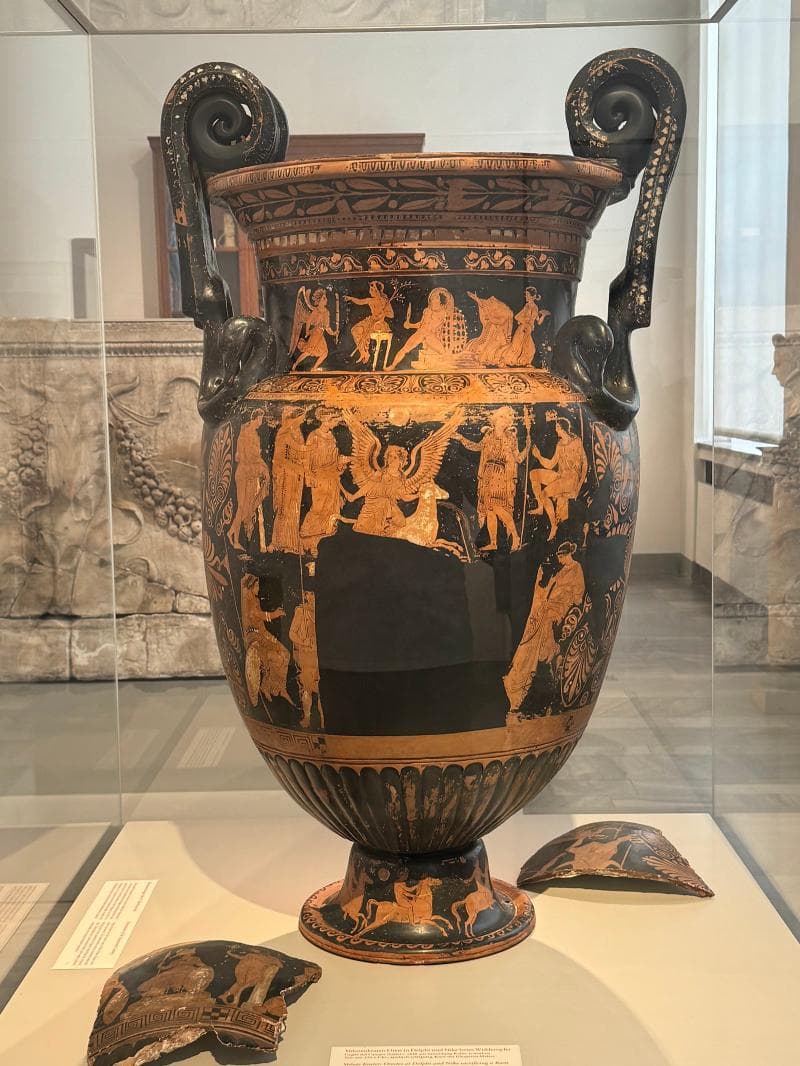
Explore Berlin's Altes Museum on Museum Island, a neoclassical masterpiece housing exquisite Greek, Etruscan, and Roman antiquities. Discover ancient art and history.
Overview
The Altes Museum, German for 'Old Museum', stands as a monumental gateway to classical antiquity on Berlin's renowned Museum Island. Inaugurated in 1830, it holds the distinction of being Prussia's first public museum, conceived to democratize art and culture for its citizens. Its grand neoclassical facade, with a majestic colonnade overlooking the Lustgarten, invites visitors into a world of ancient Greek, Etruscan, and Roman artistry and artifacts. Today, it primarily houses the Collection of Classical Antiquities and a significant part of the Münzkabinett (numismatic collection), offering a profound journey through early European civilization.
History & Cultural Background
The vision for the Altes Museum began in the early 19th century, driven by King Friedrich Wilhelm III's desire to make the royal art collections accessible to the public, aligning with Enlightenment ideals promoted by figures like Wilhelm von Humboldt. Construction commenced in 1823, following the designs of the celebrated Prussian architect Karl Friedrich Schinkel, and it was completed in 1830. Initially known as the Königliches Museum (Royal Museum), it was later renamed 'Altes Museum' after the construction of the Neues Museum (New Museum) in 1845, establishing its place within what would become the UNESCO World Heritage-listed Museum Island. Schinkel's design, inspired by ancient Greek temples, was revolutionary, making it one of the first buildings in Europe specifically constructed as a public museum. Despite suffering severe damage during World War II, the museum underwent extensive restoration between 1958 and 1966, diligently preserving its architectural splendor and historical significance.
What Makes It Special
What truly sets the Altes Museum apart is its groundbreaking architecture by Karl Friedrich Schinkel, a masterpiece of German Neoclassicism. The building's imposing portico, featuring eighteen fluted Ionic columns, presents a striking resemblance to ancient Greek temples, symbolizing its dedication to high culture and public education. Inside, the central domed rotunda, a direct homage to Rome's Pantheon, is an architectural marvel. This solemn, light-filled space was designed to prepare visitors for their encounter with art and knowledge, emphasizing the universality of antiquity as the foundation of European thought. The museum's collection itself is exceptional, offering one of the world's most important assemblages of Greek, Etruscan, and Roman art. On the main floor, visitors can explore Greek antiquity, while the upper floor showcases Etruscan and Roman artifacts, including one of the largest collections of Etruscan art outside Italy.
Stories, Fun Facts & Local Details
Imagine the logistical challenge of building such a grand structure on marshy ground; the Altes Museum stands resiliently upon 3053 stilts, a testament to 19th-century engineering. The inscription above the columns, 'FRIDERICUS GUILELMUS III STUDIO ANTIQUITATIS OMNIGENIAE ET ARTIUM LIBERALIUM MUSEUM CONSTITUIT MDCCCXXVIII,' translates to 'Friedrich Wilhelm III dedicated this museum to the study of all antiquity and liberal arts in 1828,' encapsulating its original mission. This bold statement highlights the king's progressive vision to use art for public enlightenment. Visitors today can admire celebrated pieces such as the 'Berlin Goddess,' the 'Praying Boy,' and captivating portraits of historical figures like Gaius Julius Caesar and Cleopatra, bringing ancient history to vivid life. The museum's early popularity was such that people would pay the entrance fee just to marvel at its interior architecture, even before engaging with the art.
Visitor Perspective
A visit to the Altes Museum is a contemplative journey into the ancient world. Upon entering, the magnificent rotunda immediately captivates, setting a reverent tone for the exploration ahead. The museum is thoughtfully arranged, with the ground floor dedicated to Greek art, spanning from the 10th to the 1st century BC, showcasing sculptures, vases, and jewelry. The upper floor presents the rich heritage of the Etruscans and Romans, featuring unique Etruscan burial artifacts and powerful Roman imperial portraits. The duration of a visit typically ranges from 1.5 to 3 hours, allowing ample time to appreciate the detailed exhibits and the architectural grandeur. The Altes Museum serves as an ideal starting point for exploring the broader Museum Island, providing a foundational understanding of classical influences that shaped much of European history and art. It's a place where history whispers through marble and pottery, inviting every curious traveler to connect with civilizations long past.
Coordinates: 13.39833, 52.51944
View on Google Maps💬 How Travelers Describe This Place
Based on community votes
Must See
922Unique
379Photogenic
225Beautiful
183Interesting
19
Traveler Stories
Discover memorable experiences shared by travelers who have visited this place.
No traveler stories yet.
Be the first traveler to share what made this place memorable.

Tour
By
Spot
Discover amazing places around the world. Your journey starts here.
Explore
© 2026 TourBySpot. All rights reserved.