Alte Nationalgalerie
Berlin, Germany
Explore the Alte Nationalgalerie on Museum Island, Berlin, housing masterpieces of 19th-century European art, from Romanticism to Impressionism. Discover its rich history and stunning neoclassical architecture.
Overview
The Alte Nationalgalerie, or 'Old National Gallery', stands proudly as a monumental testament to 19th-century art and architecture in the heart of Berlin, Germany. Nestled within the UNESCO World Heritage site of Museum Island, this grand institution invites visitors on a captivating journey through a pivotal period of European artistic expression. Its neoclassical facade, reminiscent of an ancient Greek temple, immediately commands attention, hinting at the treasures housed within. As one of the five renowned museums making up the iconic Museum Island complex, it plays a vital role in Berlin's cultural landscape, offering a focused collection that distinguishes it from its larger neighbors.
Dedicated primarily to paintings and sculptures from the 'long 19th century'—a period stretching from the French Revolution to the First World War—the Alte Nationalgalerie presents a comprehensive overview of movements such as Neoclassicism, Romanticism, Biedermeier, Realism, and Impressionism. It is a place where art enthusiasts can immerse themselves in works by celebrated masters, both German and international, in a setting designed to elevate the art it displays.
History & Cultural Background
The vision for a national gallery in Berlin began to take shape in the mid-19th century, driven by King Friedrich Wilhelm IV of Prussia's dream to establish a 'sanctuary for art and science' on Museum Island. The formal impetus for the Alte Nationalgalerie, however, came in 1861 with a significant bequest from banker Johann Heinrich Wagener. He donated 262 paintings to the Prussian state, with the stipulation that they be publicly displayed in a 'suitable location'. This generous act formed the foundation of the museum's collection.
Designed by Friedrich August Stüler, a pupil of the influential architect Karl Friedrich Schinkel, the building's construction commenced in 1862. Following Stüler's death, Johann Heinrich Strack completed the impressive structure, which finally opened its doors to the public in 1876, exactly 125 years prior to its most recent significant reopening. The building's majestic design, with its grand portico, Corinthian columns, and a central dome, was intended to evoke the grandeur of a classical temple, embodying the newly emerging patriotic self-confidence of the time. During World War II, the Alte Nationalgalerie suffered severe damage, particularly from aerial bombardment after 1944. Fortunately, much of its collection had been evacuated to safety. Extensive reconstruction and renovation efforts were undertaken, with the museum partially reopening in 1949 and undergoing a complete, modern restoration from 1998 to 2001.
What Makes It Special
What truly sets the Alte Nationalgalerie apart is its remarkable collection of 19th-century European art, presented within an architectural masterpiece that perfectly complements the artworks it houses. Visitors can explore iconic pieces that defined an era, from the contemplative landscapes of German Romanticism by artists like Caspar David Friedrich, such as 'Monk by the Sea', to the vivid industrial realism of Adolph Menzel's 'The Iron Rolling Mill'. The gallery also boasts an impressive array of French Impressionist works, including those by Édouard Manet and Claude Monet, a pioneering acquisition by director Hugo von Tschudi at the turn of the 20th century. This made the Nationalgalerie one of the first museums worldwide to actively collect Impressionist art.
The harmonious relationship between the building itself and its contents is a unique draw. The temple-like structure, with its elevated plinth and imposing staircase, was conceived to be a 'total work of art,' where the environment enhances the appreciation of the art. This thoughtful design creates an intimate and serene atmosphere, allowing for a more personal and reflective engagement with the masterpieces on display, a welcome contrast to some larger, more overwhelming institutions.
Stories, Fun Facts & Local Details
The Alte Nationalgalerie is rich with fascinating stories that add layers to its artistic narrative. For instance, the very existence of the gallery is owed to the generous donation of Johann Heinrich Wagener, who ensured his collection would be accessible to the public, thus kickstarting the creation of this significant institution. Another compelling tale revolves around Hugo von Tschudi, a visionary director who, despite potential conflicts with Kaiser Wilhelm II, boldly acquired works by French Impressionists. This forward-thinking approach positioned Berlin at the forefront of modern art collecting.
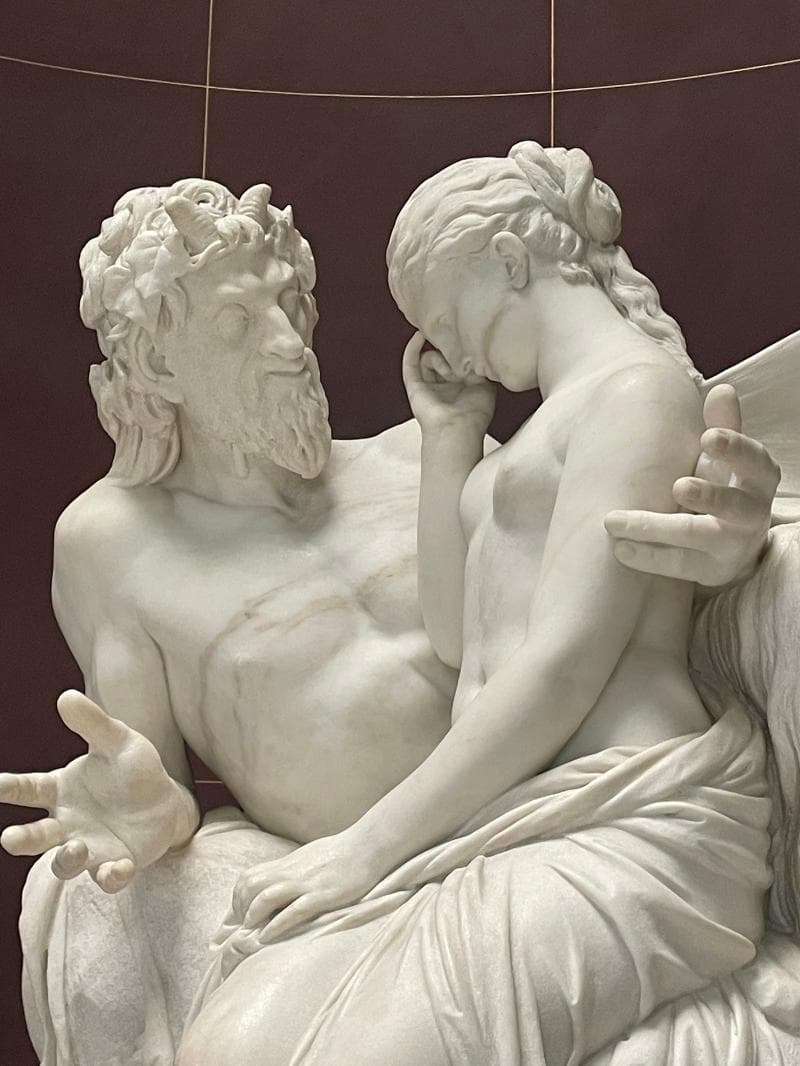
Even controversies have left their mark. Walter Leistikow's painting 'Grunewaldsee' reportedly caused a scandal upon its exhibition and was even rejected by jurors before finding a home at the Alte Nationalgalerie. The emperor himself explicitly expressed his displeasure, showcasing the tensions between traditional and emerging art forms of the time. The monumental marble sculpture 'Sleeping Beauty' by Louis Sussmann-Hellborn, a donation to the gallery, symbolically represented the 'revival' of the newly unified German Reich in the late 19th century. From its very inception, with the inscription 'Dedicated to German Art' proudly displayed on its gable, the building itself was a statement of national cultural ambition.
Visitor Perspective
For the curious traveler, a visit to the Alte Nationalgalerie offers a deeply enriching experience without the overwhelming scale of some larger museums. Typically, a visit lasts around 1.5 to 2 hours, providing ample time to appreciate the extensive collection of 19th-century art. The museum's serene ambiance and carefully curated spaces encourage a focused exploration of each artwork, whether you're drawn to the dramatic intensity of Romanticism or the luminous brushstrokes of Impressionism.
As you ascend through the gallery's grand staircase, you embark on a chronological journey through the art of the 19th and early 20th century, with each floor revealing new artistic developments. The collection starts on the third floor with the 'Age of Goethe' and continues to unfold a captivating panorama of artistic evolution. Located centrally on Museum Island, it's easily accessible and provides a perfect complement to visits to the other cultural institutions nearby, making it an essential stop for anyone exploring Berlin's vibrant artistic heritage.
Coordinates: 13.398056, 52.520833
View on Google Maps💬 How Travelers Describe This Place
Based on community votes
Beautiful
848Must See
830Unique
797Photogenic
770Interesting
100
Traveler Stories
Discover memorable experiences shared by travelers who have visited this place.
No traveler stories yet.
Be the first traveler to share what made this place memorable.

Tour
By
Spot
Discover amazing places around the world. Your journey starts here.
Explore
© 2026 TourBySpot. All rights reserved.