Alpine Landscapes
Almaty, Kazakhstan
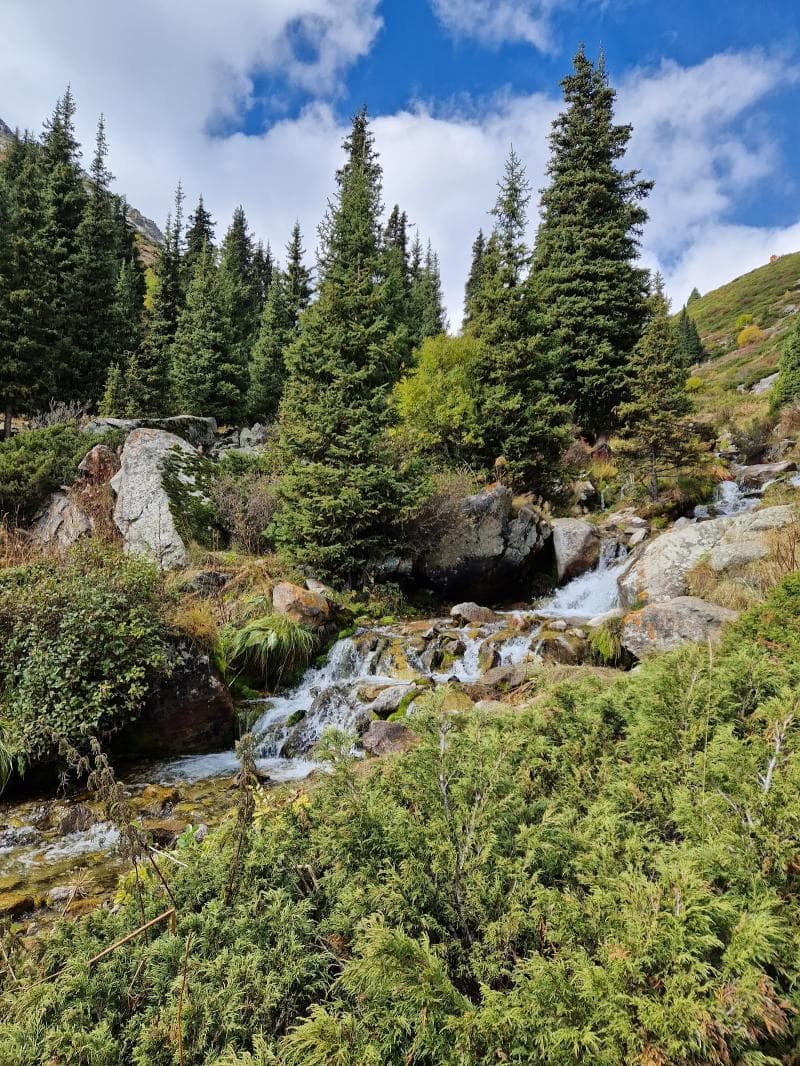
Explore the stunning Alpine Landscapes of Big Almaty Lake in Almaty, Kazakhstan. Discover glacial turquoise waters amidst majestic Trans-Ili Alatau peaks.
Overview
Perched high in the Trans-Ili Alatau mountains, a northern range of the vast Tian Shan system, the Alpine Landscapes surrounding Big Almaty Lake offer a breathtaking natural spectacle just 15 kilometers south of Almaty, Kazakhstan. Situated at an elevation of 2,511 meters above sea level, this natural alpine reservoir is a jewel of stunning turquoise-blue waters, constantly shifting in color with the seasons and the interplay of light. The lake is cradled by a trio of imposing peaks—Sovetov (4,317 m), Ozyorny (4,110 m), and Turist (3,954 m)—which collectively forge a dramatic and unforgettable panorama.
As a vital part of the Ile-Alatau National Park, this area is not just a scenic wonder but also a protected ecological zone. The crisp mountain air and serene environment provide a stark, refreshing contrast to the bustling city life below, making it a cherished escape for locals and a captivating destination for visitors seeking the raw beauty of Central Asian highlands.
History & Cultural Background
The origins of Big Almaty Lake are deeply rooted in the geological history of the region. It is believed to have formed thousands of years ago—estimates range from 2,000 to 10,000 years—as a result of significant tectonic activity and glacial movements. Ancient earthquakes fractured the high mountain valley, creating a natural basin which was then gradually filled by meltwater from surrounding glaciers and snow.
Beyond its geological formation, the lake holds immense practical and symbolic importance. It serves as the primary source of drinking water for the city of Almaty, underscoring its critical role in the lives of the city's inhabitants. This essential function has shaped its cultural context, leading to strict regulations that protect its pristine condition, making it a treasured and respected natural resource. The surrounding Trans-Ili Alatau mountains, where the lake resides, are known for their distinct 'Alatau' characteristic, featuring a blend of vegetation, scattered rocks, and snow, a landscape that has long inspired local lore and traditions.
What Makes It Special
The undeniable allure of the Alpine Landscapes around Big Almaty Lake lies in its perpetually changing beauty and ecological significance. The lake's water exhibits a mesmerizing spectrum of colors, ranging from a vibrant light blue to a deep turquoise, and even a milky blue hue in spring due to glacial melt. This chameleon-like quality makes every visit a unique visual experience, particularly striking in September and early October when the turquoise is at its most brilliant.
Enveloped within the Ile-Alatau National Park, the area is a sanctuary for diverse flora and fauna. Enthusiasts might spot elusive inhabitants such as marmots, ibex, and various bird species, including golden eagles and Himalayan vultures. The alpine meadows burst with wildflowers and aromatic herbs during warmer months, adding vibrant splashes of color to the rugged terrain. Moreover, the high altitude and minimal light pollution have made the vicinity a suitable location for scientific endeavors, housing a scientific research station and the Tien Shan Astronomical Observatory, offering a unique blend of natural wonder and scientific pursuit.
Stories, Fun Facts & Local Details
Local legends sometimes speak of mythical origins for the lake, with one tale suggesting that the lake was formed from the tears of a giant who once dwelled in these mountains. While a charming fable, the true story of its seismic and glacial birth is equally compelling, showcasing the immense power of nature. A fascinating detail for visitors is the consistent coolness of the lake's water, which rarely exceeds 10°C even in the peak of summer, a testament to its glacial feeding.
The area's proximity to the Kyrgyz border adds a layer of historical intrigue. During Soviet times, it was possible to hike across the mountain border from Kazakhstan to Kyrgyzstan; however, security has since increased, and these mountain paths are now restricted. The presence of border guards is a reminder of this sensitive location and the regulations in place to protect Almaty's vital water supply. The name 'Alatau' itself, often used for these mountain ranges, is a Turkic term describing mountains with a varied landscape of vegetation, rocks, and snow, perfectly encapsulating the visual diversity found here.
Visitor Perspective
Visiting the Alpine Landscapes of Big Almaty Lake is an immersive experience that begins with anticipation. While the lake is relatively close to Almaty, the journey typically involves navigating mountain roads, and access rules for private vehicles have changed, often requiring visitors to hike or join guided tours from a certain point. This contributes to the sense of adventure and detachment from urban life.
Upon arrival, the sheer scale and beauty of the lake framed by its colossal peaks are immediately captivating, offering endless opportunities for photography. Hiking trails abound, leading to various viewpoints that offer breathtaking vistas. It is crucial for visitors to remember that swimming is strictly forbidden as the lake is a drinking water source, and approaching the water's edge too closely may result in fines. Preparing for the cool mountain climate, even in summer, by dressing in layers and bringing adequate water and snacks, is highly advisable, as amenities near the lake are scarce. The reward for this preparation is an encounter with one of Kazakhstan's most spectacular and serene natural wonders.
Coordinates: 76.985, 43.0506
View on Google Maps💬 How Travelers Describe This Place
Based on community votes
Interesting
961Must See
733Photogenic
695Beautiful
404Unique
336
Traveler Stories
Discover memorable experiences shared by travelers who have visited this place.
No traveler stories yet.
Be the first traveler to share what made this place memorable.

Tour
By
Spot
Discover amazing places around the world. Your journey starts here.
Explore
© 2026 TourBySpot. All rights reserved.