Allianz Arena
Munich, Germany
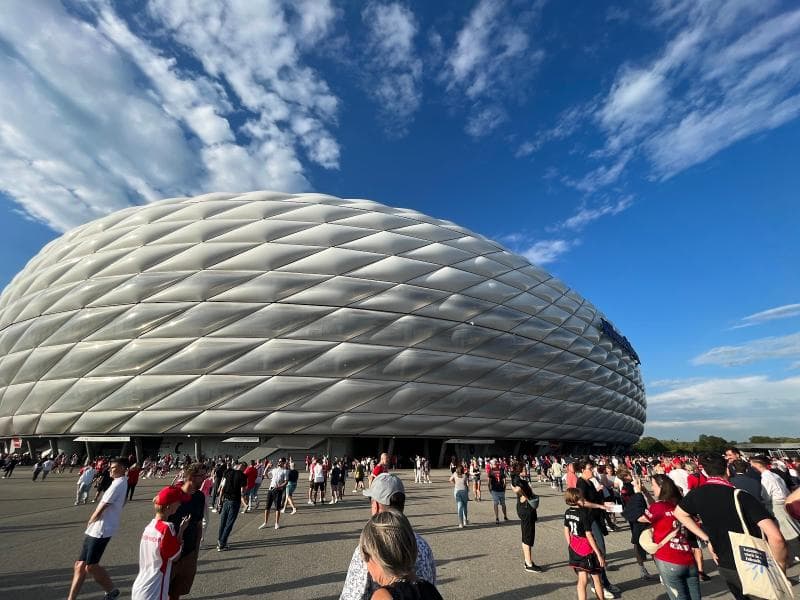
Explore Allianz Arena in Munich, Germany, an iconic football stadium known for its innovative color-changing facade and home to FC Bayern Munich.
Overview
Nestled on the northern edge of Munich's Schwabing-Freimann borough, the Allianz Arena stands as a shimmering beacon of modern architecture and a temple to German football. Often described as an 'inflatable boat' or 'tire' due to its distinctive shape and luminous exterior, this iconic stadium is much more than just a sports venue; it's a landmark known worldwide for its innovative design and passionate atmosphere.
The stadium, with its full color-changing facade, boasts a seating capacity of 75,024 for domestic matches and 70,000 for international games, making it the second-largest stadium in Germany. It serves as the proud home ground for FC Bayern Munich, one of the most successful football clubs globally.
History & Cultural Background
The vision for the Allianz Arena emerged from a desire for a dedicated football stadium in Munich, particularly with Germany's bid to host the 2006 FIFA World Cup. Before its construction, Munich's main stadium was the Olympic Stadium, a multi-purpose venue that didn't fully cater to the specific needs of football.
After extensive debate and a referendum in October 2001, where a significant majority of Munich citizens voted in favor, the project proceeded. Swiss architects Jacques Herzog and Pierre de Meuron designed the arena, envisioning a structure with a transparent, self-cleaning exterior that could be illuminated. Construction commenced in late 2002 and was completed by April 2005, a remarkably swift build of under three years.
Initially, the stadium was home to both FC Bayern Munich and their city rivals, TSV 1860 Munich. This dual occupancy was reflected in the facade's ability to glow in the respective club colors – red for Bayern and blue for TSV 1860 – or white for the German national team. However, following TSV 1860 Munich's relegation and subsequent financial restructuring, FC Bayern Munich acquired full ownership of the stadium shares in 2006 and later became the sole occupant by 2017.
What Makes It Special
The Allianz Arena's most striking feature is undoubtedly its facade, composed of 2,760 diamond-shaped, inflated ETFE (ethylene tetrafluoroethylene) plastic panels. These panels are kept inflated with dry air, forming the world's largest membrane shell, covering an area of 66,500 square meters. The material is lightweight, highly durable, self-cleaning, and translucent, allowing for internal LED lighting.
This pioneering use of ETFE allowed the Allianz Arena to be the first stadium globally with a fully color-changing exterior. Each panel can be independently lit, creating dynamic lighting moods and transforming the stadium's appearance. The architectural innovation of its 'smart facade' set a new standard in sports architecture and has influenced other venues worldwide.
Stories, Fun Facts & Local Details
The Allianz Arena quickly earned the affectionate nickname 'Schlauchboot' among locals, translating to 'inflatable boat' or 'dinghy', a nod to its unique puffed-up appearance. The cost of lighting the stadium's exterior is surprisingly economical, estimated at about €50 per hour. On clear nights, the stadium's glow is so powerful that it can be spotted from distant Austrian mountaintops.
When it opened, the Allianz Arena also boasted Europe's largest parking structure, featuring four multi-storey garages with 9,800 parking spaces, showcasing meticulous planning for visitor convenience. The stadium was a key venue for the 2006 FIFA World Cup, hosting the opening match, and has since been a site for other major international football events, including the UEFA Champions League final in 2012.
Inside the arena, visitors will find the FC Bayern Museum, which is Germany's largest club museum. Spanning over 3,000 square meters, it offers an immersive journey through FC Bayern Munich's rich history, displaying trophies, memorabilia, and interactive exhibits.
Visitor Perspective
For a curious traveler, a visit to the Allianz Arena offers an unforgettable experience, extending beyond just attending a match. Guided stadium tours provide behind-the-scenes access, allowing visitors to walk through player tunnels, see the press conference area, and learn about the unique architectural design up close.
Combining a stadium tour with a visit to the FC Bayern Museum is highly recommended. The museum provides an emotional and informative dive into the club's storied past, celebrating its legends and triumphs. Audio guides are available in multiple languages to enhance the museum experience. Fan shops are also available for those wishing to take a piece of the experience home. Catering facilities throughout the arena ensure visitors are well looked after, making for a comprehensive and engaging visit for any football enthusiast or architectural admirer.
Coordinates: 11.624664, 48.218808
View on Google Maps💬 How Travelers Describe This Place
Based on community votes
Interesting
886Photogenic
564Beautiful
443Must See
310Unique
233
Traveler Stories
Discover memorable experiences shared by travelers who have visited this place.
No traveler stories yet.
Be the first traveler to share what made this place memorable.
Things to see at Allianz Arena



Tour
By
Spot
Discover amazing places around the world. Your journey starts here.
Explore
© 2026 TourBySpot. All rights reserved.