Akershus Castle
Oslo, Norway
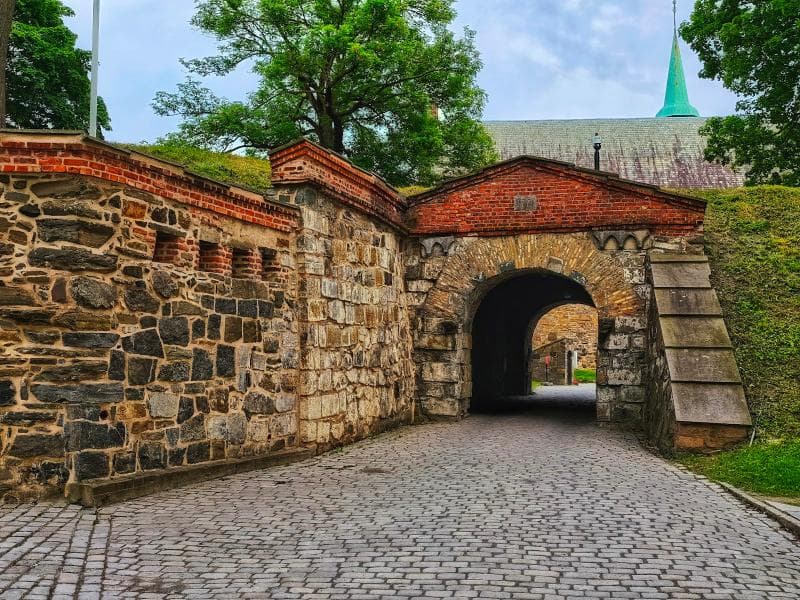
Explore Akershus Castle in Oslo, Norway, a medieval stronghold and Renaissance palace with centuries of royal history and captivating tales.
Overview
Nestled majestically on a headland overlooking the shimmering Oslofjord, Akershus Castle stands as a testament to Norway's rich and often turbulent past. While commonly referred to as Akershus Castle, it is an integral part of the larger Akershus Fortress complex, a formidable structure that has guarded Oslo, Norway's capital, for over 700 years. This historic site is a blend of medieval castle, Renaissance palace, and military stronghold, offering visitors a profound journey through time. Its strategic location was paramount, as whoever controlled Akershus effectively controlled Norway. Today, it serves as both a significant cultural landmark and a working military base, making it a unique destination where history breathes alongside modern life.
History & Cultural Background
The origins of Akershus Castle trace back to the late 13th century, with construction commencing around 1290-1299 under King Håkon V Magnusson. This ambitious undertaking was a direct response to earlier attacks on Oslo, highlighting the city's urgent need for a stronger defensive heart. The castle quickly became one of Norway's most vital strongholds, playing a crucial role in establishing Oslo as the nation's capital.
Throughout the Middle Ages, Akershus endured numerous sieges, primarily from Swedish forces, yet it famously remained uncaptured by force. Its resilience earned it the reputation of being an 'invincible European castle.' A significant transformation occurred in the early 17th century, under the reign of King Christian IV. Following a devastating fire in Oslo in 1624, Christian IV ordered the city's relocation closer to the fortress and initiated an extensive modernization of Akershus. The medieval castle was rebuilt and transformed into a grand Renaissance palace, adorned with Italian-inspired bastions, reflecting the architectural styles of the era.
Beyond its defensive and royal functions, Akershus also served as an infamous prison, with a section known as 'The Slavery,' where prisoners were often rented out for labor in the city. Notable inmates included the 'Norwegian Robin Hood,' Ole Høiland, and participants of the Kautokeino rebellion. During World War II, the fortress was surrendered to Nazi Germany in 1940 without a fight and became a site of executions by the occupiers. After liberation in 1945, it also served as the execution site for several Norwegian traitors, including Vidkun Quisling.
What Makes It Special
What sets Akershus Castle apart is its multifaceted identity and its deep imprint on Norwegian history. It is not merely an old building but a living narrative of the nation's evolution. Its strategic prominence, perched above the Oslofjord, underscores centuries of geopolitical importance. The castle's architecture beautifully showcases the transition from a stark medieval fortress to an elegant Renaissance palace, offering a unique visual timeline of design and defense.
Akershus has consistently adapted, serving as a royal residence, a formidable military base, a prison, and now a public cultural arena and a venue for official state functions. It houses the Royal Mausoleum, the final resting place for several Norwegian monarchs and royals, including King Håkon VII and Queen Maud. This blend of historical grandeur, strategic significance, and ongoing relevance makes it a compelling site that transcends typical tourist attractions.
Stories, Fun Facts & Local Details
Akershus Castle is steeped in captivating stories and local lore, perhaps none more intriguing than its reputation as Norway's most haunted building. Tales of ghostly encounters abound, with many visitors and staff reporting inexplicable footsteps, disembodied voices, and strange smells. Among the most famous spectral residents is Malcanisen, a demon dog said to guard the castle gates, and Mantelgeisten, a female ghost that appears in the Margaretasalen. Other reported phenomena include screams and rattling chains from its prison days, and even the ghost of a Swedish horse.
A curious detail connects Akershus to popular culture: some say the castle was a real-life inspiration for Arendelle Castle in Disney's 'Frozen'. While the resemblance might be coincidental, it adds a touch of modern magic to its ancient stones. Another fascinating historical tidbit is the renaming of Oslo to Christiania for over 300 years after King Christian IV rebuilt the city near the fortress. The castle's successful resistance to numerous sieges, failing only when surrendered without a fight during World War II, highlights its enduring physical and symbolic strength.
Visitor Perspective
Exploring Akershus Castle and Fortress offers a unique journey. While the fortress grounds, with their panoramic views of the Oslofjord, are freely accessible and invite leisurely strolls, access to the castle interiors is typically ticketed. Inside the castle, visitors can step into vaulted halls, royal chambers, and the solemn Royal Mausoleum, gaining insight into centuries of royal life and significant historical events. The site also hosts museums, such as the Armed Forces Museum and the Norwegian Resistance Museum, which delve deeper into Norway's military history and its experiences during World War II.
Guided tours are often available, offering deeper insights into the castle's history and legends. Whether you are drawn to its architectural grandeur, its dark past as a prison, its royal connections, or its ghostly tales, Akershus Castle provides a compelling and educational experience. It is a place where every stone seems to whisper stories of kings, battles, and the soul of Norway, making it a must-visit for any curious traveler to Oslo.
Coordinates: 10.735, 59.904
View on Google Maps💬 How Travelers Describe This Place
Based on community votes
Unique
826Must See
800Beautiful
387Interesting
242Photogenic
82
Traveler Stories
Discover memorable experiences shared by travelers who have visited this place.
No traveler stories yet.
Be the first traveler to share what made this place memorable.

Tour
By
Spot
Discover amazing places around the world. Your journey starts here.
Explore
© 2026 TourBySpot. All rights reserved.