Adriatic Viewpoints
Dubrovnik, Croatia
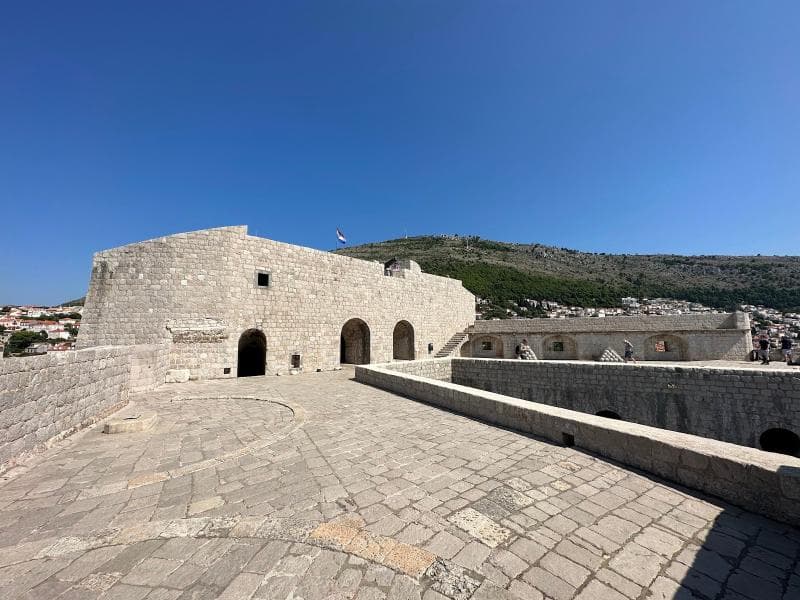
Discover the Adriatic Viewpoints from Fort Lovrijenac in Dubrovnik, Croatia. Explore this historic fortress for unparalleled views of the Old Town and sea.
Overview
Perched majestically on a 37-meter-high sea cliff just outside the western walls of Dubrovnik, Croatia, Fort Lovrijenac, often known as St. Lawrence Fortress, presents a remarkable blend of formidable history and breathtaking natural beauty. This iconic structure is not merely a fort; it is a gateway to some of the most captivating vistas across the Adriatic Sea and the historic city it once tirelessly protected. Known colloquially as 'Dubrovnik's Gibraltar' due to its strategic position and imposing presence, Lovrijenac offers an unparalleled perspective of Dubrovnik's Old Town, the shimmering Adriatic, the tranquil Kolorina Bay, and the enigmatic Lokrum Island. It stands as a testament to the city's enduring spirit, inviting curious travelers to delve into its past while soaking in its panoramic splendors.
History & Cultural Background
The origins of Fort Lovrijenac are shrouded in a fascinating legend that speaks volumes of Dubrovnik's resolve. While historical records place its existence as early as 1301, with some chronologists suggesting construction between 1018 and 1038, local lore tells of a much swifter genesis. According to this tale, in the 11th century, the Venetians planned to build a fortress on this very rock to control Dubrovnik. However, the quick-thinking citizens of Dubrovnik learned of their plot and, in a monumental effort, constructed their own formidable fort in a mere three months, thwarting the Venetian invasion. This act of defiance established Lovrijenac as a crucial defensive stronghold, protecting the city's western flank from both land and sea attacks and safeguarding its vital maritime trade routes. Over centuries, the fort has witnessed much, enduring significant damage during the devastating 1667 earthquake and later serving various roles, including a barracks and a prison under Austrian rule. Despite being damaged again during the Siege of Dubrovnik in the early 1990s, the fort was meticulously repaired, reaffirming its place as a cherished cultural landmark.
What Makes It Special
Fort Lovrijenac's unique charm lies in its dual identity: a stoic guardian and a spectacular observation deck. Architecturally, it boasts a distinctive triangular shape with three terraced levels, ingeniously designed to maximize defensive capabilities. Its outer walls, facing potential threats, are an imposing 12 meters thick, yet intriguingly, the wall facing the city is only 60 centimeters thick – a clever failsafe against a potentially rebellious fort commander. From these strategically placed terraces, visitors are treated to what are arguably the finest 'Adriatic Viewpoints' in Dubrovnik. The upper terrace, in particular, unveils a breathtaking panorama of the Old Town's terracotta rooftops cascading down to the sea, the formidable City Walls snaking along the coastline, and the expansive blue canvas of the Adriatic stretching to the horizon, dotted with Lokrum Island. Beyond its defensive architecture and stunning outlooks, Lovrijenac has embraced a new cultural role. It transforms into an atmospheric open-air stage during the annual Dubrovnik Summer Festival, famously hosting productions like Shakespeare's 'Hamlet', where the fort's ancient stones become a dramatic backdrop for timeless narratives.
Stories, Fun Facts & Local Details
The spirit of Fort Lovrijenac is perhaps best encapsulated by its famous inscription above the entrance: 'Non bene pro toto libertas venditur auro', which translates to 'Freedom is not to be sold for all the treasures in the world'. This powerful motto reflects Dubrovnik's historical commitment to its independence. Another intriguing detail involves 'The Lizard', a massive cannon designed by the master founder Ivan Rabljanin in 1537, which once guarded the fort. Legend has it that this cannon now rests at the bottom of the sea below Lovrijenac, having fallen during its disarmament by Austrian troops in the 19th century. More recently, Fort Lovrijenac has gained international recognition as a prominent filming location for the immensely popular television series 'Game of Thrones', where it doubled as the formidable Red Keep in King's Landing. This contemporary connection has introduced the ancient fortress to a new generation of admirers, eager to walk the same storied paths as their favorite characters.
Visitor Perspective
Reaching the 'Adriatic Viewpoints' of Fort Lovrijenac requires a moderately challenging ascent, with over 200 stairs leading up to its entrance. While the climb demands some effort, every step is rewarded with increasingly spectacular views and a growing sense of anticipation. Once inside, visitors can explore the fort's three distinct terraces, each offering unique vantage points of the surrounding landscape. Wandering through its stone passageways, arched corridors, and courtyards, one can truly feel transported back in time. The upper terrace is widely considered the pinnacle for panoramic photography and immersive viewing. A typical visit lasts between 30 and 60 minutes, allowing ample time to absorb the history, appreciate the architecture, and, most importantly, savor the breathtaking maritime and cityscapes. For those planning their visit, the entry to Fort Lovrijenac is often included with a ticket to the Dubrovnik City Walls, making it an excellent addition to a day of historical exploration. The late afternoon, especially nearing sunset, is often recommended as the best time to experience the fort's magnificent views, as the golden light bathes the Old Town and the Adriatic in an unforgettable glow.
Coordinates: 18.1065, 42.6418
View on Google Maps💬 How Travelers Describe This Place
Based on community votes
Photogenic
954Beautiful
946Must See
439Unique
92Interesting
66
Traveler Stories
Discover memorable experiences shared by travelers who have visited this place.
No traveler stories yet.
Be the first traveler to share what made this place memorable.

Tour
By
Spot
Discover amazing places around the world. Your journey starts here.
Explore
© 2026 TourBySpot. All rights reserved.