Academy of Fine Arts
Milan, Italy
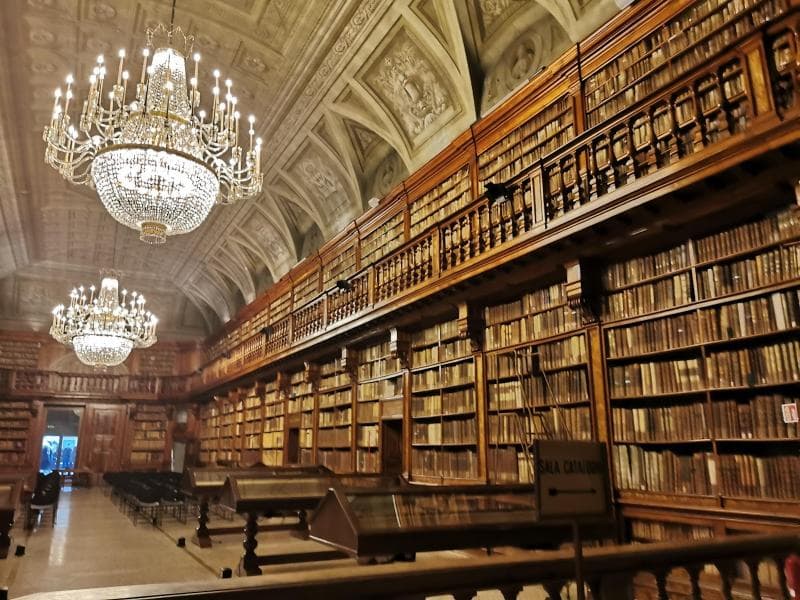
Discover the Accademia di Belle Arti di Brera in Milan, Italy. Explore its rich history, significant cultural impact, famous alumni, and role in art education.
Overview
Nestled within the historic Palazzo Brera in the heart of Milan, Italy, the Academy of Fine Arts (Accademia di Belle Arti di Brera) stands as a beacon of artistic education and cultural heritage. This prestigious, state-run public academy of fine arts shares its venerable history and main building with the renowned Pinacoteca di Brera, Milan's primary public art museum. Founded in 1776 by Empress Maria Theresa of Austria, the Accademia has long been a pivotal center for art education and vibrant artistic discourse in Italy. Today, it continues to foster talent, attracting a remarkably diverse cohort of students from across the globe, making it a truly international institution.
History & Cultural Background
The journey of the Accademia di Belle Arti di Brera began in 1776, a deliberate act by Empress Maria Theresa of Austria to systematically organize the teaching of fine arts. The Academy found its home in the grand Palazzo Brera, a site that previously served as a Jesuit college until 1773. In line with the Enlightenment ideals of its founding era, the Accademia was conceived not in isolation, but as part of a larger cultural and scientific complex. It shared its premises with institutions such as an astronomical observatory, the Orto Botanico di Brera (botanical garden), the Biblioteca di Brera, and various schools for philosophy and law. This integrated approach aimed to forge connections between science, literature, and the arts, promoting a broad cultural understanding.
A significant development came with Giuseppe Bossi, who served as administrator from 1802 to 1807. He was instrumental in propelling the Accademia forward, establishing strong ties with leading European intellectuals and initiating annual exhibitions that became vital showcases for contemporary Italian art during the 19th century. The Pinacoteca di Brera, which today houses one of Italy's most significant collections of paintings, formally began in 1806, officially instituted in 1809. It was initially established with the specific educational purpose of providing art students with a collection of exemplary works to study, drawing largely from paintings confiscated from suppressed convents during the Napoleonic era. This close symbiotic relationship between the Academy and the Pinacoteca underscores the institution's deep commitment to artistic learning and preservation. Following World War II, the Accademia adapted and reopened its courses under Aldo Carpi, continuously evolving to meet changing cultural conditions. The later half of the 19th century saw further modernization, embracing emerging art forms like photography and new stylistic expressions.
What Makes It Special
The Accademia di Belle Arti di Brera holds a unique and enduring position in the art world, distinguished by several key characteristics. It remains one of Italy's most prestigious and historically significant art academies. Its influence extends beyond traditional fine arts, having profoundly impacted 20th-century Italian design by educating a multitude of prominent artists, designers, and architects. By the 19th century, the Accademia had already established itself as a vibrant hub of the 'avant-garde,' a spirit it carried forward into the 20th century. This forward-thinking approach led to continuous innovations in its academic offerings, embracing contemporary art and design movements.
The institution is celebrated for its remarkable internationalization, attracting a substantial number of students from around the world who seek to pursue their artistic and human journeys here. The Accademia offers a comprehensive array of courses across three main departments: visual arts (including decorative art, graphic art, painting, and sculpture), design and applied art (featuring art restoration, design for business, new technologies of art, and scenic design), and communication and education in art (with courses in cultural heritage conservation and art education). This diverse curriculum ensures that students are prepared for a wide range of artistic and professional paths, making the Brera Academy a dynamic center for creative development.
Stories, Fun Facts & Local Details
Throughout its rich history, the Accademia di Brera has been a crucible for artistic talent, nurturing many celebrated figures. Its halls have welcomed renowned artists both as students and as teachers, including sculptors like Adolfo Wildt and Arturo Martini, and painters such as Lucio Fontana and Fausto Melotti. Even Nobel Prize laureate Dario Fo is among its distinguished alumni. The faculty has boasted luminaries like Mauro Reggiani, Domenico Cantatore, Pompeo Borra, and Domenico Purificato, all contributing to its esteemed reputation. An interesting detail from its past is how the sculptor Adolfo Wildt merged his own art school with the Accademia, further enriching its educational landscape. The institution was also a breeding ground for revolutionary artistic movements, with figures like Lucio Fontana emerging to pioneer Italian Spatialism.
Beyond its human luminaries, the Accademia holds unique treasures, such as a rare copy of the 'Treatise on Demonology' within its contemporary art library. The very name of its home, Palazzo Brera, hints at local history, deriving from the Germanic 'braida,' meaning a grassy opening in the urban landscape. Historically, the Academy's artistic committee, known as the Commissione di Ornato, played a significant role in influencing the design and preservation of public monuments, predating modern heritage boards. These layers of history, famous connections, and unique facts add depth to the Accademia's story, revealing its profound impact on Milan's cultural fabric.
Visitor Perspective
For the curious traveler exploring Milan, visiting the area around the Accademia di Belle Arti di Brera offers a profound immersion into the city's artistic soul. While the Academy itself is primarily an educational institution, its integral connection to the Pinacoteca di Brera means that visitors to the art gallery are, in essence, stepping into a historical hub that has shaped generations of artists. The Pinacoteca's collection was, in part, specifically amassed to provide students of the Accademia with direct access to masterpieces for study, offering a unique historical context to the artworks on display.
The entire Brera district is renowned for its inspiring atmosphere, a charm that has captivated artists and writers throughout the ages. Walking through its cobblestone streets and entering the grand Palazzo Brera allows one to appreciate not just the art, but also the physical space where centuries of creativity have flourished. The Palazzo itself is a historical and architectural marvel, housing not only the Academy and the Pinacoteca but also other significant cultural institutions, making it a microcosm of Milanese intellectual life. Even today, the Academy contributes to Milan's vibrant cultural scene through various exhibitions and public events, providing a continuous link to its dynamic artistic legacy. Visitors can feel the palpable sense of history and ongoing artistic endeavor that makes this spot truly special.
Coordinates: 9.18806, 45.47222
View on Google Maps💬 How Travelers Describe This Place
Based on community votes
Unique
996Interesting
726Photogenic
717Must See
494Beautiful
193
Traveler Stories
Discover memorable experiences shared by travelers who have visited this place.
No traveler stories yet.
Be the first traveler to share what made this place memorable.

Tour
By
Spot
Discover amazing places around the world. Your journey starts here.
Explore
© 2026 TourBySpot. All rights reserved.