Abbey Church
Salzburg, Austria
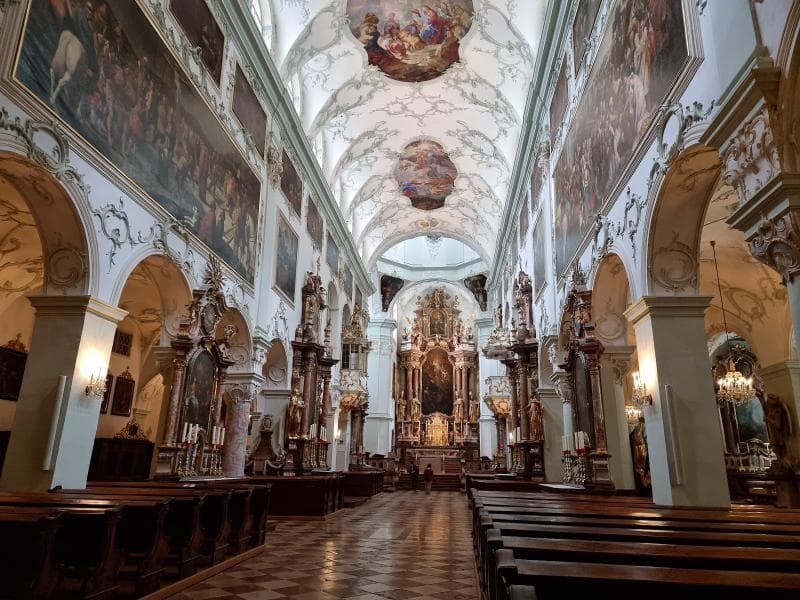
Discover the historic Abbey Church of St. Peter in Salzburg, Austria, a stunning blend of Romanesque, Gothic, and Baroque architecture. Explore its rich history and cultural significance.
Overview
Nestled in the heart of Salzburg, Austria, the Abbey Church of St. Peter stands as a profound testament to centuries of spiritual devotion and architectural evolution. This remarkable church, an integral part of the larger St. Peter's Abbey, is widely recognized as one of the oldest and most continuously active monastic sites in the German-speaking world, with its origins tracing back to the 7th century. It offers visitors a captivating journey through time, showcasing a harmonious blend of Romanesque, Gothic, and Baroque styles that narrate its rich and dynamic history. Far more than just a place of worship, the Abbey Church acts as a cultural anchor for Salzburg, drawing pilgrims, history enthusiasts, and art lovers alike into its hallowed grounds.
History & Cultural Background
The story of the Abbey Church of St. Peter begins around 696 AD, when Saint Rupert, Bishop of Worms, founded the monastery on the foundations of an even older Late Antique church. This pivotal act initiated a continuous monastic tradition that has endured for over 1,300 years, making it an unparalleled historical site. The original Romanesque basilica was built between 1130 and 1143 after a fire in 1127. Over the centuries, the church underwent numerous transformations, reflecting the prevailing artistic currents of each era. The 18th century brought a significant Rococo redesign under Abbot Beda Seeauer, transforming its interior into the vibrant space seen today. Historically, St. Peter's Abbey was not only a spiritual center but also a hub of learning, renowned in the Middle Ages for its outstanding scriptorium and writing school. Until 987, the abbot's office was even combined with that of the Archbishop of Salzburg, underscoring its immense influence.
What Makes It Special
The Abbey Church's distinctive charm lies in its layered architectural beauty. While its core structure retains Romanesque elements, the interior bursts with the opulent elegance of Rococo, characterized by intricate stucco work, vibrant frescoes, and lavish altars. A particular highlight is the early Baroque high altar, and the delicately carved pulpit adds to the interior's artistic grandeur. The church also houses the tombs of significant figures like St. Rupert and St. Vitalis, with parts of St. Rupert's bones enshrined beneath the main altar. Adjacent to the church is St. Peter's Cemetery, an ancient Christian burial ground known for its picturesque setting and historic crypts carved into the Mönchsberg rock, which are often referred to as catacombs. These 'catacombs' were likely early Christian meeting places rather than burial sites, adding another layer of historical intrigue.
Stories, Fun Facts & Local Details
Beyond its spiritual significance, the Abbey Church is interwoven with fascinating cultural narratives. It holds the distinction of being the venue for the premiere of Wolfgang Amadeus Mozart's 'Great Mass in C Minor,' a significant musical event where his wife, Constanze, is said to have sung the first soprano part. The cemetery grounds are the final resting place for many notable Salzburg personalities, including Mozart's beloved sister, Maria Anna Mozart, known as Nannerl, and the esteemed composer Michael Haydn. Fans of 'The Sound of Music' will recognize the atmospheric St. Peter's Cemetery and its catacombs as a famous backdrop from the film. The Abbey itself boasts Austria's oldest library, containing over 100,000 volumes, and even houses what is considered the oldest restaurant in Central Europe, St. Peter Stiftskulinarium, a testament to its long-standing tradition of hospitality.
Visitor Perspective
Visiting the Abbey Church of St. Peter is an immersive experience that transcends a simple sightseeing trip. The serene ambiance within its ancient walls offers a quiet retreat from the bustling city, inviting contemplation and appreciation for the artistry and history contained within. As you wander through the nave, the interplay of light and shadow on the ornate decorations creates a sense of awe. The surrounding St. Peter's Abbey complex, including the meticulously maintained cemetery with its unique wrought-iron gates and family crypts, offers further opportunities for exploration. Many find themselves captivated by the peaceful beauty of the graves, lovingly adorned with flowers, and the historical depth of the catacombs. The church provides barrier-free access on the left side of the main entrance, ensuring that a broader range of visitors can experience its profound heritage.
Coordinates: 13.0451, 47.7966
View on Google Maps💬 How Travelers Describe This Place
Based on community votes
Photogenic
951Unique
748Beautiful
499Interesting
427Must See
94
Traveler Stories
Discover memorable experiences shared by travelers who have visited this place.
No traveler stories yet.
Be the first traveler to share what made this place memorable.

Tour
By
Spot
Discover amazing places around the world. Your journey starts here.
Explore
© 2026 TourBySpot. All rights reserved.