Abanotubani
Tbilisi, Georgia
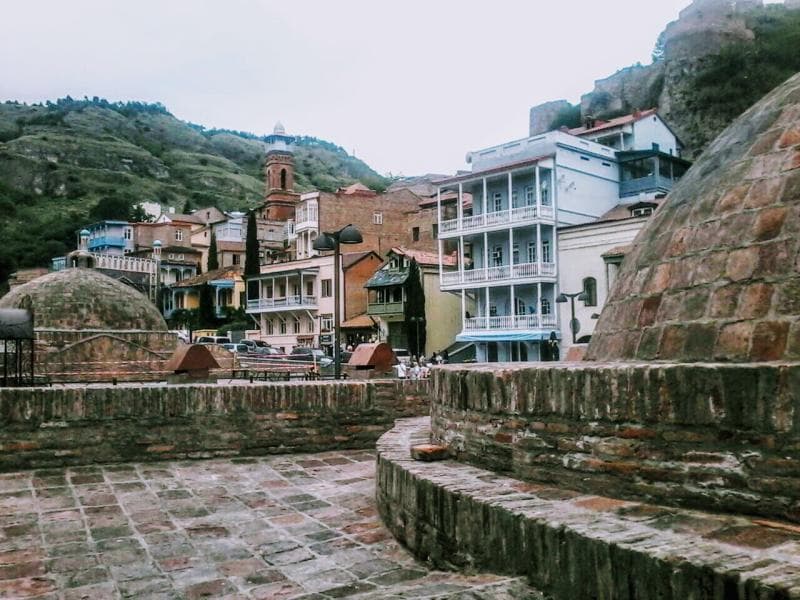
Discover Abanotubani, the historic sulfur bath district in Old Tbilisi, Georgia. Explore its unique domed bathhouses and ancient healing traditions.
Overview
Abanotubani, literally meaning 'bath district' in Georgian, is the historical heart of Old Tbilisi, nestled on the eastern bank of the Mtkvari River. It is renowned for its distinctive natural sulfur bathhouses, immediately recognizable by their low, brick dome roofs that dot the landscape. These unique structures are largely subterranean, allowing natural light to filter through vents in their domes while containing the steamy, mineral-rich air below. The air in Abanotubani often carries a faint, distinctive sulfur scent, which is an authentic part of its charm. This ancient district serves as a living testament to Tbilisi's origins and enduring cultural practices, offering visitors a unique blend of history, architecture, and wellness.
History & Cultural Background
The story of Abanotubani is intricately woven into the very foundation of Tbilisi itself. According to a cherished Georgian legend, King Vakhtang Gorgasali was hunting in the 5th century when his falcon caught a pheasant. Both birds reportedly fell into a hot spring, and when retrieved, were found cooked by the warm waters. Impressed by this natural phenomenon, the King ordered a city to be built on this very spot. The city's name, 'Tbilisi,' derives from the Old Georgian word 'tbili,' meaning 'warm place,' a direct homage to these geothermal springs that flow beneath the district.
By the 13th century, Abanotubani flourished, boasting an impressive 65 bathhouses, and was even noted by the famed traveler Marco Polo for its therapeutic properties. Throughout centuries, these baths transcended their function as mere washing places, evolving into vital social and cultural hubs. They were venues for socializing, conducting business deals, and even playing a role in matrimonial traditions, where women would visit to assess potential daughters-in-law. This long history underscores the deep cultural significance of Abanotubani in Georgian society.
What Makes It Special
Abanotubani's allure lies in its natural hot sulfur springs, with water temperatures typically ranging between 38-45°C (100-113°F). The high sulfur content in the water is believed to offer numerous health benefits, including relief for skin conditions and joint pain, as well as promoting overall well-being. The district's architecture is truly unique; unlike bathhouses elsewhere, Tbilisi's are built underground, with only their brick domes visible at street level. These domes are not only visually striking, often adorned with intricate tilework, but also serve the practical purpose of regulating temperature and allowing natural light to enter.
A visit here often includes the traditional `kisi` scrub, a vigorous exfoliating treatment performed by an attendant, leaving the skin feeling remarkably clean and refreshed. Among the array of bathhouses, the Orbeliani Baths, also known as Chreli Abano ('Colorful Bath'), stands out with its stunning blue-tiled, Persian-influenced facade, making it one of the most photographed spots in Tbilisi. Other notable baths like Gulo's Thermal Spa and Bathhouse No. 5 offer varied experiences, from more luxurious settings to traditional public options.
Stories, Fun Facts & Local Details
Beyond the founding legend, Abanotubani holds countless tales. It famously captivated literary giants like Russian poet Alexander Pushkin, who, after his visit in the 1820s, declared the Tbilisi baths more luxurious than any he'd encountered in Russia or Turkey. French writer Alexandre Dumas also left enthusiastic accounts of his experience in 1858. These personal endorsements highlight the enduring impression the baths have made on visitors throughout history. A lesser-known local tradition involves gently tapping three times on a bathhouse door before entering, a custom believed to invite good luck and the healing power of the waters. Adding to the district's charm is the nearby Leghvtakhevi Waterfall, an unexpected cascade tumbling through a small canyon right in the heart of the city, offering a tranquil escape just steps from the bustling baths.
Visitor Perspective
For the curious traveler, Abanotubani offers a choice between communal public baths, which are typically more affordable and provide a genuine local experience, and private rooms that offer a more intimate and comfortable setting. Many bathhouses operate 24/7, though booking private rooms, especially at popular spots like Chreli Abano, is highly recommended in advance. Visitors should consider bringing their own swimwear, flip-flops, and towels, though some facilities provide them. The district is compact and highly walkable, making it easy to explore on foot. It is conveniently located near other iconic Old Tbilisi attractions such as Narikala Fortress, the Jumah Mosque, and Metekhi Church, allowing for a seamless exploration of the city's rich heritage. Whether seeking therapeutic relief, historical insight, or simply a unique cultural immersion, Abanotubani promises a memorable experience.
Coordinates: 44.8067, 41.686
View on Google Maps💬 How Travelers Describe This Place
Based on community votes
Photogenic
997Unique
523Interesting
231Beautiful
149Must See
141
Traveler Stories
Discover memorable experiences shared by travelers who have visited this place.
No traveler stories yet.
Be the first traveler to share what made this place memorable.

Tour
By
Spot
Discover amazing places around the world. Your journey starts here.
Explore
© 2026 TourBySpot. All rights reserved.