World Clock
Berlin, Germany
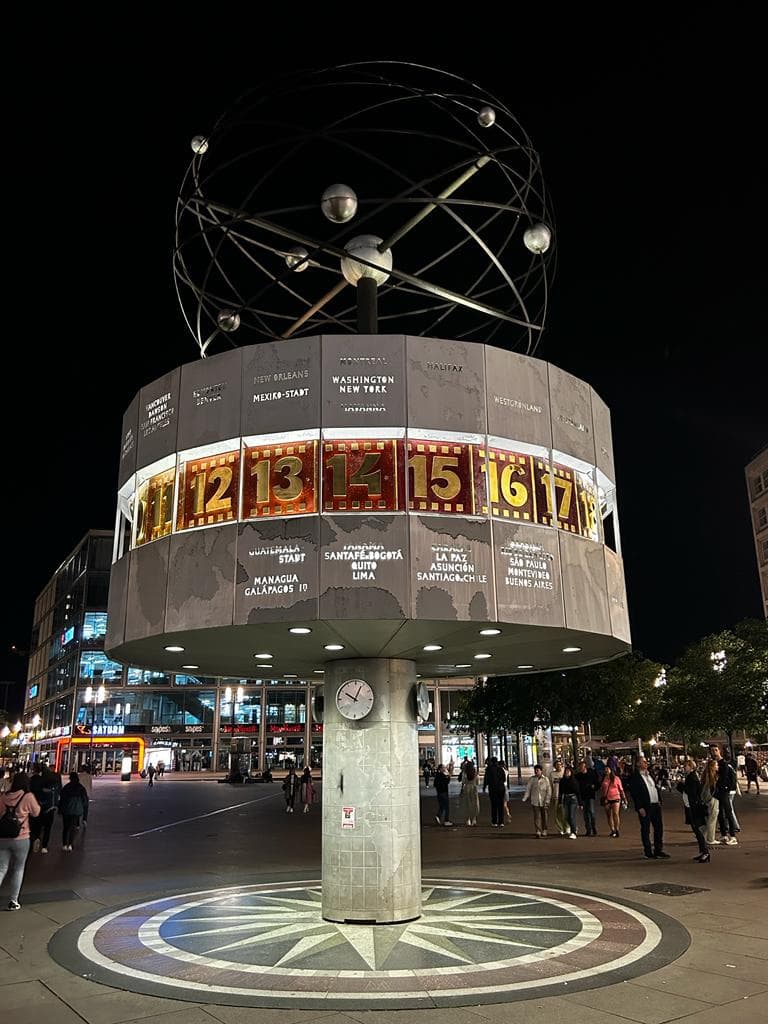
Discover Berlin's iconic World Clock (Weltzeituhr) at Alexanderplatz, Germany. A symbol of global connection and a historic meeting point.
Overview
At the heart of Berlin's bustling Alexanderplatz stands a unique monument to time and connection: the World Clock, or 'Weltzeituhr'. More than just a timepiece, this iconic structure serves as a popular meeting point and a symbol of global interconnectedness, right in the vibrant core of the German capital. Its striking design, with cities from around the globe etched onto its rotating cylinder, invites curious travelers and locals alike to ponder the synchronized dance of time across continents.
History & Cultural Background
The World Clock was officially unveiled on September 30, 1969, as a central element of the socialist redesign of Alexanderplatz in East Berlin. Conceived during a period when the German Democratic Republic (GDR) sought to present itself as a modern, forward-thinking state, the clock symbolized progress and an ambition to connect with the world, albeit ironically for a country with restricted travel for its citizens. Industrial designer Erich John, then a lecturer at the College of Fine and Applied Arts in Berlin, led its creation. The inspiration for the clock's full name, 'Urania-Weltzeituhr', stems from an older 'Urania column'—a street clock with a weather station—discovered during demolition work on the square in 1966. Its construction was a collaborative effort involving over 120 specialists, from engineers to metal sculptors.
What Makes It Special
Standing an impressive ten meters high, the World Clock is a complex and captivating piece of engineering and art. Its core feature is a large, rotating aluminum cylinder with 24 facets, each representing one of the Earth's main time zones. Engraved on this cylinder are the names of 148 major cities worldwide, allowing visitors to instantly see the current time in various locations. Above the clock, a simplified model of the solar system with spheres representing planets rotates, adding another layer of cosmic wonder to the design. At its base, a stone mosaic depicting a wind rose is embedded in the ground, reinforcing the theme of global direction. A fascinating technical detail is that the mechanism driving the hour ring includes a converted Trabant gearbox, a testament to the ingenuity of East German engineering, ensuring its precise operation even today. In July 2015, the World Clock was officially declared a historically and culturally significant monument, recognizing its enduring importance.
Stories, Fun Facts & Local Details
The World Clock has accumulated many stories over its decades. It quickly became, and remains, one of Berlin's most popular meeting places, often simply referred to by locals as 'die Uhr' (the clock). It also served as a significant site for political expression; during the peaceful revolution that led to the fall of the Berlin Wall, it was a focal point for demonstrations where citizens gathered to protest the GDR regime. Over the years, the clock has undergone restorations, notably in 1997, to update city names reflecting geopolitical changes, such as Leningrad becoming St. Petersburg and the addition of cities like Tel Aviv and Jerusalem. Designer Erich John received the Federal Cross of Merit in 2021 for his enduring creation, a recognition of his contribution to German culture. A charming local myth suggests that if a couple holds hands under the World Clock at midnight, their love will last forever.
Visitor Perspective
For any traveler exploring Berlin, the World Clock offers a moment of reflection amidst the city's dynamic energy. It's not just a functional object but a piece of living history, blending Cold War design with a timeless fascination for global connections. Its central location on Alexanderplatz makes it an ideal starting point for further exploration, with landmarks like the TV Tower, Marienkirche, and numerous shopping opportunities just a stone's throw away. Observing the names of cities and contemplating the synchronized times, one can feel a tangible link to places far away, making the Weltzeituhr a compelling stop on any Berlin itinerary. It continues to be a vibrant hub where people from all walks of life converge, embodying Berlin's spirit of openness and enduring history.
Coordinates: 13.413056, 52.521111
View on Google Maps💬 How Travelers Describe This Place
Based on community votes
Beautiful
921Interesting
831Unique
232Photogenic
211Must See
147
Traveler Stories
Discover memorable experiences shared by travelers who have visited this place.
No traveler stories yet.
Be the first traveler to share what made this place memorable.

Tour
By
Spot
Discover amazing places around the world. Your journey starts here.
Explore
© 2026 TourBySpot. All rights reserved.