Wooden Carving Hall
Dushanbe, Tajikistan
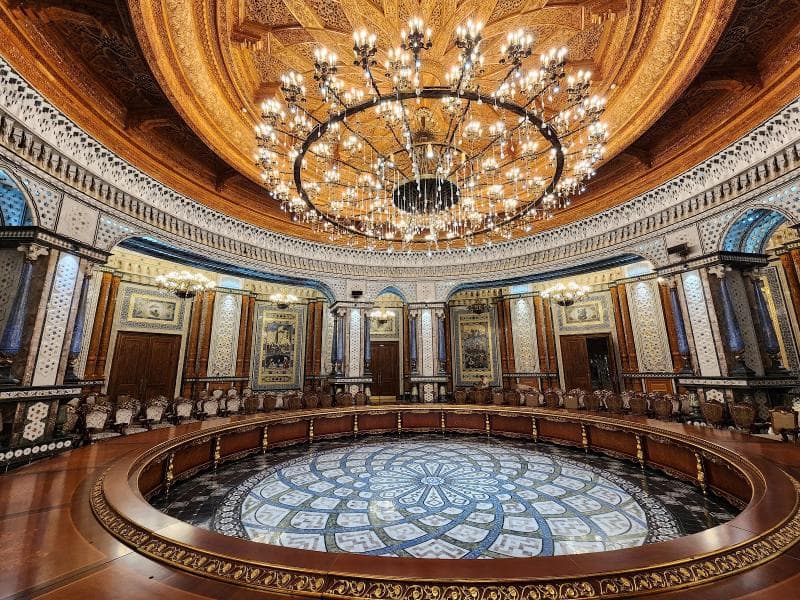
Discover the exquisite Wooden Carving Hall (Guliston Hall) inside Kokhi Navruz in Dushanbe, Tajikistan, showcasing ancient Tajik craftsmanship.
Overview
Deep within the opulent Kokhi Navruz complex in Dushanbe, Tajikistan, lies a true marvel of traditional craftsmanship: the Wooden Carving Hall. Known locally as Guliston Hall, this dedicated space serves as a vibrant testament to the enduring artistry of Tajik woodcarving, an ancient craft that has shaped the aesthetic landscape of Central Asia for centuries. It's not merely a room but a deeply immersive experience, where every surface tells a story etched in wood, showcasing the skill and dedication of thousands of local artisans who contributed to its creation. The hall provides a captivating glimpse into the cultural soul of Tajikistan, inviting visitors to appreciate the intricate details and historical depth of its national art form.
History & Cultural Background
Kokhi Navruz, or Navruz Palace, was completed in Dushanbe in 2014, although its construction began around 2009 or 2010. The complex holds a unique origin story; it was initially conceived as Central Asia's largest teahouse. However, as the project evolved, spurred by the initiative of Tajikistan's President Emomali Rahmon, the vision expanded dramatically, transforming it into a magnificent five-story palace and cultural center. This transformation allowed for an expansive showcase of Tajik national handicrafts, including plasterwork, mosaic, painted ceilings, and, most prominently, intricate woodwork and stone carving. The art of wood carving, or 'kandakory', has a profound history in Tajikistan, dating back millennia. It was historically applied to essential architectural elements like pillars, doors, and gates, and religious structures such as mosques. Over time, particularly with the arrival of Islam, the motifs shifted from figurative representations to complex geometric, floral, and calligraphic patterns, a tradition that continues to thrive in contemporary works.
What Makes It Special
The Wooden Carving Hall, or Guliston Hall, is undoubtedly one of Kokhi Navruz's most breathtaking features. It stands as a grand tribute to the art of Tajik woodcarving, boasting an astonishing more than 6,000 square meters of exquisitely carved wooden surfaces. This immense undertaking was meticulously executed under the expert guidance of master craftsman Burhon, a testament to the collaborative spirit and skill of countless artisans. The hall itself covers an area of approximately 1650 square meters and is adorned with sixteen majestic columns, each a canvas for intricate carved designs. The sheer scale and detail of the carvings, which grace both the walls and ceilings, create an overwhelming sense of beauty and cultural richness. Within this hall, even the lighting is a work of art, featuring a colossal crystal chandelier weighing three tons, adding to the grandeur of the space.
Stories, Fun Facts & Local Details
The name 'Guliston' literally translates to 'flower garden,' a fitting designation that is vividly reflected in the abundant floral carvings adorning the hall's ceilings and walls. These intricate patterns are not random but deeply rooted in traditional Tajik artistic vocabulary, often featuring stylized plant forms that connect back to ancient nomadic traditions and even Zoroastrian influences. Artisans from renowned woodcarving centers such as Khujand and Isfara contributed their generational expertise to the creation of the hall, bringing diverse regional styles and techniques to this monumental project. The complex itself, including the Wooden Carving Hall, required the collective effort of approximately 4,000 craftsmen from all corners of Tajikistan, highlighting a nationwide commitment to preserving and showcasing their heritage. Its cultural significance is further underscored by Kokhi Navruz's inclusion in the prestigious list of '8 Wonders of the SCO' (Shanghai Cooperation Organization), recognizing it as a modern masterpiece celebrating Tajik independence and folk art.
Visitor Perspective
Stepping into the Wooden Carving Hall is like entering a sanctuary of artisanal skill and cultural pride. The air seems to resonate with the echoes of chisels and mallets, as thousands of hours of painstaking labor manifest in the detailed patterns that envelop you. Visitors are often struck by the sensory experience: the subtle aroma of wood, the interplay of light and shadow dancing across the relief carvings, and the sheer visual abundance of traditional motifs. It's an opportunity to witness the living legacy of Tajik craftsmanship, to see how ancient techniques are revitalized and celebrated in a contemporary setting. This hall is not just a display; it's an invitation to connect with the heart of Tajik culture, offering a tranquil yet awe-inspiring journey through the artistry of its people.
Coordinates: 68.76855, 38.58277
View on Google Maps💬 How Travelers Describe This Place
Based on community votes
Photogenic
623Must See
363Interesting
302Beautiful
250Unique
88
Traveler Stories
Discover memorable experiences shared by travelers who have visited this place.
No traveler stories yet.
Be the first traveler to share what made this place memorable.

Tour
By
Spot
Discover amazing places around the world. Your journey starts here.
Explore
© 2026 TourBySpot. All rights reserved.