Wind Energy Floor
Astana, Kazakhstan
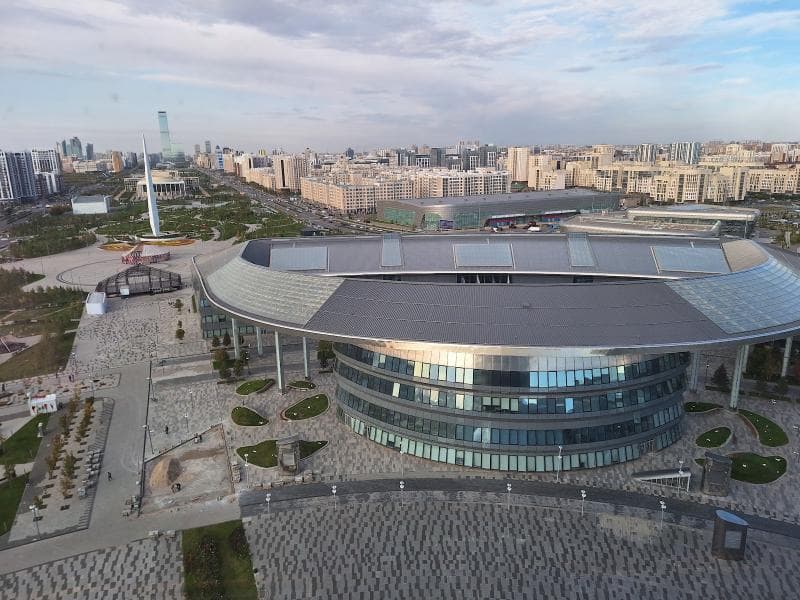
Explore the Wind Energy Floor at the former Nur Alem Museum of Future Energy in Astana, Kazakhstan, discovering wind power's past, present, and future.
Overview
The Nur Alem Museum of Future Energy, an architectural marvel in Astana, Kazakhstan, once stood as the central pavilion of EXPO-2017, themed 'Future Energy'. This iconic spherical structure, measuring 80 meters in diameter and 100 meters in height, was recognized as the largest spherical building in the world. After the exhibition, it transitioned into Kazakhstan's first technological museum dedicated to future energy.
Among its eight captivating floors, each exploring a different form of energy, the fifth floor was home to the immersive Wind Energy Floor. This dedicated space invited visitors to delve into the fascinating world of wind as a powerful and sustainable energy source, showcasing both its natural phenomena and its potential for humanity's future.
History & Cultural Background
The Nur Alem sphere was conceived as the centerpiece for EXPO-2017, an international exhibition held in Astana from June to September 2017. Its foundational concept revolved around 'the last drop of oil before the era of green technologies,' signaling a global shift towards renewable resources. Designed by the renowned American architectural firm Adrian Smith + Gordon Gill Architecture, the building itself was a testament to future energy, incorporating integrated photovoltaic panels and silent wind generators at its apex to produce its own electricity.
Following the EXPO, the sphere was repurposed into the Museum of Future Energy, a decision that cemented Kazakhstan's commitment to promoting a green economy and advancing renewable energy solutions. The museum served as an interactive educational hub, where local scientists' projects and innovative startup ideas in 'green' energy were presented, making the complex a significant cultural and scientific institution in Astana.
What Makes It Special
The Wind Energy Floor distinguished itself through its highly interactive and educational exhibits. A highlight was the 'Alley of Winds,' where visitors could experience different wind speeds, ranging from 5 to 7 on the Beaufort scale, offering a tangible understanding of wind's force. Beyond the sensory experience, the floor provided in-depth explanations of natural phenomena such as tornadoes and the mesmerizing aurora borealis (polar lights).
What truly set this floor apart was its ability to connect scientific concepts with human history and culture, exploring the myths and legends surrounding wind gods from various civilizations. This blend of scientific exploration and cultural storytelling made the complex topic of wind energy accessible and engaging for all ages, fostering a deeper appreciation for this vital natural resource.
Stories, Fun Facts & Local Details
Stepping onto the Wind Energy Floor was like embarking on a journey through both scientific discovery and ancient folklore. Visitors learned about powerful deities like Aeolus from Greek mythology, Huracan from Central American traditions (whose name gave us 'hurricane'), and the Japanese wind gods Fujin and Raijin. These mythological narratives underscored humanity's long-standing fascination and reverence for the wind.
A fascinating detail about the Nur Alem sphere itself was its self-sufficiency. The building wasn't just a museum about future energy; it embodied it. Wind generators subtly integrated into the upper structure of the sphere, alongside solar panels, generated a portion of the building's own power, demonstrating sustainable practices in action. This real-world application of renewable energy within the museum showcased Astana's ambitious vision to source up to 50% of its electricity from renewable sources by 2050, turning the entire structure into a living exhibit of 'Future Energy.'
Visitor Perspective
For many visitors, the Wind Energy Floor offered a unique and memorable experience within the Nur Alem Museum. The interactive exhibits encouraged hands-on engagement, transforming passive viewing into active learning and exploration. Guests of all ages, from curious children to adults, found themselves drawn into experiments and immersive displays that demystified the complexities of wind energy.
The journey through the Wind Energy Floor, often guided by friendly robots, was not just about understanding turbines or weather patterns. It was about igniting imagination and inspiring contemplation on the future of our planet. This floor, like others in the museum, provided a compelling blend of education and entertainment, leaving visitors with a heightened awareness of renewable resources and their potential to shape a sustainable tomorrow.
Coordinates: 71.4160066, 51.0892454
View on Google Maps💬 How Travelers Describe This Place
Based on community votes
Unique
836Interesting
797Photogenic
286Beautiful
255Must See
86
Traveler Stories
Discover memorable experiences shared by travelers who have visited this place.
No traveler stories yet.
Be the first traveler to share what made this place memorable.

Tour
By
Spot
Discover amazing places around the world. Your journey starts here.
Explore
© 2026 TourBySpot. All rights reserved.