White Pillar on Jabal al-Rahmah
Mecca, Saudi Arabia
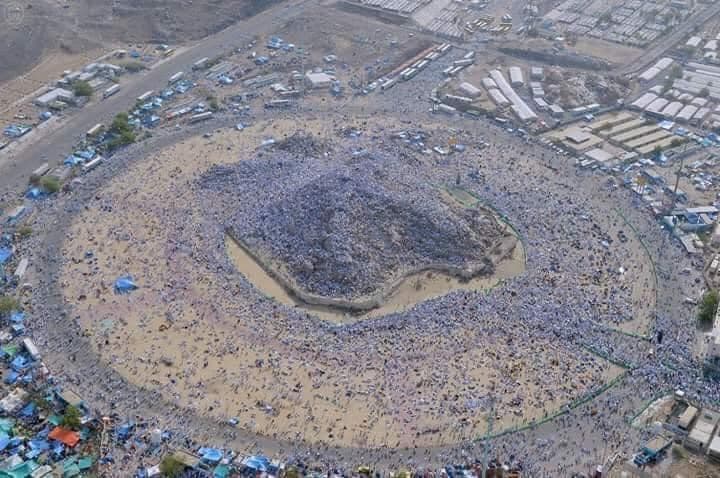
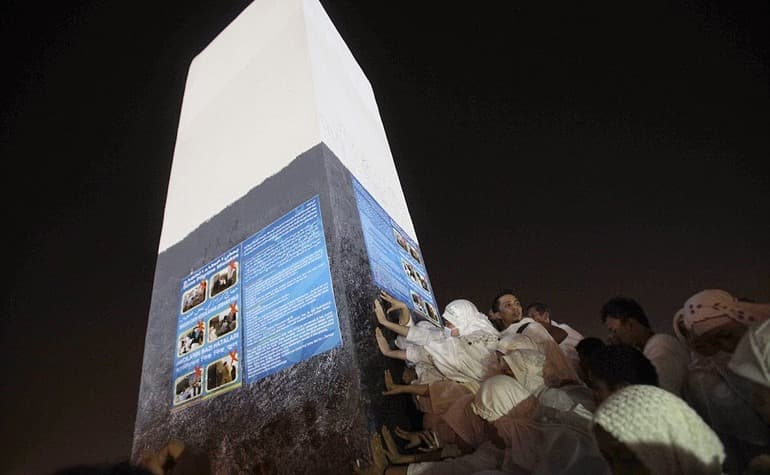
Discover the White Pillar on Jabal al-Rahmah, Mount Arafat, Mecca, Saudi Arabia – a sacred site vital to the Hajj pilgrimage and Prophet Muhammad's Farewell Sermon.
Overview
Nestled within the vast and sacred plains of Mount Arafat, approximately 20 kilometers southeast of Mecca in Saudi Arabia, stands the White Pillar on Jabal al-Rahmah. Known widely as the 'Mount of Mercy', Jabal al-Rahmah is a significant granite hill, and the distinctive white pillar atop it serves as a powerful symbol for millions of Muslims worldwide. While the entire plain of Arafat holds immense spiritual weight during the annual Hajj pilgrimage, this particular spot, marked by the pillar, carries profound historical and religious significance, drawing pilgrims to its summit.
Jabal al-Rahmah itself is a low hill, rising about 65-70 meters above the surrounding plain, with its highest point at approximately 454 meters above sea level. Its presence helps guide the throngs of pilgrims to a location steeped in Islamic narrative, offering a focal point for their devotions during one of the most critical rites of the Hajj.
History & Cultural Background
The White Pillar on Jabal al-Rahmah marks a site central to two pivotal narratives in Islamic tradition. Foremost among these is the belief that Prophet Muhammad (peace be upon him) delivered his momentous Farewell Sermon (Khutbat al-Wada') to thousands of his companions during his final Hajj pilgrimage in 632 CE. This sermon, delivered on the 9th of Dhul Hijjah, provided comprehensive guidance on the principles of Islam, emphasizing human equality, the sanctity of life and property, the rights of women, and adherence to the Quran and Sunnah.
Adding another layer of profound historical depth, many Islamic traditions hold that Jabal al-Rahmah is the very place where Prophet Adam and Hawa (Eve) reunited on Earth after their descent from Paradise. It is believed to be the spot where Adam's repentance was accepted by Allah, leading to the mountain's designation as the 'Mount of Mercy' (Jabal ar-Rahmah). These deep historical connections imbue the White Pillar and its surroundings with unparalleled spiritual resonance, making it a place of immense emotional and religious significance for Muslims globally.
What Makes It Special
The White Pillar on Jabal al-Rahmah is special because it embodies the spiritual climax of the Hajj pilgrimage: the Wuquf Arafah, or 'standing on Arafat'. On the 9th day of Dhul Hijjah, pilgrims gather on the plains and slopes of Mount Arafat, from noon until sunset, engaging in fervent prayer, supplication (dua), and seeking forgiveness from Allah. This day is considered the essence of Hajj, as Prophet Muhammad (PBUH) stated, 'Hajj is Arafat.' Without performing this standing at Arafat, the pilgrimage is not valid.
It is important to understand that the significance lies in being present anywhere within the blessed plain of Arafat, not specifically at the pillar itself. The pillar primarily serves as a marker or a guide, indicating a historically significant spot on the hill, rather than being a site for a specific ritual in itself.
Stories, Fun Facts & Local Details
The white pillar is a conspicuous landmark, often described as a seven-meter-high structure, with some accounts detailing a blue base and a white topping. This marker stands out clearly on the dark, rocky surface of Jabal al-Rahmah, which consists of large, hard stones, allowing pilgrims to ascend it during the Day of Arafat.
While many pilgrims are drawn to climb the hill and pray near the pillar, scholars emphasize that there is no authentic evidence from the Sunnah (Prophet's tradition) that encourages climbing it or performing specific acts at its peak. The crucial aspect is the spiritual presence and sincere devotion anywhere within the designated area of Arafat. Outside of the Hajj season, the area is much quieter, offering a stark contrast to the bustling, spiritually charged atmosphere during the pilgrimage when millions congregate, transforming the plain into a sea of white ihram garments.
Visitor Perspective
For pilgrims, the visit to Jabal al-Rahmah, particularly during the Hajj, is an experience filled with deep reflection and immense spiritual emotion. Standing on the plain of Arafat, pilgrims raise their hands in prayer, seeking Allah's mercy and forgiveness. It's a day when tears often meet hope, and souls are purified through repentance and supplication. The atmosphere is one of solemn devotion mixed with a profound sense of camaraderie and unity among Muslims from diverse backgrounds.
While climbing the hill is not obligatory, many choose to do so to feel a powerful connection to the historical events that unfolded there. The sheer scale of humanity gathered, all united in devotion and equality, under the open sky, makes it an unforgettable and transformative experience. It is a time for individuals to reflect on their lives, make heartfelt supplications, and witness the profound unity of the Muslim world.
Coordinates: 39.984116, 21.354885
View on Google Maps💬 How Travelers Describe This Place
Based on community votes
Unique
989Beautiful
613Photogenic
603Interesting
581Must See
207
Traveler Stories
Discover memorable experiences shared by travelers who have visited this place.
No traveler stories yet.
Be the first traveler to share what made this place memorable.

Tour
By
Spot
Discover amazing places around the world. Your journey starts here.
Explore
© 2026 TourBySpot. All rights reserved.