Wenceslas Square
Prague, Czech Republic
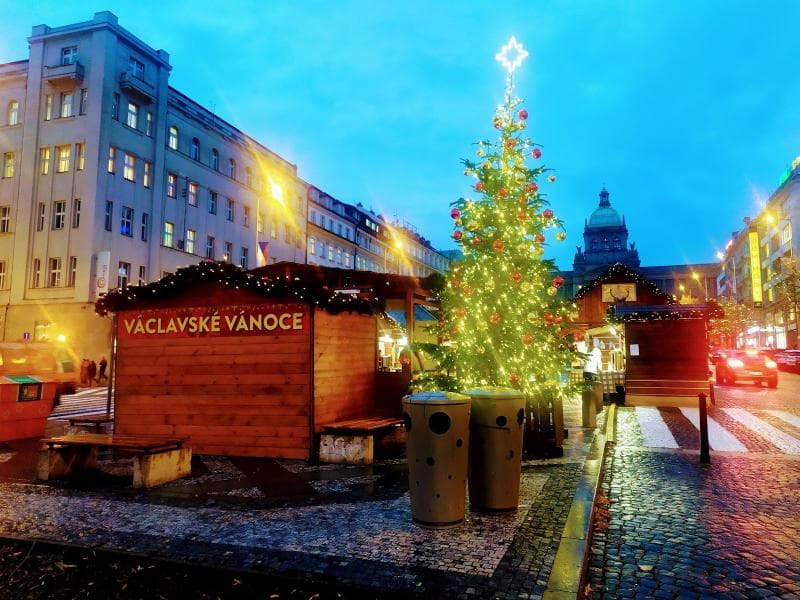
Explore Wenceslas Square in Prague, Czech Republic – a historic boulevard where centuries of history meet modern city life. Discover its monuments and stories.
Overview
Wenceslas Square, known locally as Václavské náměstí, stands as a vibrant heart within Prague's New Town, Czech Republic. More accurately described as a grand boulevard than a traditional square, this iconic urban space stretches approximately 750 meters in length and 60 meters in width, creating an impressive setting for both daily life and momentous historical events. It serves as a bustling commercial and cultural hub, lined with a diverse array of shops, cafes, hotels, and businesses, making it one of the busiest pedestrian areas in the entire country. Dominating its southeastern, uphill end is the majestic National Museum, while the equestrian statue of Saint Wenceslas, Bohemia's patron saint, proudly stands as a central landmark. Wenceslas Square is an integral part of Prague's historic center, which holds the distinguished status of a UNESCO World Heritage Site.
History & Cultural Background
The origins of Wenceslas Square date back to 1348 when Emperor Charles IV founded Prague's New Town. It was originally laid out as the 'Koňský trh' or Horse Market, a significant center for medieval trade. The square received its current, more noble name, Svatováclavské náměstí (Saint Wenceslas Square), in 1848 during a period of Czech national revival, honoring Saint Wenceslas, the revered patron saint of Bohemia.
Throughout its long history, Wenceslas Square has been far more than just a marketplace; it has served as a powerful stage for significant national events and public gatherings. It witnessed the revolutionary upheavals of 1848 and was the site where the independent Czechoslovak Republic was proclaimed in 1918. During the Nazi occupation, it was used for propaganda events, and later, the square saw fierce fighting during the Prague Uprising in 1945. Perhaps most poignantly, it became a symbol of resistance against Soviet-led oppression, particularly during the Warsaw Pact invasion in 1968. The tragic self-immolations of students Jan Palach and Jan Zajíc in 1969 occurred here, protesting the invasion. Decades later, in November 1989, Wenceslas Square was the primary focal point for the massive demonstrations of the Velvet Revolution, which ultimately led to the peaceful overthrow of communist rule in Czechoslovakia.
What Makes It Special
What truly sets Wenceslas Square apart is its remarkable fusion of historical gravitas and contemporary vibrancy. It is a place where centuries of Czech identity, struggle, and triumph are etched into the very fabric of its surroundings, while simultaneously serving as a dynamic commercial and social center. The square's most prominent features, the imposing Neo-Renaissance National Museum at its head and Josef Václav Myslbek's magnificent equestrian statue of Saint Wenceslas, stand as enduring symbols of the nation's heritage and aspirations.
The square's unique elongated shape, resembling a grand boulevard, offers a continuous vista leading up to the museum, making it an architectural marvel in its own right. It acts as a natural convergence point, connecting the historical Old Town with the more modern districts of the New Town. This blend of monumental architecture, profound history, and lively urban energy creates an atmosphere that is both awe-inspiring and intimately engaging for anyone who wanders through it.
Stories, Fun Facts & Local Details
Beyond its grand narrative, Wenceslas Square holds numerous fascinating local details. Colloquially, Prague residents often refer to it simply as 'Václavák.' A common local phrase, 'Let's meet at the horse,' immediately conjures the image of the famous equestrian statue, serving as a popular meeting point for friends and visitors alike. Interestingly, within the nearby Lucerna Palace, a satirical, upside-down rendition of the Saint Wenceslas statue, crafted by artist David Černý, offers a humorous, alternative perspective on the national hero.
Despite its name, the square's expansive, rectangular layout means it functions more like a wide avenue or boulevard, a characteristic that often surprises first-time visitors expecting a more traditional 'square.' During the holiday season, Wenceslas Square transforms into a magical Christmas market, offering traditional Czech food, crafts, and a festive atmosphere that draws both locals and tourists. Exploring the intricate passages branching off the main square can also reveal hidden gems: charming cafes, unique boutiques, and impressive architectural details that add to Prague's unique character.
Visitor Perspective
Visiting Wenceslas Square is an experience freely accessible to all, open every day and night. For those seeking to avoid the largest crowds, particularly during peak tourist season, the early morning hours or late afternoon are often recommended. The shoulder seasons of spring and fall provide pleasant weather and a somewhat more relaxed atmosphere.
The square boasts excellent connectivity through Prague's public transport system, with metro stations (Muzeum and Můstek) located at either end and tram lines running directly through it. Its central location also means it's just a short walk from the main train station and the historic Old Town Square. While generally safe, visitors should remain mindful of their belongings, as pickpockets can be active in crowded areas, particularly during busy times. Beyond its historical landmarks, the square offers a full spectrum of modern amenities, including countless shops, restaurants, cafes, and a lively nightlife scene, ensuring there is something for every traveler to enjoy.
Coordinates: 14.4275, 50.08139
View on Google Maps💬 How Travelers Describe This Place
Based on community votes
Interesting
853Must See
667Unique
190Photogenic
93Beautiful
32
Traveler Stories
Discover memorable experiences shared by travelers who have visited this place.
No traveler stories yet.
Be the first traveler to share what made this place memorable.
Things to see at Wenceslas Square



Tour
By
Spot
Discover amazing places around the world. Your journey starts here.
Explore
© 2026 TourBySpot. All rights reserved.