Weinmarkt Square
Lucerne, Switzerland
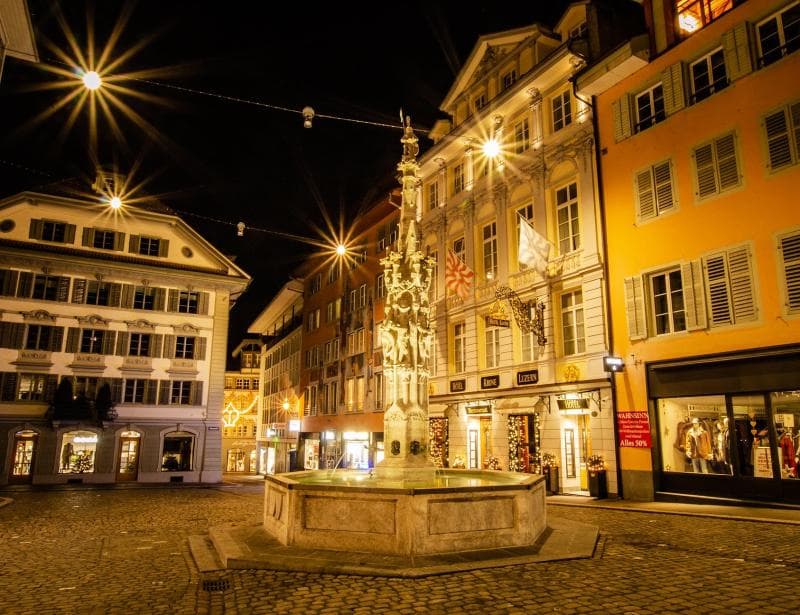
Explore Weinmarkt Square in Lucerne, Switzerland's historic Altstadt. Discover its rich past as a fish and wine market, stunning frescoes, and iconic fountain.
Overview
Tucked within the charming embrace of Lucerne's Altstadt, Weinmarkt Square stands as a vibrant testament to centuries of Swiss history and culture. This pedestrian-only square, known as the Wine Market Square, offers a captivating journey back in time with its cobblestone streets and beautifully preserved buildings. It's a place where the echoes of bustling markets and significant civic events still resonate, inviting visitors to pause and absorb its unique atmosphere. Surrounded by architecturally rich houses adorned with intricate frescoes, Weinmarkt Square is a cornerstone of Lucerne's Old Town, providing a genuine glimpse into the city's enduring heritage.
History & Cultural Background
Weinmarkt Square boasts a rich and layered history that dates back to the early 1300s. Originally, and for much of the medieval period until the mid-16th century, it served as Lucerne's primary fish market, a fitting role given the city's lakeside location and its historical reliance on fishing. Beyond its commercial significance, the square held profound civic importance. In 1332, it was the momentous site where the citizens of Lucerne swore their oath of allegiance to the Old Swiss Confederation, marking a pivotal moment in the nation's formation. The square also housed the city's first city hall until 1447, underscoring its role as a central political and administrative hub. From 1453 to the 16th century, the square was renowned for its Easter Passion plays, considered significant early German-language dramatic performances. Around the mid-16th century, the square transitioned from a fish market to a wine market, earning its current name. Merchants traversing the arduous Saint Gotthard trade route brought wines and spices from Italy to be sold here, transforming it into a vibrant trading post. The square's present appearance largely solidified in 1841, following the demolition of an old two-story medieval wooden market hall.
What Makes It Special
The true essence of Weinmarkt Square lies in its harmonious blend of historical depth and visual splendor. At its heart stands the magnificent Weinmarkt Fountain, often referred to as the Fritschi Fountain or Saint Maurice Fountain. Crafted by Konrad Lux in 1481, and later featuring an octagonal basin from the 16th century and a column by Leopold Häfliger, this fountain is considered one of Lucerne's prettiest. Its central pillar depicts Saint Maurice, the revered patron saint of Lucerne and the Swiss army, adding a layer of spiritual and military heritage to the square. The fountain's water, sourced from Mount Pilatus, once served as a vital drinking supply for residents and still offers fresh spring water today. Surrounding the square, the historic buildings are a canvas of intricate frescoes. These vibrant murals, many restored or added in the early 1900s, tell stories of Lucerne's past, depicting guild symbols, historical events, and religious scenes. One notable fresco from 1928 portrays 'The Wedding at Cana,' where Christ transforms water into wine, a symbolic nod to the square's later identity as a wine market. The presence of ancient guild halls, once belonging to fishermen and butchers, further enriches the square's unique character.
Stories, Fun Facts & Local Details
Beyond its grand history, Weinmarkt Square is brimming with charming anecdotes and local details. Imagine the lively chatter of medieval fishmongers, followed centuries later by the clinking of wine barrels as merchants traded goods from across the Alps. The square's name itself, 'Weinmarkt,' literally means 'Wine Market,' reflecting its transformation and the significant role it played in regional commerce. The 'Butchers' Arch,' or 'Metzgerbogli,' a preserved passage dating back to 1458, offers a hidden pathway that once connected the guild houses directly to the Reuss River, showcasing the practical and integral link between the market and its water source. For nearly two centuries, the square transformed into an open-air theater each Easter, hosting elaborate Passion plays that drew crowds and became a cornerstone of the city's cultural calendar. Even today, the square continues to be a gathering place, albeit for different reasons, hosting markets and cultural events that connect modern Lucerne with its storied past. The brightly painted frescoes are not merely decorative; they are visual historical documents, each telling a piece of Lucerne's rich narrative, from tales of legendary figures to the everyday lives of its inhabitants.
Visitor Perspective
Exploring Weinmarkt Square is an immersive experience for any curious traveler. As you wander through this car-free zone, the beautifully frescoed facades create a picturesque backdrop, perfect for photography, especially during the 'golden hour' when the light bathes the buildings in a warm glow. The square offers a true taste of local life, with cafes and shops inviting you to sit and people-watch, perhaps with a coffee in hand. Many of the surrounding buildings now house boutique shops, restaurants, and hotels, including the Altstadt Hotel Krone Luzern, which offers a chance to stay within these historic walls. Filling your water bottle directly from the Weinmarkt Fountain allows you to taste the fresh spring water from Mount Pilatus, a small but memorable connection to the natural beauty surrounding Lucerne. While the square can be bustling, particularly during peak times, its central location within the Altstadt makes it an unmissable stop on any walking tour. It serves as an ideal starting point for further exploration of Lucerne's Old Town, with the Chapel Bridge and other significant landmarks just a short stroll away.
Coordinates: 8.30472, 47.052
View on Google Maps💬 How Travelers Describe This Place
Based on community votes
Must See
836Beautiful
797Photogenic
695Interesting
396Unique
286
Traveler Stories
Discover memorable experiences shared by travelers who have visited this place.
No traveler stories yet.
Be the first traveler to share what made this place memorable.

Tour
By
Spot
Discover amazing places around the world. Your journey starts here.
Explore
© 2026 TourBySpot. All rights reserved.