Weeping Column
Istanbul, Turkey
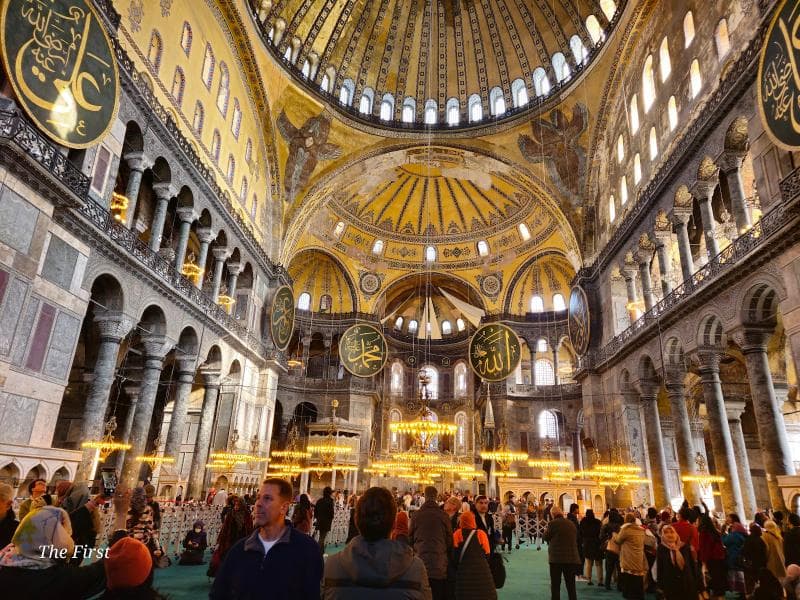
Discover the mystical Weeping Column in Hagia Sophia, Istanbul, Turkey. Learn its legends, history, and the ancient ritual of wishing and healing.
Overview
Deep within the awe-inspiring Hagia Sophia in Istanbul, Turkey, lies a fascinating and mysterious site known as the Weeping Column. This ancient marble column, sometimes referred to as the Wishing Column, Sweating Column, or the Column of St. Gregory, draws countless visitors seeking to partake in a centuries-old ritual. It's not just a structural element of this grand edifice; it's a living legend, a silent witness to history, and a focal point for hopes and beliefs that have persisted through empires and ages. Its enduring appeal lies in the belief that it holds unique powers, particularly related to healing and the granting of wishes.
History & Cultural Background
The Hagia Sophia itself is a monument of unparalleled historical significance. Constructed between 532 and 537 AD during the reign of Emperor Justinian I, it stood as the largest cathedral in the world for nearly a thousand years, a masterpiece of Byzantine architecture. Its colossal columns, made of diverse materials like porphyry from Egypt and green Thessalian marble, were not merely support structures but also works of art and historical artifacts. The Weeping Column's exact origins within the Hagia Sophia are shrouded in time, but folklore suggests it might have been repurposed from an even older sacred site, perhaps the ancient Temple of Artemis in Ephesus. Over its long history, Hagia Sophia transitioned from a Christian cathedral to an imperial mosque, and then a museum, before returning to its current status as a mosque in 2020. Throughout these transformations, the legend of the Weeping Column has persevered, becoming an integral part of the building's rich cultural tapestry.
What Makes It Special
What sets the Weeping Column apart is its unique ritual and the mystery surrounding its perpetually moist surface. Positioned in the northwest corner of the Hagia Sophia, this white marble column features a small hole at its base, often covered by a bronze plate. Visitors are drawn to this spot to perform a specific act: inserting their thumb into the hole and attempting to rotate it a full 360 degrees while making a wish. The lore dictates that if one's thumb emerges damp after this rotation, their wish will be granted, or an illness healed. The column's inexplicable dampness is a key component of its mystique. While scientific explanations might point to moisture condensation within the ancient structure, local beliefs attribute its 'tears' to more profound, almost miraculous, sources.
Stories, Fun Facts & Local Details
The Weeping Column is a treasure trove of captivating stories. One of the most famous legends involves Emperor Justinian himself. It is said that he suffered from a severe headache and, in desperation, leaned against this very column. To his astonishment, his pain vanished, leading to the column's initial reputation for healing powers. Another popular tale connects the column's dampness and healing properties to Saint Gregory the Miracle Worker, who is believed to have appeared near it around the year 1200 AD. Yet another poignant legend suggests the moisture represents the tears of the Virgin Mary, believed to have melted a hole in the column upon hearing the news of Jesus' crucifixion. Some even interpret its constant weeping as a sign of a sultan's pity. These diverse narratives highlight the column's deep integration into both Christian and Islamic lore, making it a sacred site for different faiths and beliefs across centuries. It serves as a reminder of the many layers of history and belief embedded within the Hagia Sophia's walls.
Visitor Perspective
For many travelers, encountering the Weeping Column is a deeply personal and often emotional experience. Amidst the grandeur of Hagia Sophia's mosaics and soaring domes, this unassuming column stands as a more intimate point of connection. Visitors often queue patiently, each with their own hopes and ailments, eager to try their luck with the ancient ritual. It's a moment of quiet contemplation and engagement with a tangible piece of living history. The constant flow of people performing the wishing ritual transforms the column from a mere architectural support into an interactive cultural landmark, echoing the prayers and dreams of generations. It offers a unique opportunity to participate in a tradition that spans over a millennium, linking modern-day visitors to the countless pilgrims and worshippers who have sought solace and miracles within Hagia Sophia's sacred confines. The column serves as a powerful symbol of hope and the enduring human desire for healing and wish fulfillment, making it an unforgettable stop on any visit to this magnificent monument.
Coordinates: 28.9792432, 41.0079493
View on Google Maps💬 How Travelers Describe This Place
Based on community votes
Unique
958Beautiful
794Must See
571Photogenic
565Interesting
157
Traveler Stories
Discover memorable experiences shared by travelers who have visited this place.
No traveler stories yet.
Be the first traveler to share what made this place memorable.

Tour
By
Spot
Discover amazing places around the world. Your journey starts here.
Explore
© 2026 TourBySpot. All rights reserved.