Watchtowers
Split, Croatia
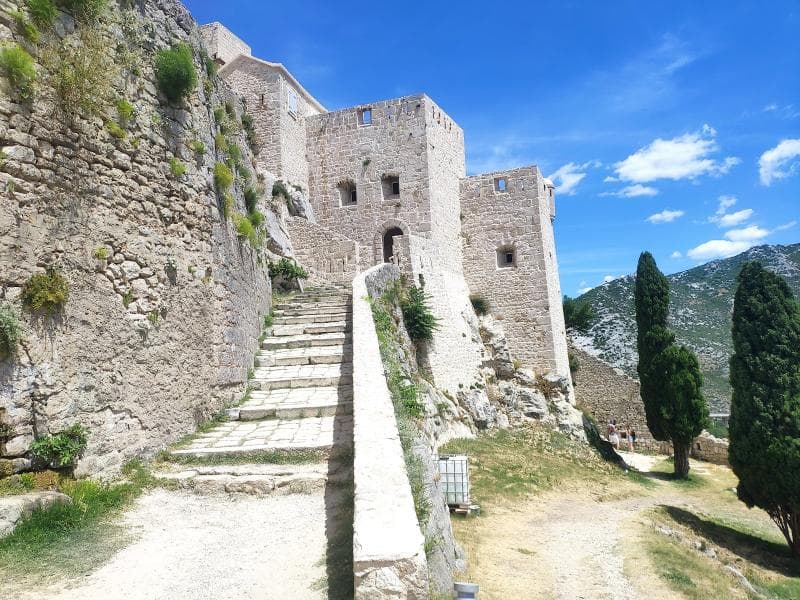
Explore the historic Watchtowers of Klis Fortress in Split, Croatia. Discover millennia of history, strategic views, and breathtaking Dalmatian panoramas.
Overview
High above the historic city of Split, in Croatia, lies the formidable Klis Fortress, and within its ancient stone embrace are the very structures that defined its purpose for millennia: the Watchtowers. These aren't singular, distinct buildings as much as they are an integral system of defensive positions, vantage points, and robust walls that collectively formed the fortress's unblinking eyes over the surrounding landscape. Perched on a dramatic limestone ridge between the Mosor and Kozjak mountains, the Klis Fortress, and by extension its watchtowers, command an unparalleled panoramic sweep, stretching from the sparkling Adriatic Sea and its islands to the ancient Roman city of Salona and the rugged Dalmatian hinterland. This strategic placement made Klis Fortress, with its ever-vigilant watchtowers, a crucial defensive stronghold and a crossroads between the Mediterranean and the Balkans for over two millennia. Understanding the watchtowers of Klis is to understand the very heartbeat of Dalmatian history and its persistent struggles for freedom.
History & Cultural Background
The story of Klis Fortress is one etched in stone, spanning more than 2,000 years, and its watchtowers have silently borne witness to every chapter. The earliest fortifications were raised by the ancient Illyrian tribe of Dalmatae as early as the 2nd century BC, who instinctively recognized the strategic value of this elevated pass. Later, the Romans established a military outpost, known as 'Clausura', laying the groundwork for more elaborate defenses.
It was during the medieval Croatian period, particularly from the 9th to 10th centuries, that Klis ascended to its zenith, serving as the seat of Croatian dukes and kings. Duke Mislav and later Duke Trpimir I significantly expanded the fortress, solidifying its role as a royal castle and a vital defensive hub. Every new wall, every reinforced turret, became part of the 'watchtower' network, guarding the emerging Croatian state. The fortress's most legendary period unfolded during the 16th century when it became the last Christian bastion against the encroaching Ottoman Empire. Under the leadership of Captain Petar Kružić and his Uskoks, a band of fierce Croatian guerrilla fighters, the watchtowers of Klis stood firm against relentless sieges for twenty-five years. This epic defense, steeped in stories of bravery and sacrifice, underscores the critical role these elevated positions played in spotting, signaling, and defending against overwhelming odds, making them symbols of Croatian resilience.
What Makes It Special
What truly sets the watchtowers of Klis Fortress apart is their organic integration with the natural topography and their layered architectural evolution. Unlike many fortresses with symmetrical, distinct towers, Klis evolved with the rocky spur it occupies, resulting in an irregular yet incredibly effective defensive system. The fortress essentially consists of three main defensive lines, composed of thick stone walls, bastions, and elevated positions that functioned as watchtowers, each offering a progressive layer of defense and observation.
From the 'Položaj maggiore' (Grand Position) at its highest eastern end to other strategic points, these watchtowers provided unparalleled visibility, allowing defenders to monitor movement across vast distances – from the sea lanes to the mountain passes. The construction methods tell a story of successive empires: traces of medieval Croatian stonework blend with robust Venetian additions and practical Ottoman modifications. The Oprah Tower, for instance, in the higher eastern section, is specifically mentioned as an important medieval defensive stronghold, serving as a key observation point. This continuous adaptation and reinforcement over centuries, always prioritizing maximum visibility and strategic advantage, makes the collective watchtowers of Klis a living testament to defensive ingenuity.
Stories, Fun Facts & Local Details
Imagine a lone Uskok soldier, cloaked against the fierce bura wind, peering from one of Klis's watchtowers. His gaze scans the horizon, vigilant for the tell-tale dust clouds of an approaching Ottoman army or the glint of Venetian sails on the Adriatic. Such was the daily reality of those who manned these posts, their lives often depending on the keenness of their sight and the swiftness of their warning. The fortress's commanding position over the critical pass between the mountains meant that whoever controlled Klis controlled the flow of trade, military movements, and even refugee populations between the coast and the interior.
A fun fact for modern travelers: the dramatic setting of Klis Fortress, including its imposing walls and watchtower-like structures, achieved global recognition as one of the primary filming locations for the fictional city of Meereen in the popular television series 'Game of Thrones'. Standing on these ancient ramparts, one can almost hear the clamor of dragons and the cries of armies, blending historical reality with a touch of fantasy. Locals might also share tales of the strong 'bura' wind, a natural element that served as both an ally, hindering attackers, and a formidable challenge for the watchmen enduring its icy gusts.
Visitor Perspective
Today, ascending to the watchtowers of Klis Fortress offers a truly immersive journey through time. As you navigate the winding paths and ascend the various levels of the fortress, each step reveals another layer of history and an ever more breathtaking vista. From these elevated positions, the views are simply spectacular, encompassing the city of Split, the ancient ruins of Salona, the azure expanse of the Adriatic Sea dotted with islands, and the dramatic karst landscape stretching inland.
There's a tangible sense of what it must have been like for the guards and soldiers who once stood here, keenly aware of every movement below. The freedom to explore almost the entire perimeter allows visitors to grasp the sheer scale and strategic brilliance of the fortifications. Standing on what once were critical observation points, you can feel the echoes of past vigilance and struggle. It's a place that not only educates with its rich history but also stirs the imagination, offering a powerful connection to the resilience of human spirit and the timeless beauty of the Croatian landscape. The watchtowers of Klis are more than just stone structures; they are gateways to understanding a profound historical narrative and experiencing an unforgettable panorama.
Coordinates: 16.523, 43.5605
View on Google Maps💬 How Travelers Describe This Place
Based on community votes
Interesting
521Beautiful
477Must See
422Unique
157Photogenic
28
Traveler Stories
Discover memorable experiences shared by travelers who have visited this place.
No traveler stories yet.
Be the first traveler to share what made this place memorable.

Tour
By
Spot
Discover amazing places around the world. Your journey starts here.
Explore
© 2026 TourBySpot. All rights reserved.