Watchtowers
Marseille, France
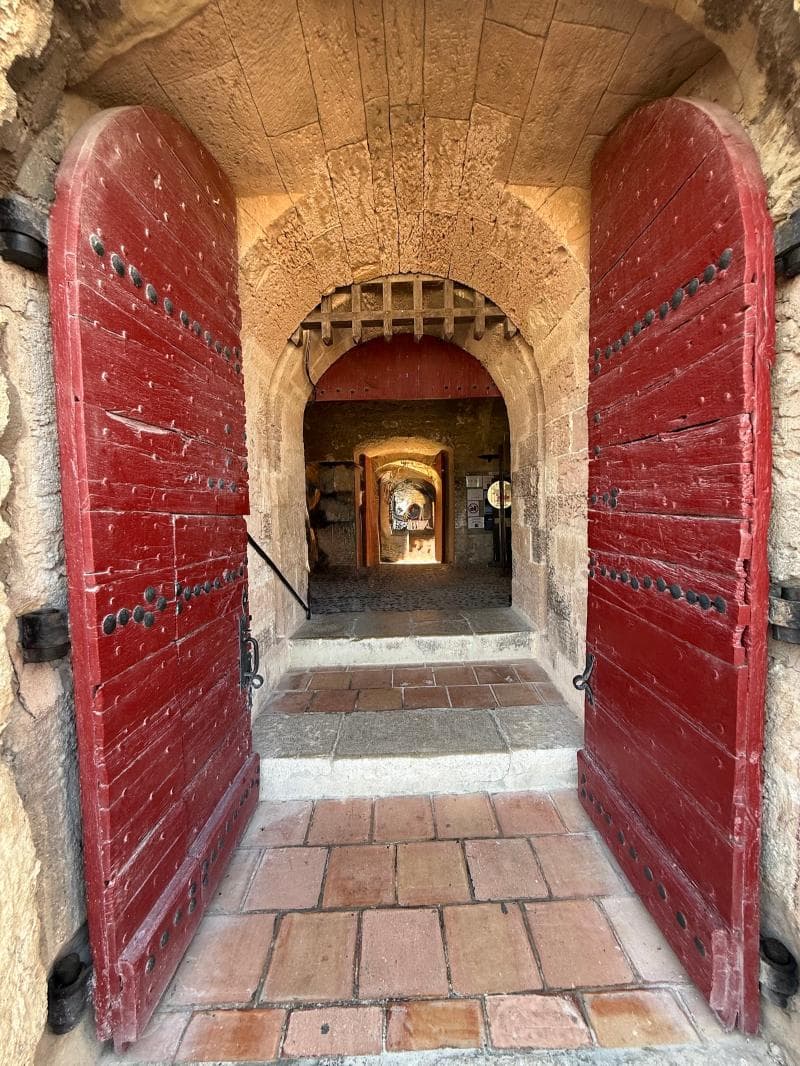
Explore the historic watchtowers of Château d'If in Marseille, France. Discover their military past, prison stories, and breathtaking Mediterranean views.
Overview
Perched majestically on the tiny Île d'If, just 1.5 kilometers off the vibrant coast of Marseille, France, stands the formidable Château d'If. This historic fortress, initially conceived as a deterrent against sea-borne invasions, is instantly recognizable by its robust, square central block flanked by three distinctive towers. These towers, integral to its original military purpose, have silently guarded the approaches to Marseille's Old Port for centuries. While the Château d'If is globally renowned for its fictional role as Edmond Dantès' prison in Alexandre Dumas's 'The Count of Monte Cristo', its real history is equally compelling. It served as a feared state prison for nearly 400 years, housing political prisoners, religious dissenters, and common criminals within its imposing walls, often in conditions of extreme hardship. Today, this iconic landmark invites visitors to explore its depths, unravel its rich past, and experience the breathtaking panoramic views of Marseille and the Mediterranean Sea from its ramparts and watchtowers.
History & Cultural Background
The story of the Château d'If's watchtowers is inseparable from the fortress's very inception. Commissioned by King Francis I of France between 1524 and 1531, the castle was a direct response to Marseille's vulnerability following an attack by Charles V. The king, after a visit in 1516, recognized the strategic importance of the Île d'If for defending the coastline and safeguarding the royal galleys anchored in the port. The château's design was steeped in medieval military architecture, featuring a keep and three substantial cylindrical towers: Saint-Christophe, Saint-Jaume, and Maugouvert. These towers were not merely decorative; they were pierced with large gun embrasures, showcasing their primary role in artillery defense. The keep, also known as the Saint-Christophe Tower, was specifically designed with a large door to facilitate the movement of heavy artillery to its terraces. The Saint-Jaume Tower even boasted a curved parapet, a clever architectural feature intended to deflect incoming cannonballs, highlighting the advanced defensive thinking of its builders.
For decades, the Château d'If, with its vigilant towers, successfully fulfilled its role as a deterrent. Despite facing threats, it was never directly attacked, proving its formidable presence was often enough to ward off potential invaders. However, by 1580, its purpose shifted dramatically. The isolated location and the treacherous currents surrounding the island, which made escape virtually impossible, transformed the fortress into one of France's most notorious prisons. The watchtowers, once symbols of external defense, became part of a larger structure designed for containment and surveillance, contributing to the castle's grim reputation as 'Marseille's Alcatraz'.
What Makes It Special
What makes the watchtowers of Château d'If particularly special is their dual historical narrative: born of strategic military necessity and later integrated into a notorious prison. They are not merely architectural features but silent witnesses to centuries of geopolitical shifts and human drama. Their robust construction, with thick walls and gun ports, speaks volumes of 16th-century defensive engineering, particularly how they were adapted to the unique challenges of a maritime fortress. The Saint-Christophe Tower, in particular, with its accessibility for artillery, highlights a practical ingenuity in military design. Furthermore, these towers offer more than just historical insights; they provide unparalleled, sweeping vistas of the Mediterranean coastline and Marseille. From these elevated vantage points, visitors can grasp the strategic brilliance of Francis I's choice of location, understanding how the towers once commanded a full view of any approaching vessel, protecting one of France's most vital ports.
Stories, Fun Facts & Local Details
While the Château d'If's towers never fired a shot in anger, they were constantly 'watching'. Imagine the tension and vigilance of the guards stationed within them, scanning the horizon for enemy fleets that never arrived, or perhaps, for any sign of attempted escape from the prisoners below. A fascinating tidbit is the original strategic objective of the fortress: to watch over Marseille itself, which had only recently become part of the Kingdom of France and often showed resistance to central authority. So, in a sense, the towers were also keeping an eye on the city behind them.
Alexandre Dumas's 'The Count of Monte Cristo' famously placed his protagonist, Edmond Dantès, within these very walls. While the character is fictional, the novel drew heavily on the castle's reputation as an inescapable prison. Though Dantès' dramatic escape through a tunnel connecting cells is a work of fiction, the popular narrative adds a layer of romantic intrigue to the stern reality of the fortress. The cells themselves, often located in the lower levels or 'cachots', were indeed windowless and notoriously unsanitary, leading to short life expectancies for prisoners.
A lesser-known, yet amusing, historical footnote tied to the island before the fortress was built involves a rhinoceros. In 1516, King Emmanuel of Portugal sent a rhinoceros to Pope Leo X. The ship carrying this exotic creature stopped in Marseille, and the rhinoceros was temporarily housed on the Île d'If. This event drew crowds and even King Francis I, who visited to see the animal, thus realizing the island's defensive potential.
Visitor Perspective
Visiting the watchtowers of Château d'If offers a truly immersive experience. As you ascend the winding staircases within these ancient structures and step out onto the terraces, you are met with a sensory journey through time. The powerful Mistral wind, often characteristic of the region, can sweep across the battlements, making you feel connected to the centuries of guards and prisoners who endured its force. From these vantage points, the azure expanse of the Mediterranean stretches endlessly, dotted with the Frioul archipelago and the distant, bustling skyline of Marseille.
The towers provide the perfect spots for contemplation, allowing visitors to ponder the castle's dual identity as both a formidable guardian and a place of despair. You can almost hear the echoes of history in the wind – the clanking chains of prisoners, the shouts of guards, or the silent watch of a lone sentry. It's a place where literature and history intertwine, making the landscape come alive with tales of courage, injustice, and longing for freedom. The journey to the island itself, a short ferry ride from Marseille's Old Port, adds to the sense of stepping into another world, creating an unforgettable element of anticipation before you even set foot within the castle walls.
Coordinates: 5.3251, 43.2799
View on Google Maps💬 How Travelers Describe This Place
Based on community votes
Photogenic
995Interesting
964Beautiful
926Must See
646Unique
482
Traveler Stories
Discover memorable experiences shared by travelers who have visited this place.
No traveler stories yet.
Be the first traveler to share what made this place memorable.

Tour
By
Spot
Discover amazing places around the world. Your journey starts here.
Explore
© 2026 TourBySpot. All rights reserved.