Warrior On A Horse Statue
Skopje, North Macedonia
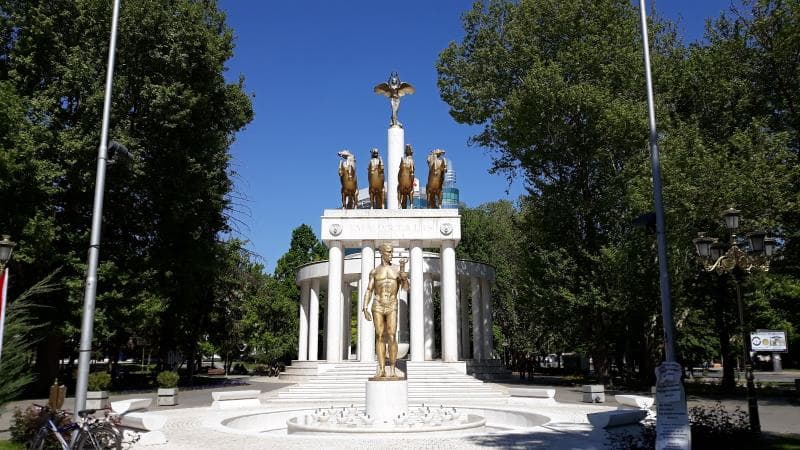
Discover the 'Warrior On A Horse Statue' in Skopje, North Macedonia, a majestic monument in Macedonia Square representing Alexander the Great. Explore its history and cultural significance.
Overview
Rising majestically from the heart of Macedonia Square in Skopje, North Macedonia, the 'Warrior On A Horse Statue' is an undeniable focal point of the city's central plaza. While officially bearing the generic name 'Warrior on a Horse,' this towering monument is widely recognized and unofficially referred to by locals and visitors alike as a representation of Alexander the Great. Unveiled on September 8, 2011, the statue commemorates twenty years since North Macedonia declared independence from Yugoslavia. It stands as a powerful symbol of national identity and historical narrative within the capital.
The monument itself is an impressive bronze equestrian statue, sculpted by Valentina Stevanovska. The statue of the warrior on horseback measures 12 meters in height and rests atop a 10-meter-high pedestal. The entire structure is part of a grand fountain, featuring eight life-sized bronze soldiers and eight bronze lions at its base, creating a theatrical and dynamic display that often includes sound and colorful lights. This grand scale and intricate detail make it a captivating sight, day or night.
History & Cultural Background
The 'Warrior on a Horse Statue' is a central piece of the ambitious and often controversial 'Skopje 2014' urban renewal project. This large-scale initiative aimed to reshape Skopje's city center with classical architectural elements and numerous public sculptures, asserting a particular cultural identity for the newly independent nation. The decision to erect such a monumental depiction, strongly implying Alexander the Great, sparked considerable debate, particularly with neighboring Greece.
The historical figure of Alexander the Great is a contested legacy between North Macedonia and Greece, with both nations claiming a connection to his heritage. To navigate these geopolitical sensitivities, the monument was officially named 'Warrior on a Horse' rather than explicitly 'Alexander the Great.' The monument's inauguration in 2011 was a significant event, coinciding with the 20th anniversary of the country's independence referendum. Following the Prespa Agreement in 2018, which aimed to resolve the longstanding naming dispute between the two countries, a plaque was reportedly placed at the monument acknowledging Alexander's belonging to Hellenic civilization.
What Makes It Special
Beyond its sheer size and central location, what makes the 'Warrior on a Horse' truly special is its role as a living monument—a focal point for both local life and national identity. It is an impressive work of art crafted from bronze, with meticulous attention to the muscular form of the horse and the poised figure of the warrior. The columned pedestal itself is adorned with intricate carvings, adding to its majestic presence.
The surrounding fountain, with its dynamic bronze figures of soldiers and lions, provides a multisensory experience, often featuring water jets choreographed with lights and sound, particularly in the evenings. This interaction of sculpture, water, light, and sound transforms the monument from a static object into a vibrant, engaging spectacle that captures the imagination of those who gather in Macedonia Square.
Stories, Fun Facts & Local Details
The 'Warrior on a Horse' carries with it a fascinating layer of local interpretation and international intrigue. Despite its official, generic title, the connection to Alexander the Great is an open secret and a point of pride for many in North Macedonia. This unofficial affiliation speaks volumes about the nation's efforts to connect with ancient history and shape its modern identity. The monument was sculpted by Valentina Stevanovska, a Macedonian artist. Its construction cost was significant, estimated at several million euros, a figure that also contributed to its controversial status within the country.
The square itself is a hub of activity, frequently hosting festivals, events, and political gatherings, making the statue a constant backdrop to the rhythm of Skopje's urban life. Visitors might notice the monument's reflection in the Vardar River during calm evenings, especially when viewed from the historic Stone Bridge, offering excellent photographic opportunities. The nearby Stone Bridge, connecting Macedonia Square to the Old Bazaar, further enhances the historical depth of the area, linking the classical-inspired grandeur with centuries of Ottoman heritage.
Visitor Perspective
For any curious traveler in Skopje, the 'Warrior on a Horse Statue' is an unmissable landmark. Its central placement in Macedonia Square makes it incredibly accessible, serving as an ideal starting point for exploring the city. Visitors can easily reach it via public transportation or by walking from many parts of the city center.
Standing before the statue, one can truly appreciate its monumental scale and the artistic ambition behind it. The surrounding square buzzes with energy, featuring a variety of cafes and restaurants where one can pause to soak in the local atmosphere. Whether you're interested in history, art, or simply experiencing the vibrant pulse of Skopje, the 'Warrior on a Horse' offers a unique window into North Macedonia's complex past and dynamic present. It's not merely a statue; it's a testament to a nation's journey and a symbol that continues to spark conversation and contemplation among all who visit.
Coordinates: 21.43147, 41.99591
View on Google Maps💬 How Travelers Describe This Place
Based on community votes
Interesting
726Photogenic
720Beautiful
597Must See
300Unique
300
Traveler Stories
Discover memorable experiences shared by travelers who have visited this place.
No traveler stories yet.
Be the first traveler to share what made this place memorable.

Tour
By
Spot
Discover amazing places around the world. Your journey starts here.
Explore
© 2026 TourBySpot. All rights reserved.