Walking Trails
Bali, Indonesia
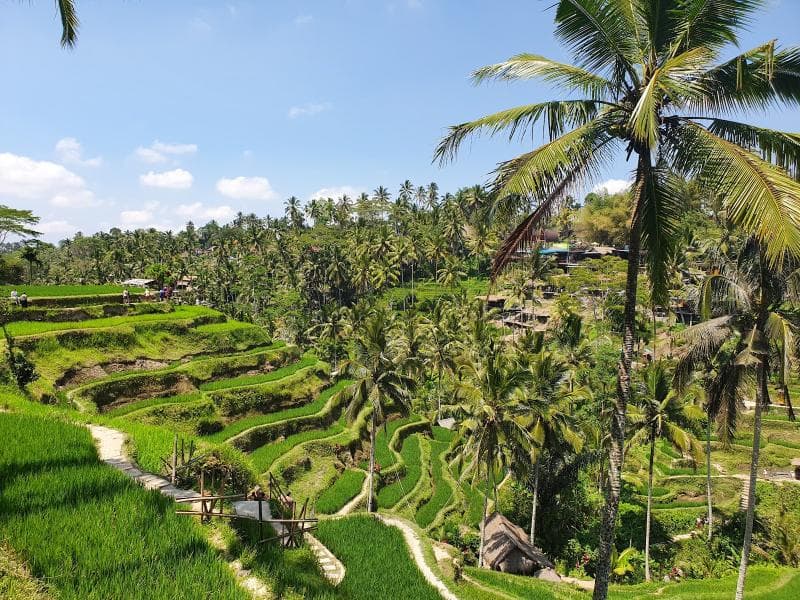
Explore the Walking Trails of Tegallalang Rice Terrace in Bali, Indonesia. Discover ancient Subak irrigation, stunning green paddies, and Balinese culture.
Overview
The Walking Trails within the Tegallalang Rice Terrace in Bali, Indonesia, offer an immersive journey through a landscape meticulously sculpted by centuries of human ingenuity and deep spiritual connection. Far from a single defined path, these trails are a complex network of narrow dirt tracks and stone steps that weave intimately through the cascading emerald paddies. As you navigate this verdant terrain, you will encounter bamboo bridges spanning irrigation canals and occasionally climb steep, uneven steps, revealing new perspectives with every turn.
Located just north of Ubud, the Tegallalang Rice Terrace is renowned for its dramatic beauty and accessibility. While the views from the rim are spectacular, venturing into the heart of the terraces via these trails provides a unique, up-close experience of Balinese agricultural life. To truly appreciate the tranquility and softer light, an early morning visit is highly recommended, allowing you to avoid the crowds and the midday heat.
History & Cultural Background
The history of the Tegallalang Rice Terrace is deeply intertwined with Bali's ancient Subak irrigation system, a UNESCO World Heritage cultural landscape. Its origins trace back to the 8th century, with the system introduced by the revered sage Rsi Markandeya. This sophisticated, community-based irrigation network is not merely a method for watering fields; it is a physical manifestation of the Balinese philosophy of Tri Hita Karana, emphasizing harmonious relationships between humanity, nature, and the divine.
Farmers in Tegallalang view water not just as a resource but as a sacred gift from Dewi Danu, the goddess of water and lakes. This spiritual reverence translates into daily rituals and offerings placed in small shrines within the rice fields. The Subak system operates democratically, with councils of farmers managing water distribution from mountain lakes, ensuring every farmer receives an equitable share. This cooperative approach has fostered resilience and prevented conflicts for over a millennium, surviving natural disasters and societal changes while maintaining its core mechanics.
What Makes It Special
The special allure of the Tegallalang Walking Trails lies in the intimate encounter with a living, working agricultural masterpiece. The sight of the rice paddies, meticulously carved into stepped terraces, cascading down the valley like giant green staircases, is truly breathtaking. This intricate design, guided by the Subak system, showcases centuries of Balinese agricultural wisdom and a profound respect for the land.
The visual experience along the trails transforms with the seasons. The fields are at their most vibrant emerald green during planting and growing seasons, typically in March, April, September, and October. Just before harvest, they turn a golden brown, offering a different, equally picturesque scene. The constant trickle of water, flowing entirely by gravity through bamboo pipes and hand-dug channels, creates a soothing soundtrack to your exploration, highlighting the natural harmony inherent in the Subak system.
Stories, Fun Facts & Local Details
Walking these trails offers glimpses into a way of life deeply connected to the land and spirit. Farmers often wear traditional conical hats ('caping') as they tend to their crops, performing age-old techniques passed down through generations. You might encounter small offerings, 'canang sari,' made of flowers, rice, and incense, placed along the irrigation channels and at shrines, reinforcing the spiritual dialogue with Dewi Sri, the goddess of rice, and Dewi Danu.
A unique aspect of the Subak system is its complete reliance on gravity; not a single mechanical pump is used for water distribution. As you wander, you may find local vendors operating small cafes or 'warungs' nestled within the terraces, offering refreshing drinks like fresh coconut. Local landowners often maintain sections of the paths, and a small donation (typically 10,000-20,000 IDR) may be requested to help with upkeep, a small contribution to the community that preserves this stunning landscape.
Visitor Perspective
For visitors, the Walking Trails provide an adventure that combines natural beauty with cultural insight. While the terrain can be challenging in places, with narrow, steep, and potentially muddy sections, especially after rainfall, the rewards are immense. Comfortable, sturdy footwear is highly recommended over flip-flops to navigate the uneven paths and slippery irrigation channels.
A typical walk can range from 30 minutes to several hours, depending on your pace and how deeply you choose to explore the winding paths. Many visitors find that arriving before 9 AM offers the most peaceful and authentic experience, with cooler temperatures and fewer people. Though the site has become a popular tourist destination, venturing beyond the main viewpoints into the heart of the terraces reveals a quieter, more personal connection to Bali's agricultural heritage and the diligent farmers who continue to shape this extraordinary landscape.
Coordinates: 115.283151, -8.455986
View on Google Maps💬 How Travelers Describe This Place
Based on community votes
Interesting
996Must See
658Unique
585Photogenic
143Beautiful
69
Traveler Stories
Discover memorable experiences shared by travelers who have visited this place.
No traveler stories yet.
Be the first traveler to share what made this place memorable.

Tour
By
Spot
Discover amazing places around the world. Your journey starts here.
Explore
© 2026 TourBySpot. All rights reserved.