Walking paths
Milan, Italy
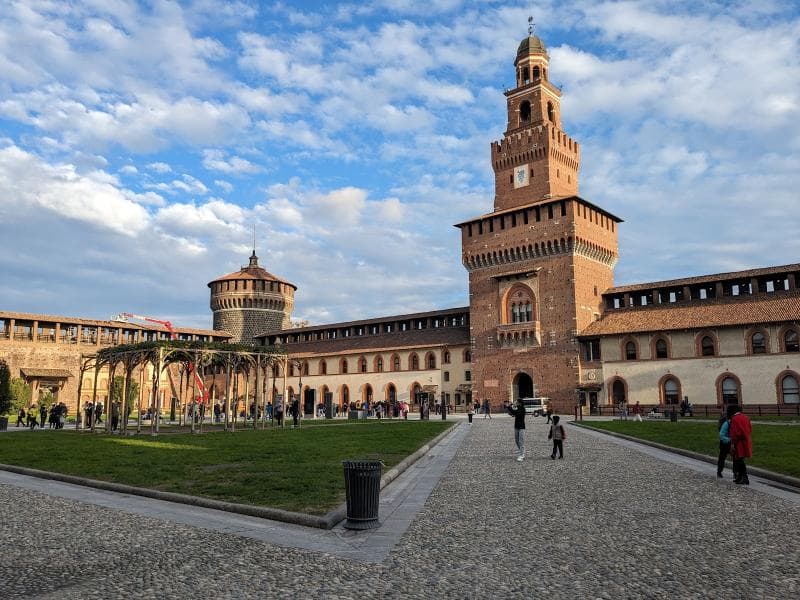
Explore the enchanting walking paths of Parco Sempione in Milan, Italy, connecting Castello Sforzesco and Arco della Pace. Discover history, art, and nature in this urban oasis.
Overview
Nestled in the vibrant heart of Milan, Italy, Parco Sempione stands as a verdant oasis, a cherished green lung for both locals and travelers alike. This expansive English-style garden, designed with picturesque winding paths, offers a tranquil escape from the bustling city. The walking paths within Parco Sempione are not merely routes but arteries connecting nature, history, and culture, inviting discovery at every turn. They gracefully lead visitors between two of Milan's most iconic landmarks: the majestic Castello Sforzesco on one side and the grand Arco della Pace on the other, creating a visually stunning and historically rich pedestrian journey. The park itself covers approximately 38 to 47 hectares, providing ample space for leisurely strolls, invigorating runs, and quiet contemplation amidst its diverse flora and serene landscapes.
History & Cultural Background
The history of Parco Sempione's walking paths is deeply intertwined with Milan's evolution. The area where the park now flourishes once served as the 'Barcho,' a ducal park for the Visconti family, and later, the vast hunting grounds of the Sforza family in the 14th and 15th centuries. For centuries, it was a sprawling wood, home to oak and chestnut trees and even exotic animals. After the fall of the Sforzas and during Spanish rule, parts of the park were used for agriculture, and the area eventually became a military parade ground adjacent to the Castello Sforzesco until the late 19th century.
The park as we know it today was conceived between 1888 and 1894 by architect Emilio Alemagna, who envisioned a large English-style garden. His design prioritized naturalistic elements, with streams, small hills, and a network of winding paths that create a romantic and idyllic landscape. This transformation was a deliberate effort to create an organic green space, contrasting with Milan's more rigid urban architecture. The park also played a significant cultural role, famously hosting the Milan International Exhibition in 1906, an event that left behind enduring structures like the Civic Aquarium.
What Makes It Special
What makes the walking paths of Parco Sempione truly special is their ability to transport you through Milan's past while offering a peaceful present. As you navigate the tree-lined avenues and verdant stretches, you encounter a curated blend of natural beauty and historical monuments. The paths seamlessly connect the medieval grandeur of Castello Sforzesco to the neoclassical elegance of the Arco della Pace, providing striking visual axes. Along these routes, you'll discover architectural gems like the Art Nouveau Civic Aquarium, one of Europe's oldest, and the Torre Branca, offering panoramic city views.
A particular highlight for walkers is the 'Ponte delle Sirenette' or Bridge of Little Mermaids, Italy's first iron bridge, which was relocated to the park in 1930. Its four mermaid statues add a touch of whimsical charm to the park's tranquil artificial lake, making it a favorite spot for couples. The thoughtful design of Alemagna's English garden style, characterized by its irregular layout and picturesque elements like the 'Monte Tordo' hill, ensures a constantly engaging and varied walking experience.
Stories, Fun Facts & Local Details
Parco Sempione holds a treasure trove of stories and local details that add depth to its walking paths. One fascinating anecdote dates back to the latter months of World War II, when, amidst famine, a portion of the park was temporarily sown with potatoes and sunflowers to help feed the city's inhabitants. Another intriguing local legend speaks of the 'Black Lady' ghost, said to appear on foggy evenings, luring young men into a mysterious fate after an encounter. These tales, whispered among generations, imbue the seemingly ordinary paths with a sense of enchantment and history.
The Ponte delle Sirenette, with its relocation from the Navigli canal system, symbolizes Milan's changing urban landscape and commitment to preserving its heritage. The park also hosts various sculptures, including works by contemporary artists like Giorgio de Chirico, whose 'Mysterious Baths' add an element of surrealism to the green spaces. Beyond the grand monuments, the paths reveal smaller, charming details, such as the diverse tree species, including impressive elms and horse-chestnuts, and the artificial lake frequented by ducks, turtles, and other small animals.
Visitor Perspective
For visitors, the walking paths of Parco Sempione offer an unparalleled opportunity to experience Milan at a different pace. Whether you're seeking a quiet moment of solitude, a romantic promenade, or an active jogging route, the park accommodates all. The well-maintained paths, some recently upgraded with new surfaces and signage, are popular among fitness enthusiasts who enjoy the refreshing alternative to indoor workouts. Families appreciate the open spaces and designated play areas, making it a safe and enjoyable environment for children to explore. As you wander, you'll witness Milanese life unfolding – locals picnicking, artists sketching, and friends gathering. The park's central location and excellent accessibility by public transport make it an ideal starting point for exploring other city attractions. Planning a few hours or even a full day to explore the paths and the numerous surrounding landmarks will allow for a truly immersive Milanese experience.
Coordinates: 9.17582, 45.47369
View on Google Maps💬 How Travelers Describe This Place
Based on community votes
Must See
944Beautiful
638Interesting
409Unique
363Photogenic
12
Traveler Stories
Discover memorable experiences shared by travelers who have visited this place.
No traveler stories yet.
Be the first traveler to share what made this place memorable.

Tour
By
Spot
Discover amazing places around the world. Your journey starts here.
Explore
© 2026 TourBySpot. All rights reserved.