Viru Gate
Tallinn, Estonia
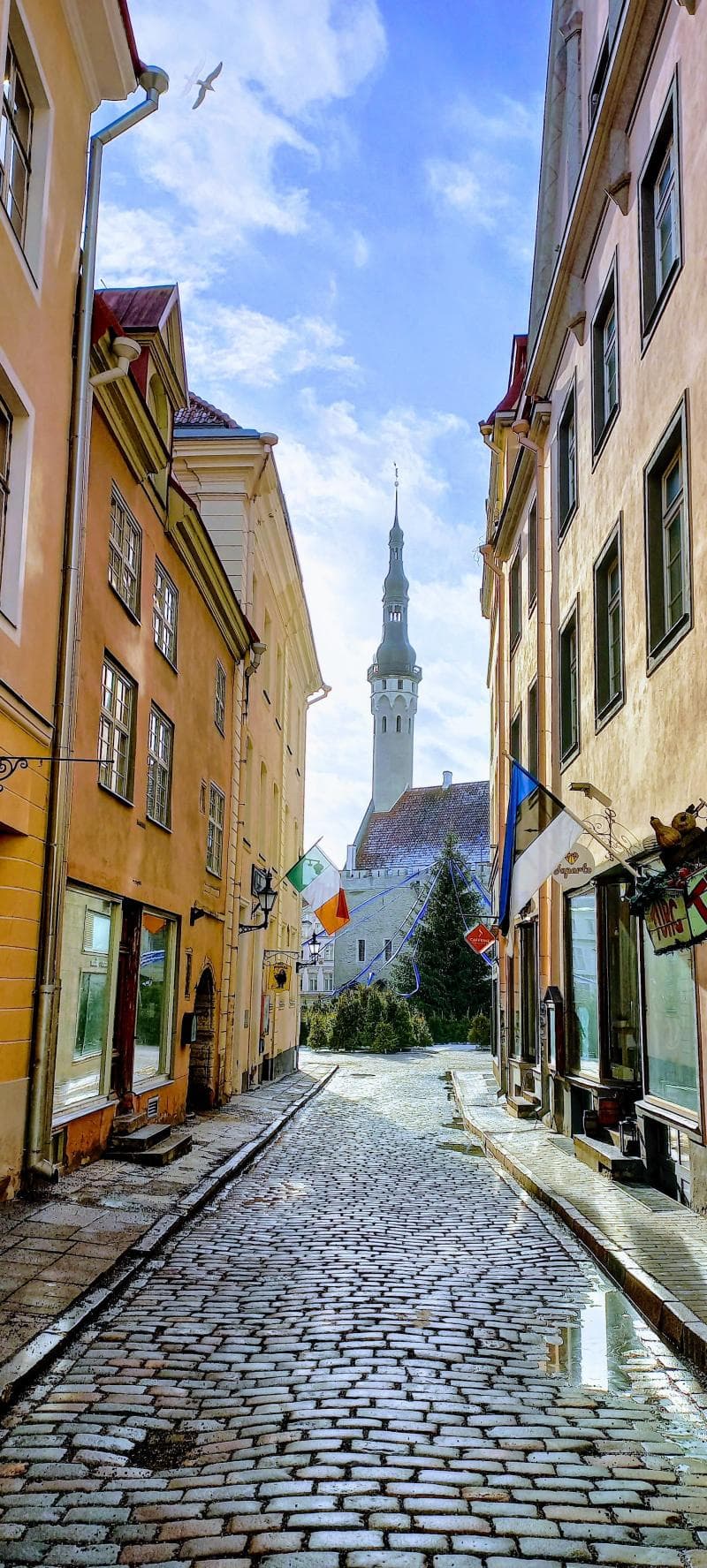
Discover Viru Gate, the enchanting medieval entrance to Tallinn's Old Town, Estonia. Step through history and explore its iconic towers.
Overview
The Viru Gate stands as an iconic and beloved entrance to Tallinn's enchanting Old Town, serving as a picturesque gateway that beckons travelers into a world steeped in history. Comprising two robust, round towers crowned with distinctive conical tiled roofs, it is a readily recognizable symbol of the Estonian capital. These well-preserved fragments of the medieval city wall offer a seamless transition from the contemporary bustle of the modern city into the cobblestone charm of Tallinn's medieval core.
Strategically positioned at the very beginning of Viru Street, a lively pedestrian thoroughfare, the gate is often the first glimpse visitors have of the historic center. It acts as an unofficial portal, inviting exploration and setting the stage for an unforgettable journey through centuries of heritage. The Viru Gate is freely accessible to view from the outside at any time, making it a perfect starting point for discovering the rich tapestry of Tallinn Old Town.
History & Cultural Background
The history of Viru Gate is intrinsically linked to the formidable defensive fortifications that once encircled Tallinn, known in medieval times as Reval. Its origins can be traced back to the 14th century, with the first mentions of the gate appearing in 1359. By 1370, a more elaborate system of 'foregates' had been established, forming a powerful component of the city's defenses.
Initially, the Viru Gate was a complex barbican system. In 1446, older wooden structures were replaced by a more imposing stone gatehouse, which included the two characteristic round towers visible today. The original defensive structure featured a high defensive wall, a wooden drawbridge spanning a deep moat, and a main gate tower that was typically square, flanked by smaller round towers in its barbicans.
However, as Tallinn evolved and urban expansion became a priority, much of the original fortification system surrounding the Viru Gate was gradually dismantled. A significant alteration occurred in the late 19th century, specifically around 1888 to 1890, when parts of the gate were demolished to accommodate the city's first horse-drawn tram line along Viru Street. Fortunately, the two iconic corner towers were preserved and stand as a poignant reminder of Tallinn's medieval past. The gate's old German name, 'Lehmpforte', meaning 'clay gate', harks back to the clay pits that once existed nearby.
What Makes It Special
Beyond its function as a mere entryway, the Viru Gate holds a special place in the heart of Tallinn. It is widely considered one of the city's most recognizable and iconic symbols, a true calling card for the capital. Its architectural beauty, characterized by sturdy medieval limestone construction and the charming conical red-tiled roofs, creates a fairy-tale-like aesthetic that enriches the Old Town's ambiance.
The gate beautifully bridges the past and the present, acting as a clear, almost tangible, boundary where the modern urban landscape gives way to a meticulously preserved medieval world. This transition offers visitors a unique sense of discovery. The Viru Gate is not just an important architectural monument; it is also an officially registered trademark of Tallinn and a valuable cultural heritage site of Estonia. Its photogenic quality, particularly at sunset when the towers are enchantingly illuminated, makes it one of the most photographed landmarks in the city. As part of the UNESCO World Heritage Site of Tallinn Old Town, it embodies the enduring historical and cultural significance of the entire area.
Stories, Fun Facts & Local Details
The Viru Gate holds a unique place in Tallinn's narrative, intertwined with anecdotes that reveal the city's dynamic past. Perhaps one of the most fascinating stories centers on its partial demolition. In 1888, the introduction of Tallinn's first horse-drawn tram line through Viru Street necessitated the removal of significant portions of the gate complex. This dramatic change transformed what was once a formidable defensive structure into a passage for urban transport, symbolizing the city's shift from a fortified medieval outpost to a burgeoning modern center.
Today, the area immediately surrounding the Viru Gate is characterized by a vibrant flower market. This colorful array of stalls, which has been a fixture for decades, adds a lively and fragrant atmosphere to the historic surroundings, creating a charming contrast with the ancient stone towers. Locals and tourists alike gather here, making it a popular meeting point before venturing further into the Old Town.
Many refer to the ivy-draped Viru Gate as the 'Gates of the Past' – a fitting moniker, as passing between its towers truly feels like slipping through time, leaving the contemporary world behind to embrace the Middle Ages. While the towers themselves are generally not open for climbing, their external grandeur and the lively scene at their base offer a rich, immersive experience.
Visitor Perspective
For many visitors, the Viru Gate is more than just a historical landmark; it's the ceremonial beginning of their Old Town adventure. Stepping through the archway formed by its twin towers creates an immediate sense of immersion, transporting one into a storybook setting. The atmosphere is vibrant and bustling, with the sounds and sights of Viru Street — lined with charming boutiques, inviting cafes, and souvenir shops — immediately engaging the senses.
The gate's central location makes it an ideal starting point for a walking exploration of Tallinn's Old Town. From here, numerous key attractions are just a short stroll away, allowing for a rich and efficient itinerary. Whether you're capturing its beauty with a camera, particularly during the golden hours of sunrise or sunset, or simply soaking in the medieval ambiance, the Viru Gate offers a memorable experience. It's a place where history comes alive, and every step deeper into the Old Town feels like a discovery.
Coordinates: 24.749447, 59.436642
View on Google Maps💬 How Travelers Describe This Place
Based on community votes
Unique
996Photogenic
673Beautiful
585Interesting
143Must See
69
Traveler Stories
Discover memorable experiences shared by travelers who have visited this place.
No traveler stories yet.
Be the first traveler to share what made this place memorable.

Tour
By
Spot
Discover amazing places around the world. Your journey starts here.
Explore
© 2026 TourBySpot. All rights reserved.