Viewing Platforms
Odessa, Ukraine
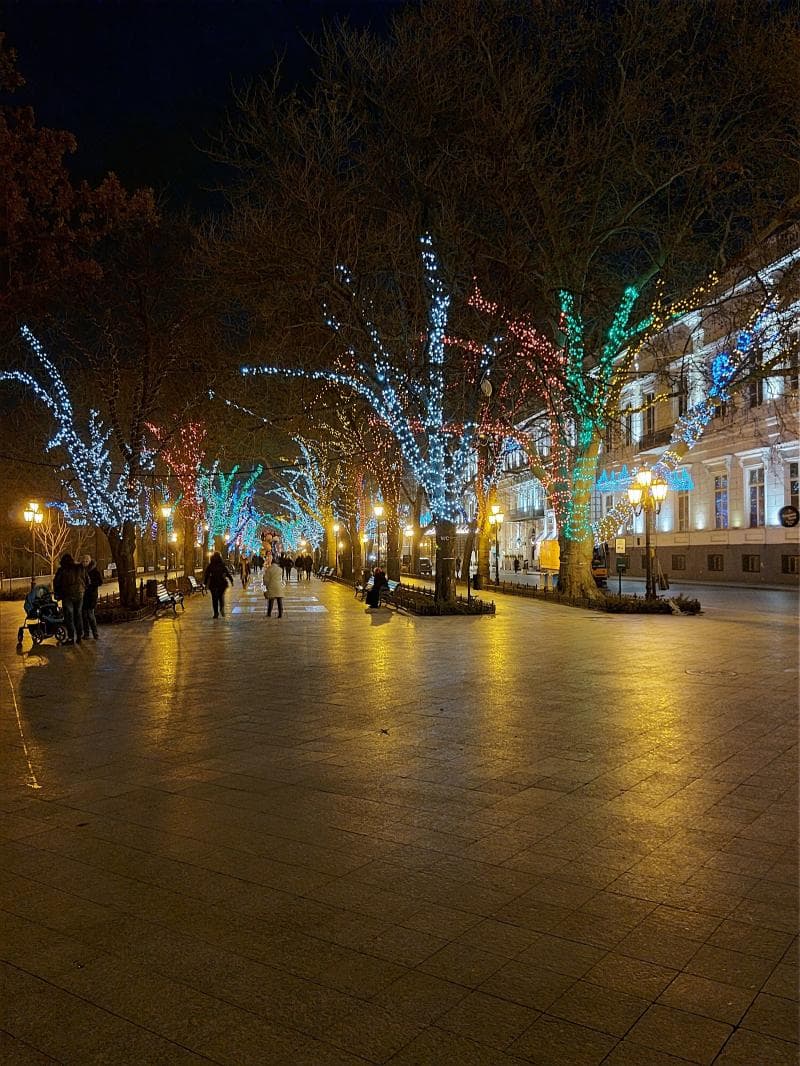
Discover the stunning viewing platforms on Primorsky Boulevard in Odesa, Ukraine, offering panoramic Black Sea and harbor views from atop the Potemkin Stairs.
Overview
Perched majestically within the historic embrace of Primorsky Boulevard in Odesa, Ukraine, the 'Viewing Platforms' are not singular, designated structures, but rather a collection of exceptional vantage points that weave seamlessly into the boulevard's charm. Primarily, these platforms refer to the expansive areas at the top of the iconic Potemkin Stairs and the immediate vicinity of the Duke de Richelieu Monument. From these elevated positions, visitors are treated to breathtaking panoramic views of the Black Sea, the bustling Odesa Marine Station, and the picturesque harbor, truly capturing the maritime soul of this vibrant city.
Primorsky Boulevard itself serves as a central artery of Odesa's historic center, stretching elegantly from the City Hall to the Vorontsov Palace. It is a place where history, architecture, and stunning natural beauty converge, offering a compelling experience for any traveler. The viewing opportunities here are integral to experiencing Odesa's grandeur and its profound connection to the sea.
History & Cultural Background
The origins of Primorsky Boulevard date back to the early 19th century. Established as the 'New Boulevard' under the governorship of Mikhail Semyonovich Vorontsov, it proudly became the Russian Empire's first asphalt-paved road. This early development speaks volumes about Odesa's ambition and progressive spirit from its nascent years as a major port city.
A pivotal figure in Odesa's early development was Armand Emmanuel Sophie Septemanie de Vignerot du Plessis, the 5th Duke de Richelieu. He served as Odesa's governor-general from 1805 to 1814, and his tireless efforts transformed the city into a significant trading port. Locals affectionately referred to him as 'our Duke'. The bronze monument dedicated to him, erected in 1827/1828, stands proudly at the summit of the Potemkin Stairs and was the first monument ever built in Odesa.
Connecting Primorsky Boulevard to the sea is the monumental Potemkin Stairs, an architectural marvel conceived by Italian architect Francesco Boffo and completed in 1841. Originally known as the Boulevard Steps, they became world-renowned after their dramatic portrayal in Sergei Eisenstein's 1925 silent film 'Battleship Potemkin'. This cinematic moment forever etched the stairs into global culture and gave them their enduring, unofficial name.
What Makes It Special
What makes these viewing platforms truly special is the unparalleled perspective they offer of Odesa's unique landscape. The panorama encompasses the vast expanse of the Black Sea, the busy port operations with ships coming and going, and the charming contours of Odesa Bay. Standing here, one can truly grasp the city's identity as a 'window to the sea'.
Adding to the allure is the ingenious architectural design of the Potemkin Stairs themselves. From the top, only the spacious landings are visible, creating a sense of a monumental descent. Conversely, from the bottom, a continuous cascade of 192 steps appears to lead directly into the sky. This optical illusion makes the journey up or down a unique experience, a playful trick of perspective designed to enhance the grandeur of the structure.
The boulevard's elegant architecture, lined with historic buildings, statues, and cafes, provides a beautiful frame for these natural vistas. The presence of the Duke de Richelieu Monument also adds a layer of historical significance, reminding visitors of the visionaries who shaped this magnificent city.
Stories, Fun Facts & Local Details
The Duke de Richelieu, despite being a French nobleman, was so beloved by Odesans that they considered him the city's founder, even though Odesa was eight years old when he took office. His nickname, 'our Duke', speaks to the deep affection and gratitude the city held for him.
The Potemkin Stairs, while famed for their role in Eisenstein's 'Battleship Potemkin', feature a scene of a baby carriage tumbling down that is entirely fictional. This dramatic cinematic moment, however, became so iconic that it's often mistakenly taken as a factual historical event. The stairs originally had 200 steps, but eight were lost due to port expansion. Today, they comprise 192 steps, and for those who prefer not to walk, a funicular runs parallel, offering an alternative and equally scenic ride.
Primorsky Boulevard itself was once shelled by British and French naval forces during the Crimean War, showcasing its strategic importance throughout history.
Visitor Perspective
For any traveler exploring Odesa, a visit to these viewing platforms on Primorsky Boulevard is an absolute must. It's an opportunity not only to capture stunning photographs of the Black Sea and Odesa's coastline but also to immerse oneself in the city's rich history and vibrant maritime atmosphere.
Walking along the boulevard, pausing at the monument, and gazing out over the water offers a moment of reflection and connection to Odesa's past and present. Whether ascending or descending the Potemkin Stairs, or simply enjoying the views from the top, visitors gain a deeper appreciation for the architectural ingenuity and the historical tapestry that define this remarkable Ukrainian city. It's an experience that blends aesthetic pleasure with a tangible sense of place, leaving a lasting impression of Odesa's charm and grandeur.
Coordinates: 30.740889407826298, 46.488027771066136
View on Google Maps💬 How Travelers Describe This Place
Based on community votes
Beautiful
728Unique
481Must See
382Interesting
183Photogenic
28
Traveler Stories
Discover memorable experiences shared by travelers who have visited this place.
No traveler stories yet.
Be the first traveler to share what made this place memorable.

Tour
By
Spot
Discover amazing places around the world. Your journey starts here.
Explore
© 2026 TourBySpot. All rights reserved.