Vicolo dei Lavandai
Milan, Italy
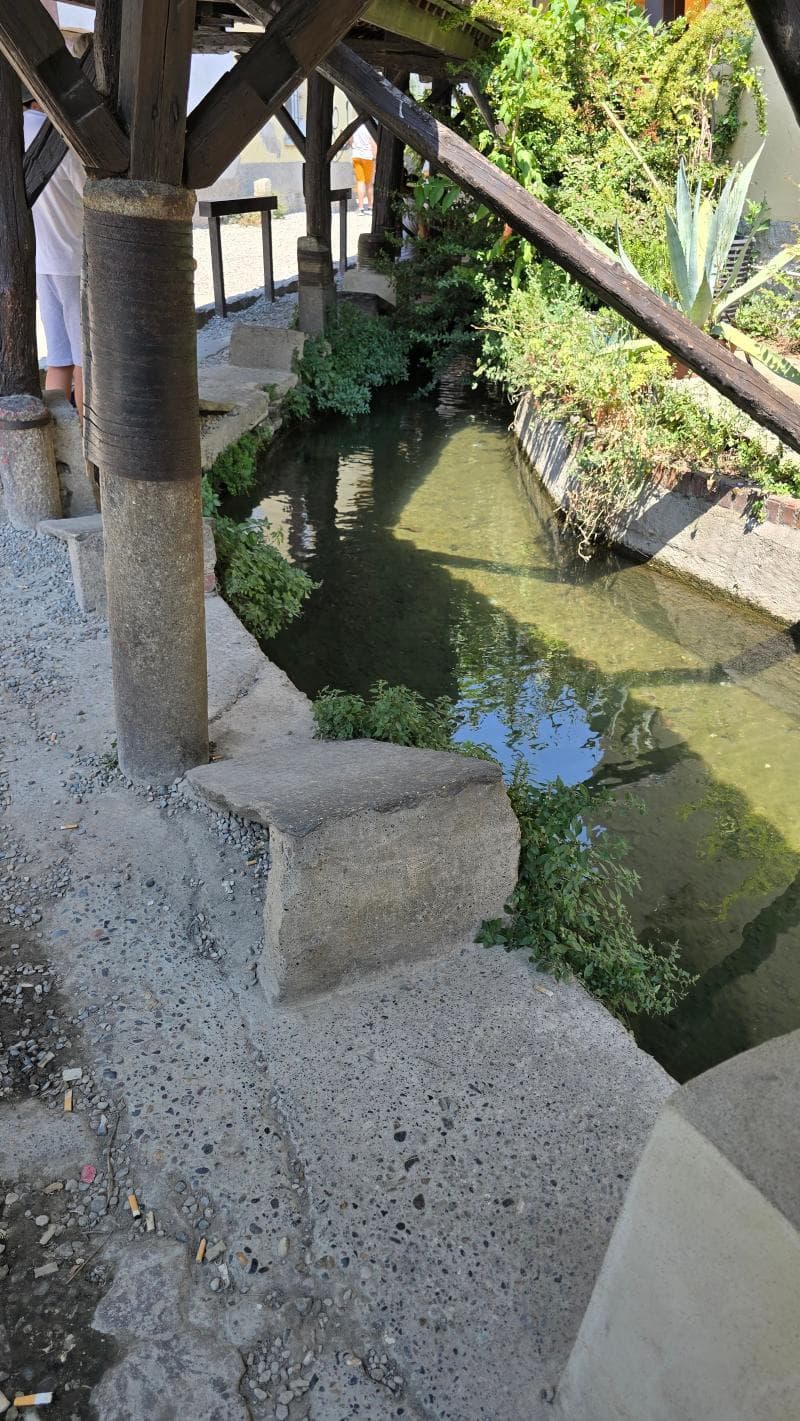
Explore Vicolo dei Lavandai in Milan's Navigli District, a historic washhouse alley preserving centuries of Italian daily life and culture.
Overview
Tucked away within the vibrant Navigli District of Milan, Italy, lies the enchanting Vicolo dei Lavandai, a small alleyway that offers a captivating glimpse into the city's industrious past. This historically significant site, whose name translates to 'Washermen's Alley', serves as a poignant reminder of a time when the Navigli canals were not just picturesque waterways, but crucial arteries of daily life and commerce. Recently restored, this charming corner of old Milan has largely retained its original character, inviting visitors to step back in time and imagine the bustling activity that once defined it.
The Vicolo dei Lavandai is located just off the Alzaia Naviglio Grande, one of the two remaining major canals in Milan. It is a preserved example of a public washhouse that remained in use until the late 1950s. Today, it stands as a unique architectural jewel, a tranquil spot amidst the lively atmosphere of the Navigli, where the stone wash basins and the small stream ('el fossett' in Milanese dialect) fed by the Naviglio Grande are still visible.
History & Cultural Background
The origins of Vicolo dei Lavandai trace back centuries, intrinsically linked to Milan's extensive network of canals, the Navigli, which were vital for transportation, irrigation, and daily utilities. The alley takes its name from a public washhouse that was operational from at least the 18th century until the mid-22th century. Interestingly, while the literal translation refers to 'washermen', the daily washing duties were predominantly carried out by women, especially from the early 1900s onwards.
However, the naming reflects an older tradition: in the 18th and 19th centuries, organized groups of men, known as the Confraternity of Washermen (Confraternita dei Lavandai di Milano), held significant sway over the washing service. This guild, established around 1700, had its own patron saint, St. Anthony of Padua, to whom an altar is dedicated in the nearby Church of Santa Maria delle Grazie al Naviglio. These washermen were responsible for collecting laundry from wealthy families, transporting it in baskets ('gerle') to the vicolo, and overseeing its cleaning. The alley was originally known in Milanese dialect as 'Vicol de Bugandee', derived from 'bugada', meaning laundry.
What Makes It Special
What truly sets Vicolo dei Lavandai apart is its remarkable state of preservation, offering an authentic archaeological insight into old Milan. The heart of the alley is the ancient washhouse itself, featuring stone stalls where clothes were once rubbed and the small stream where they were rinsed. Visitors can still observe the wooden 'brellin' – small kneeling boards used by the washermen and women – a tangible link to the past.
Furthermore, in an adjacent courtyard, a perfectly preserved centrifuge from the early 20th century, once used for drying clothes, remains visible. The very structure of the alley, with its characteristic covered section protecting the workers from the elements, speaks volumes about the pragmatic yet community-oriented life that revolved around this essential service. The current restaurant El Brellin occupies the premises of what was once an old drugstore, selling soap, bleach, and brushes to those working at the washhouse, maintaining a connection to the area's heritage through its atmosphere.
Stories, Fun Facts & Local Details
The lives of those who worked in Vicolo dei Lavandai were filled with unique routines and tools. The 'brellin', the small wooden boxes or planks, were essential for kneeling comfortably while working by the water. For detergent, they used a semi-dense paste known as 'palton', made from ash, soap, and soda. Sometimes, for delicate fabrics, laundry was even pre-soaked in a mixture involving cow manure and lye.
A fascinating detail is the occasional use of the male term 'lavandai' for an activity largely performed by women, especially in later periods. This highlights the historical guild's influence despite the changing workforce. The alley has also touched the world of literature; the celebrated author Georges Simenon, creator of Inspector Maigret, visited Milan in the late 1950s seeking inspiration and was photographed in Vicolo dei Lavandai for a feature in 'Epoca' magazine. Poet Luigi Cazzetta also dedicated a composition to the vicolo, 'Vicol di Lavandèe', which won the Carlo Porta prize in 1964.
Visitor Perspective
Visiting Vicolo dei Lavandai today is an experience that transcends mere sightseeing; it is an immersion into Milan's soul. As you stroll along this peaceful alley, the sounds of the modern city fade, replaced by the whispers of history carried on the gentle flow of the 'el fossett'. It's easy to envision the washermen and women, bent over the stone slabs, their voices mingling with the rhythmic slap of clothes against stone.
This corner of the Navigli is a testament to the resilience and resourcefulness of Milanese daily life before the advent of modern conveniences. It offers a quiet contemplation of how communities once gathered, worked, and shared their lives along the canals. For curious travelers, it's not just a photographic spot but a place for reflection, understanding, and connecting with the authentic heritage of Milan, making it an indispensable stop on any exploration of the Navigli District.
Coordinates: 9.1746997, 45.4522736
View on Google Maps💬 How Travelers Describe This Place
Based on community votes
Photogenic
923Unique
587Beautiful
334Interesting
309Must See
282
Traveler Stories
Discover memorable experiences shared by travelers who have visited this place.
No traveler stories yet.
Be the first traveler to share what made this place memorable.

Tour
By
Spot
Discover amazing places around the world. Your journey starts here.
Explore
© 2026 TourBySpot. All rights reserved.