Verkhovna Rada Exterior
Kiev, Ukraine
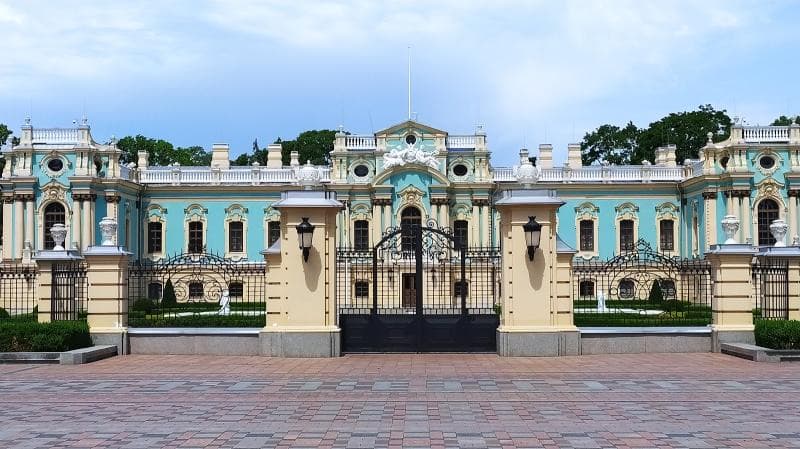
Explore the majestic Verkhovna Rada exterior in Kyiv, Ukraine, the parliamentary building nestled in Mariinskyi Park. Discover its history, architecture, and significance.
Overview
The Verkhovna Rada building, the legislative heart of Ukraine, stands majestically in the historical core of Kyiv. Located within the scenic Mariinskyi Park in the Pecherskyi District, it is easily found at Constitution Square on Hrushevsky Street. This iconic structure serves as the permanent meeting place for the Verkhovna Rada, Ukraine's unicameral parliament, where the nation's laws are debated and enacted. Architecturally, it is a prime example of Socialist Classicism, featuring a restrained neoclassical style with subtle Art Deco influences. Completed between 1936 and 1939, the building's exterior is characterized by its strict rectangular-symmetrical form, towering three stories high, and crowned by a distinctive glass and metal dome.
History & Cultural Background
The story of the Verkhovna Rada building begins in the mid-1930s, following the transfer of the Ukrainian SSR capital from Kharkiv to Kyiv. A competition for the parliament building's design was held in 1936, which was ultimately won by the talented architect Volodymyr Zabolotnyi. His vision culminated in the building's completion between 1936 and 1939, a feat for which he was awarded the State Prize in 1940 and appointed the chief architect of Kyiv. The building, however, faced significant damage during World War II. Following the war, Zabolotnyi himself oversaw its reconstruction from 1945 to 1947, meticulously restoring it to its original splendor. Notably, during this rebuilding phase, the iconic glass dome was raised one meter higher than its initial design. Throughout its existence, the Verkhovna Rada building has been a silent witness and often a central stage for pivotal moments in Ukrainian history. It was within these walls that the Declaration of State Sovereignty of Ukraine was issued in 1990, and crucially, Ukraine's independence was declared on August 24, 1991. This makes it not just an architectural marvel, but a profound symbol of Ukrainian statehood and democracy.
What Makes It Special
What truly sets the Verkhovna Rada exterior apart is its striking architectural presence and symbolic weight. Its Socialist Classicist design, with a grand colonnade featuring six massive Corinthian columns supporting a pediment, immediately commands attention. Originally, the pediment displayed the emblem of the Ukrainian SSR, which has since been replaced by Ukraine's national trident, reflecting the nation's journey to independence. The building's most memorable feature is undoubtedly its hundred-tonne glass and metal dome, which not only floods the main session hall with natural light but also offers a spectacular, multicoloured illumination at night, making it a prominent landmark on Kyiv's skyline. Adding to its distinctiveness are the four sculptural groups that adorn the sides of the portico. These sculptures, added in the mid-1980s by sculptor V. Znoba, represent key segments of Ukrainian society: industry, agriculture, science, and culture, symbolizing the people's contribution to the nation. Despite its monumental and imposing style, the Verkhovna Rada building harmoniously coexists with the more ornate Baroque Mariinskyi Palace nearby, a testament to thoughtful urban planning. Today, it stands proudly as a national architectural monument, a protected emblem of the country's heritage.
Stories, Fun Facts & Local Details
Beyond its grand facade, the Verkhovna Rada building holds fascinating stories and details that enrich its character. Imagine, for over five decades, the red-and-blue flag of the Ukrainian SSR fluttered atop the glass dome, only to be replaced by the vibrant yellow-and-blue national flag of independent Ukraine in 1991, a momentous change visible to all of Kyiv. Volodymyr Zabolotnyi, the architect, was not only honored with the State Prize for his design but also gained the prestigious position of chief architect of Kyiv, leaving an indelible mark on the city's landscape. The building's prominent location within the government quarter, nestled beside Mariinskyi Park and the Mariinskyi Palace, provides a historical backdrop that dates back centuries. From Constitution Square, visitors can enjoy picturesque views, even catching glimpses of the Dnieper River and Kyiv's left-bank neighborhoods. For those unable to visit in person, a modern marvel allows exploration: Google Street View offers a virtual 3D tour, allowing curious minds to 'walk' through the central hall and lobbies, and even see historical artifacts like the 'Flag of Independence' used during the 1991 declaration.
Visitor Perspective
Experiencing the Verkhovna Rada exterior is an essential part of any visit to Kyiv, particularly for those interested in history, architecture, and national identity. The building's exterior is best admired from the expansive Constitution Square, which borders the Verkhovna Rada, or from the serene pathways of Mariinskyi Park. Mariinskyi Park itself is a delightful green oasis, offering not only a peaceful retreat from the city bustle but also several viewing platforms that provide excellent vantage points for appreciating the parliament building and its surroundings. Strolling through the park, you'll encounter a blend of historical significance and tranquil nature. While interior access is often limited due to its governmental function, guided tours are occasionally available, offering a rare glimpse into the plenary hall and the historical context of Ukrainian parliamentarism. Even from the outside, the building's monumental scale, the intricate details of its columns, and the shimmering glass dome, especially when illuminated at night, create a powerful and memorable impression. It is a place where one can truly feel the pulse of Ukrainian democracy and witness a tangible representation of its storied past and enduring future.
Coordinates: 30.53694, 50.44722
View on Google Maps💬 How Travelers Describe This Place
Based on community votes
Photogenic
817Beautiful
657Must See
481Unique
299Interesting
19
Traveler Stories
Discover memorable experiences shared by travelers who have visited this place.
No traveler stories yet.
Be the first traveler to share what made this place memorable.

Tour
By
Spot
Discover amazing places around the world. Your journey starts here.
Explore
© 2026 TourBySpot. All rights reserved.