Västerlånggatan
Stockholm, Sweden
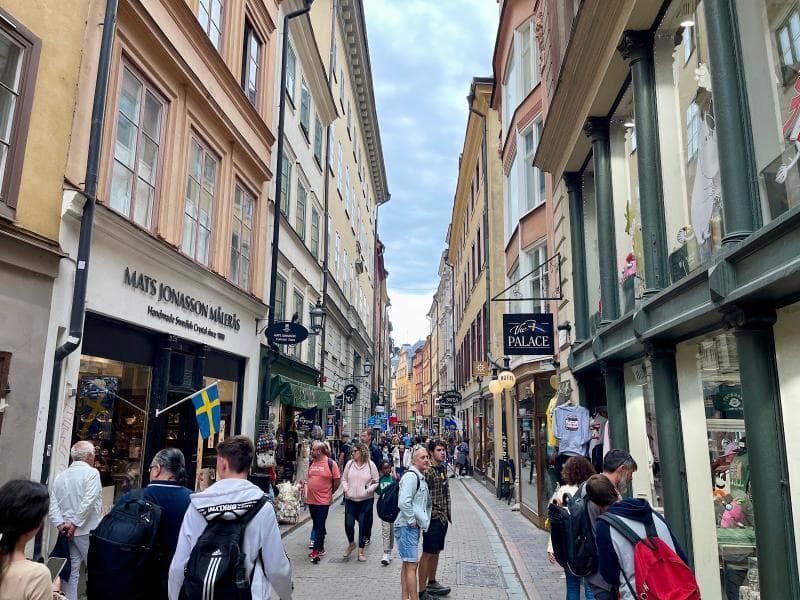
Explore Västerlånggatan, the historic main street of Gamla Stan in Stockholm, Sweden. Discover its vibrant shops, cafes, and medieval charm.
Overview
Step into the vibrant heart of Stockholm's Old Town, Gamla Stan, and discover Västerlånggatan, 'the Western Long Street'. This historic thoroughfare stretches almost 500 meters, connecting the squares of Mynttorget, close to the Royal Palace, and Järntorget in the south. It is renowned as Gamla Stan's most bustling street, a lively tapestry of colorful buildings, unique shops, and inviting cafes and restaurants.
As you wander along its cobblestone path, Västerlånggatan offers an immediate immersion into the city's medieval past, seamlessly blended with its present-day charm. It is a place where history resonates in every architectural detail and modern life unfolds amidst ancient foundations.
History & Cultural Background
Västerlånggatan's story began not as a grand avenue, but as a simple pathway outside Stockholm's 13th-century defensive wall. In medieval times, this path was a crucial part of the main road linking the regions north and south of the city. During the 15th century, as Stockholm expanded beyond its fortifications, Västerlånggatan, along with its parallel counterpart Österlånggatan, transformed into significant urban arteries.
Known for centuries as 'Allmänningsgatan' ('The Common Street') or 'Långa gatan' ('The long street'), its current name, Västerlånggatan, was officially adopted in 1885. Historically, the street served various functions. Its northern section was once called 'Stadssmedjegatan' due to the blacksmiths' workshops located there, pushed outside the city center to mitigate fire risks. Later, in the 17th century, goldsmiths established their businesses here, elevating the street's prestige. The facades underwent significant modernization in the 19th century, adorned with plaster ornaments and cast iron, though many still conceal their original medieval cores.
What Makes It Special
What truly sets Västerlånggatan apart is its captivating blend of historical depth and vibrant commercial life. The street directly traces the course of the city's ancient defensive wall, a unique geographical and historical marker. Its architecture is a visual feast, characterized by charming, often brightly colored buildings and narrow, elongated blocks that speak to centuries of urban development.
Västerlånggatan is famed for its diverse array of shops. From souvenir stores offering traditional Swedish handicrafts to boutiques featuring local design, it's a prime destination for those seeking unique finds. The street is also dotted with numerous cafes and restaurants, providing perfect spots to enjoy a traditional Swedish 'fika'—a coffee break with pastries—or a hearty meal amidst a historic backdrop. The cobblestone pavement underfoot further enhances the medieval atmosphere, creating an immersive experience as you explore.
Stories, Fun Facts & Local Details
Beyond its main thoroughfare, Västerlånggatan reveals many hidden gems in its numerous narrow alleyways. Ducking into one of these, like the famously slender Mårten Trotzigs Gränd, can lead to quieter courtyards and offer a different perspective of Gamla Stan's intricate urban fabric. These alleys often hide the main entrances of buildings, with only their side facades facing the bustling street.
The shops along Västerlånggatan often feature large windows displaying interiors that date back to the late 19th century. These modernizations, however, frequently veil the much older, intact medieval structures within, a testament to the continuous layering of history in Stockholm. While Västerlånggatan itself is a hub of activity, its parallel street, Österlånggatan, hosts Den Gyldene Freden, one of the world's oldest continuously operating restaurants with its original interior dating back to 1722, offering a glimpse into Stockholm's rich culinary heritage.
Visitor Perspective
For any traveler exploring Stockholm, Västerlånggatan offers an essential experience. To fully enjoy its charm, it's advisable to wear comfortable shoes, as the cobblestone streets, while beautiful, can be uneven. Visiting early in the morning is highly recommended to avoid the peak crowds, allowing for a more peaceful stroll and better photo opportunities.
Expect a lively atmosphere, especially during summer and weekends, where street performers and a mix of locals and tourists contribute to the vibrant pulse of the street. Whether you're seeking unique souvenirs, a taste of Swedish cuisine, or simply want to soak in centuries of history, Västerlånggatan provides a rich and engaging journey through Stockholm's past and present.
Coordinates: 18.07251, 59.32627
View on Google Maps💬 How Travelers Describe This Place
Based on community votes
Must See
981Photogenic
921Beautiful
617Unique
357Interesting
147
Traveler Stories
Discover memorable experiences shared by travelers who have visited this place.
No traveler stories yet.
Be the first traveler to share what made this place memorable.

Tour
By
Spot
Discover amazing places around the world. Your journey starts here.
Explore
© 2026 TourBySpot. All rights reserved.