Van Gogh's Self-Portrait
Paris, France
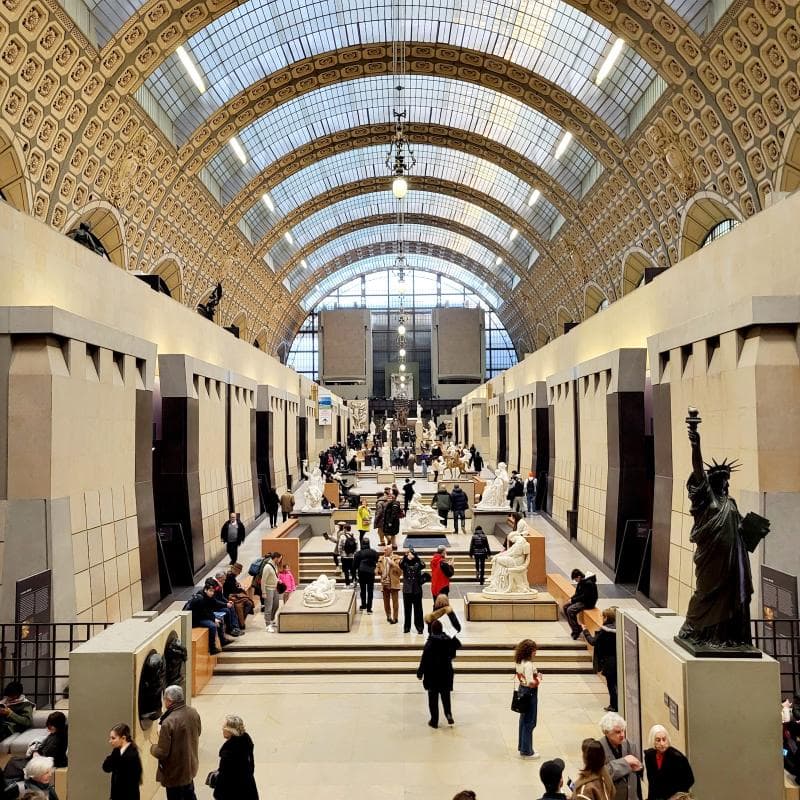
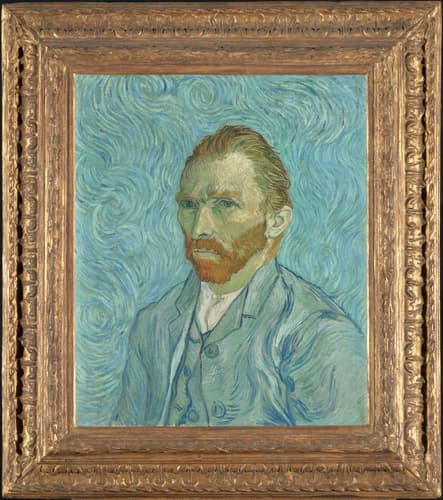
Explore Van Gogh's 1889 'Self-Portrait' at Musée d'Orsay, Paris, France. Discover its history, emotional depth, and unique artistic techniques.
Overview
Stepping into the Musée d'Orsay in Paris is an experience that transports you through a pivotal era of art history, and among its many treasures, Vincent van Gogh's 'Self-Portrait' from 1889 stands as a powerful testament to the artist's intense inner world. This iconic oil-on-canvas masterpiece, a permanent resident of the museum's distinguished collection, captures Van Gogh during a period of profound personal reflection and artistic evolution. It's a key piece in understanding the Dutch Post-Impressionist master's oeuvre, offering a direct gaze into the soul of an artist often grappling with his own identity and mental state.
Located in the heart of Paris, on the left bank of the Seine River, the Musée d'Orsay itself is a marvel, housed within the magnificent former Gare d'Orsay, a Beaux-Arts railway station built for the 1900 Universal Exhibition. The museum is renowned for its vast collection of Impressionist and Post-Impressionist works, making it the perfect home for this significant Van Gogh self-portrait.
History & Cultural Background
Vincent van Gogh painted this particular 'Self-Portrait' in September 1889, during his voluntary stay at the asylum of Saint-Paul-de-Mausole in Saint-Rémy-de-Provence, in southern France. This was a tumultuous time for Van Gogh, marked by severe mental health struggles, including the infamous incident in Arles where he mutilated his ear in December 1888. Despite, or perhaps because of, these profound personal challenges, this period was also incredibly prolific for the artist, who created over 140 paintings during his 13-month stay at the asylum.
Van Gogh's self-portraits were not mere vanity projects; they were a crucial part of his artistic practice. He often lacked the funds to pay for models, making himself his most accessible subject. Through these numerous self-depictions—he painted around 35 to 40 during his short career—Van Gogh continuously explored his changing identity and emotional landscape. This 1889 self-portrait was painted shortly before he left Saint-Rémy, possibly serving as a reflective summary of his experiences there.
What Makes It Special
What sets this 'Self-Portrait' apart is its raw emotional intensity and masterful technique, offering a window into Van Gogh's complex psyche. The artist depicts himself from the shoulders up, dressed in a blue jacket, against a swirling, textured background of turquoise and green. The deliberate brushwork, characterized by short, rhythmic strokes and dynamic lines, creates a sense of movement and vitality that seems to pulsate with the artist's inner turmoil and creative energy.
Art historians consider this painting to be one of Van Gogh's last self-portraits, making it particularly poignant. The contrasting elements are striking: the immobility of the model's fixed gaze against the undulating hair and beard, echoed and amplified in the 'hallucinatory arabesques' of the background, as described by the Musée d'Orsay. The use of cool blues and greens, creating a melancholic atmosphere, is juxtaposed with the warm tones of his face and beard, drawing focus to his intense, yet somewhat 'insecure' eyes.
Stories, Fun Facts & Local Details
This 'Self-Portrait' carries a deep personal narrative. Van Gogh sent the painting to his younger brother, Theo, with an accompanying letter, stating, 'You will need to study [the picture] for a time. I hope you will notice that my facial expressions have become much calmer, although my eyes have the same insecure look as before, or so it appears to me.' This reveals Van Gogh's self-awareness and his hope for stability during a challenging period. Curiously, while painted after the ear incident, Van Gogh strategically depicts himself to conceal the injury, showing the right side of his face, reflecting his desire to present himself as resilient rather than merely a victim.
Another fascinating aspect is the theory that the swirling, chaotic background, while a hallmark of Van Gogh's style, might also visually suggest his mental state, a 'disorientation' he felt after his time in the psychiatric hospital. Despite this, the repeated curves in the background also demonstrate a remarkable degree of control and a steady hand, indicating a mind fully capable of artistic integration.
Visitor Perspective
For visitors to the Musée d'Orsay, encountering Van Gogh's 'Self-Portrait' is often a deeply moving experience. The painting's powerful presence compels viewers to pause and connect with the artist's emotional journey. Its location within the grand setting of the Musée d'Orsay, among other masterpieces of Impressionism and Post-Impressionism, allows for a rich contextual understanding of Van Gogh's place in art history. Many find the intensity of his gaze and the vibrant, almost tactile, brushstrokes leave a lasting impression, making it a highlight of their visit. The museum's layout, housed in a former train station, offers a unique ambiance, enhancing the artistic journey. Visitors often reflect on the contrast between the artist's personal struggles and the enduring beauty and power of his work, which continues to captivate audiences with its raw emotion and masterful technique.
Coordinates: 2.3266, 48.86
View on Google Maps💬 How Travelers Describe This Place
Based on community votes
Must See
898Photogenic
853Beautiful
667Interesting
190Unique
32
Traveler Stories
Discover memorable experiences shared by travelers who have visited this place.
No traveler stories yet.
Be the first traveler to share what made this place memorable.

Tour
By
Spot
Discover amazing places around the world. Your journey starts here.
Explore
© 2026 TourBySpot. All rights reserved.