Ursuline Church
Ljubljana, Slovenia
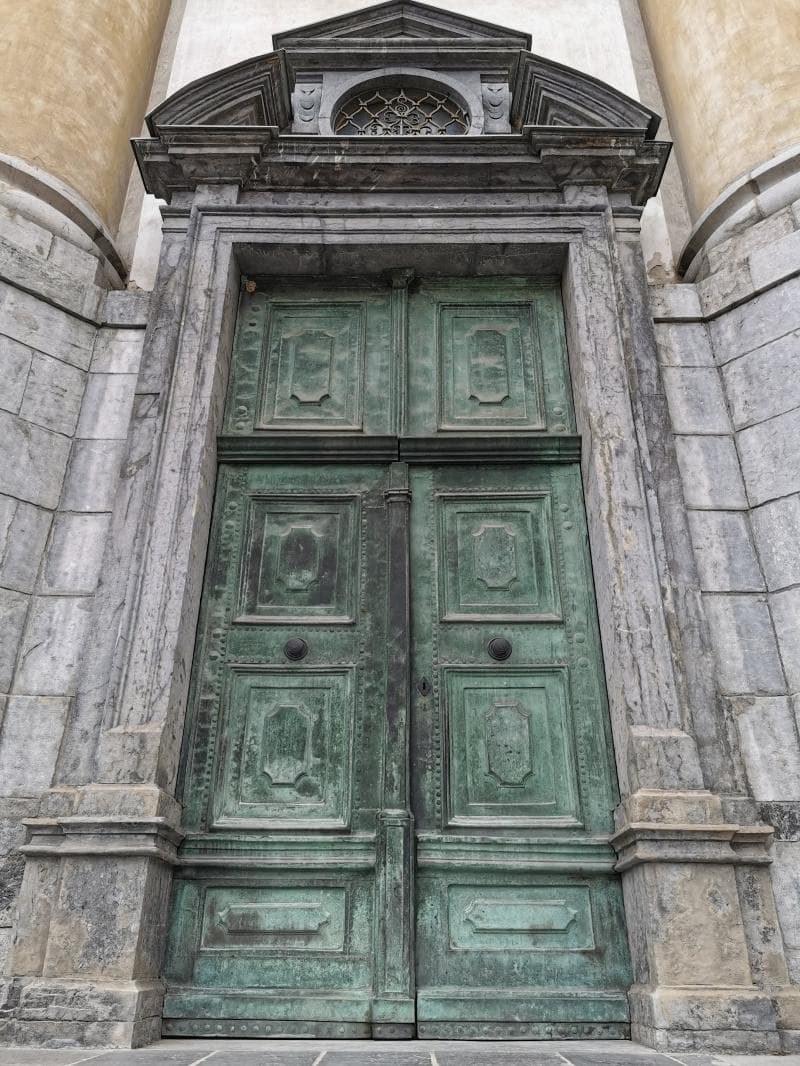
Discover the Ursuline Church of the Holy Trinity in Ljubljana, Slovenia. Explore its unique Baroque facade, rich history, and the exquisite African marble altar by Francesco Robba. A key cultural landmark on Congress Square.
Overview
Nestled along the western edge of Congress Square in Ljubljana, Slovenia, stands the Ursuline Church of the Holy Trinity, locally known as Uršulinska cerkev. This prominent Baroque masterpiece is not merely a place of worship but a significant cultural landmark, seamlessly integrated into the city's historical fabric. Its distinctive architectural style immediately captures the eye, offering a glimpse into the rich artistic heritage of the region. Originally consecrated to the Holy Trinity, the church and its adjacent monastery were central to the Ursuline Order's mission, contributing profoundly to Ljubljana's social and educational development.
The church's striking presence, characterized by its unique facade and imposing stature, makes it an unmissable highlight for anyone exploring the Slovenian capital. It acts as a serene counterpoint to the bustling Congress Square, inviting contemplation and admiration for its centuries-old craftsmanship and enduring spiritual legacy.
History & Cultural Background
The Ursuline Church of the Holy Trinity was constructed between 1718 and 1726, a period when Ljubljana flourished under Habsburg rule as the capital of the Duchy of Carniola. The project was commissioned by Jakob Schell von Schellenburg, a prosperous local merchant and financier, and his wife Ana Katarina, reflecting the era's grand Baroque ambitions. The design is attributed to the Friulian architect Carlo Marinuzzi, who imbued the structure with an innovative spirit.
Central to its foundation was the Ursuline Order, a Roman Catholic community renowned for its dedication to education and social welfare. The church thus became more than a religious edifice; it evolved into a hub for learning, particularly for young women, aligning with the Ursulines' mission to empower communities through education.
Over the centuries, the church has witnessed significant historical events and undergone several transformations. Following the devastating Ljubljana earthquake of 1895, its original belfry was rebuilt. A notable addition occurred between 1930 and 1931 when the renowned Slovenian architect Jože Plečnik designed the balustraded stairway leading to the main entrance. This intervention by Plečnik was part of his broader urban plan to reshape Congress Square, creating a harmonious link between the historic church and the evolving public space.
What Makes It Special
What truly distinguishes the Ursuline Church is its remarkable Baroque architecture, particularly its undulating facade enhanced by semi-columns and a characteristic gable. This dynamic design, inspired by the influential Roman architect Francesco Borromini, sets it apart as one of Ljubljana's most unusual and captivating Baroque monuments.
Inside, the church offers a surprising contrast to the typically richly painted Baroque interiors. While it is not painted internally, it houses a wealth of significant artworks. The focal point is undoubtedly the magnificent main altar, carved between 1730 and 1740 by the Italian Baroque artist Francesco Robba. This altar is an exquisite example of craftsmanship, fashioned from multicoloured African marble, a rare and luxurious material that underscores its importance.
Further enhancing its artistic value are four beautiful side altars. The most admired among them is the 'Ecce Homo' altar by Henrik M. Löhr. The church also proudly displays notable paintings by Jacopo Palma Jr., depicting Virgin Mary with Saints, St. Louis of Toulouse, and St. Bonaventura, alongside Valentin Metzinger's portrayals of St. Ursula and St. Augustine.
Directly in front of the church stands the Holy Trinity Column, a significant sculptural monument. Originally a wooden column from 1693, it was replaced with a stone version in 1722. The marble statues on the column are presumably by Francesco Robba. The column's current placement, forming an axis with the church and other elements of Congress Square, was orchestrated by Jože Plečnik during his redesign efforts in 1927.
Stories, Fun Facts & Local Details
The Ursuline Church holds a special place in Slovenian cultural memory, having been featured on the Slovene 10 tolar banknote after Slovenia declared independence from Yugoslavia in 1991. This banknote was in circulation until the adoption of the euro in 2007, cementing the church's iconic status within the nation's identity.
Its alternative local name, 'Nun Church' (nunska cerkev), reflects the enduring presence and influence of the Ursuline nuns who have historically played a vital role in Ljubljana. Even today, the Ursuline convent behind the church continues its legacy, supporting educational initiatives such as Montessori kindergarten and student dorms, illustrating a continuous thread of community service.
The choice of African marble for the main altar by Francesco Robba is a testament to the church's patrons' wealth and the artistic ambitions of the period. This rare material contributes to the church's distinctive character, making it unique among Slovenian religious buildings. The intricate artistry and historical resilience of the church, having survived and been restored after the 1895 earthquake, tell a story of enduring faith and architectural grandeur.
Visitor Perspective
For a curious traveler, the Ursuline Church is easily discoverable due to its prime location on Slovenska cesta, directly across from Congress Square. Its grand facade is best appreciated from the square itself, where its unique undulating form and impressive columns stand out against the urban landscape. Jože Plečnik's balustraded stairway, connecting the church to the square, provides a grand approach and emphasizes its integral role in the city's public spaces.
While the exterior is always accessible for admiration, visitors should be aware that interior access can sometimes be limited, as is common with active places of worship. However, when open, the interior offers a serene and art-rich experience, inviting quiet contemplation of its stunning altars and historical artworks. Attending a service can provide a deeper, more immersive connection to its ongoing spiritual life. The Ursuline Church serves as a captivating focal point in Ljubljana's city center, making it a rewarding stop for those interested in Baroque art, architectural history, and the cultural narrative of Slovenia.
Coordinates: 14.50194, 46.05014
View on Google Maps💬 How Travelers Describe This Place
Based on community votes
Unique
982Photogenic
876Must See
458Interesting
235Beautiful
197
Traveler Stories
Discover memorable experiences shared by travelers who have visited this place.
No traveler stories yet.
Be the first traveler to share what made this place memorable.

Tour
By
Spot
Discover amazing places around the world. Your journey starts here.
Explore
© 2026 TourBySpot. All rights reserved.