Upper Terrace
Helsinki, Finland
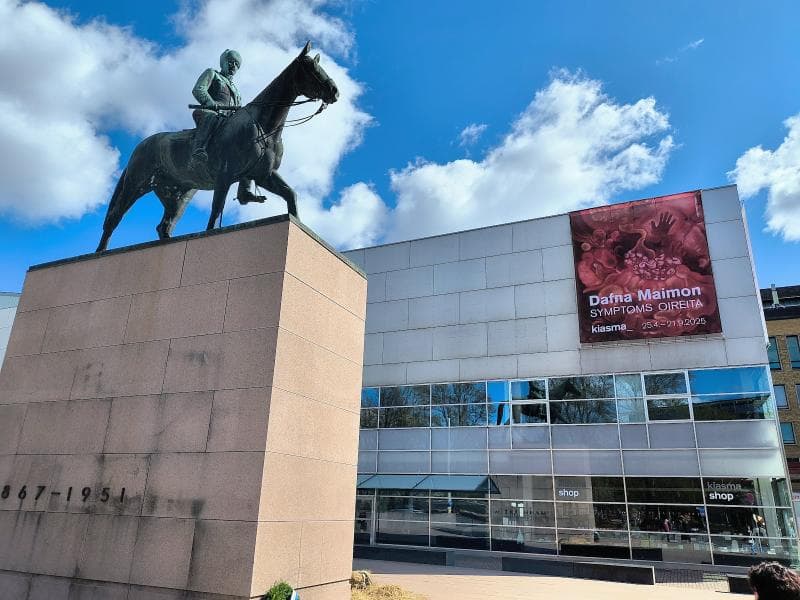
Discover the unique experience of Kiasma Museum of Contemporary Art's upper levels in Helsinki, Finland, offering stunning architecture and city views.
Overview
While not a distinct, formally named outdoor 'Upper Terrace' in the traditional sense, the upper levels of the Kiasma Museum Of Contemporary Art in Helsinki, Finland, represent a crucial aspect of American architect Steven Holl's visionary design. These elevated spaces offer visitors a unique perspective on contemporary art, the building's intricate architecture, and the surrounding urban and natural landscape. Kiasma, meaning 'chiasma' or a 'crossing' in Finnish, embodies the intertwining of architectural forms with the geometry of the city and its natural environment, a concept powerfully experienced on its higher floors.
The museum, inaugurated in 1998, features galleries spread across five floors, connected by a fluid circulation of ramps, stairs, and elevators. This design encourages a dynamic, almost cinematic exploration, where visitors are invited to experience constant shifts in perspective and visual relationships between different levels, particularly noticeable as one ascends. The upper areas are characterized by their innovative use of natural light and carefully framed views of Helsinki, offering moments of contemplation amidst the vibrant contemporary art exhibits.
History & Cultural Background
Kiasma's genesis dates back to 1990 when the Museum of Contemporary Art was established, initially housed within the Ateneum Art Museum. The decision to create an independent contemporary art museum led to an international design competition in 1992, which Steven Holl won with his 'Chiasma' proposal in 1993. Holl's design was groundbreaking, aiming to integrate the building, urban landscape, and the unique Nordic light into a coherent spatial system.
The museum's location at the heart of Helsinki, overlooking Töölönlahti Bay, is significant. Holl's concept involved two intertwining masses, one curved and one rectilinear, symbolically linking the building to the city and the natural surroundings. The upper levels, with their strategic windows and skylights, play a vital role in realizing this connection, transforming Helsinki's dramatic seasonal light into an architectural material. This architectural narrative elevates the experience beyond mere gallery viewing, making the building itself a central part of Finland's cultural heritage.
What Makes It Special
The upper levels of Kiasma are special due to their masterful integration of architecture, light, and views. Steven Holl's design uses skylights, glass surfaces, and curved walls to modulate light within the exhibition halls, creating environments that subtly change throughout the day. This interplay of light is particularly striking on the higher floors, where the diffuse northern light permeates the spaces, creating a serene yet dynamic atmosphere for art appreciation.
From these elevated vantage points, visitors can glimpse choreographed outward views of Helsinki, intentionally connecting the interior art experience with the external urban fabric. The carefully designed openings offer framed perspectives of nearby landmarks and the natural bay, which serves as an urban mirror, linking the museum to the city's heart. This thoughtful design ensures that even without a traditional outdoor terrace, the upper areas provide an immersive experience that blurs the lines between indoor and outdoor, art and environment.
Stories, Fun Facts & Local Details
A fun aspect of Kiasma's design is how Holl considered the needs of diverse contemporary artists, creating quiet, yet dynamic, exhibition spaces. The galleries on the upper floors, often almost rectangular with one curved wall, provide a dramatic backdrop for artworks, differentiating them through their irregularity. This ensures that while the art is paramount, the space itself is never static or boring. The museum also consciously embraces its Nordic context; the metal surfaces of the building, including zinc and aluminum, reflect the cool light of the Finnish landscape, enhancing the atmospheric dimension.
The word 'Kiasma' itself, deriving from the Greek 'chiasm,' refers to a crossing or intersection, much like the optic chiasm where nerve fibers cross. This name perfectly encapsulates the building's conceptual idea of intertwining paths and cultural exchanges, which visitors physically experience as they navigate the museum's levels. The fluidity of the internal pathways on the upper floors, with their ramps and walkways, invites a sense of discovery, making each visit a unique journey.
Visitor Perspective
For the curious traveler, exploring the upper levels of Kiasma is an essential part of the museum experience. As you ascend through the building, whether by the gentle incline of the ramps or the winding staircases, the architecture subtly guides your perception. You'll notice how the quality of light transforms, offering different nuances to the artworks on display. The purposeful irregularity of the gallery spaces and the glimpses of the outside world through strategically placed windows provide moments of reflection and connection.
These upper spaces are not just areas for viewing art; they are integral to understanding Steven Holl's architectural philosophy – how a building can respond to its context, its climate, and its purpose. It's a journey where the building itself becomes a piece of art, engaging the visitor in a dialogue between the interior world of contemporary creation and the exterior reality of Helsinki. Expect a meditative yet engaging exploration, where the interplay of light, form, and vista enriches your encounter with contemporary art.
Coordinates: 24.936615, 60.171977
View on Google Maps💬 How Travelers Describe This Place
Based on community votes
Unique
996Photogenic
673Beautiful
585Interesting
143Must See
69
Traveler Stories
Discover memorable experiences shared by travelers who have visited this place.
No traveler stories yet.
Be the first traveler to share what made this place memorable.

Tour
By
Spot
Discover amazing places around the world. Your journey starts here.
Explore
© 2026 TourBySpot. All rights reserved.