Upper Fortress
Split, Croatia
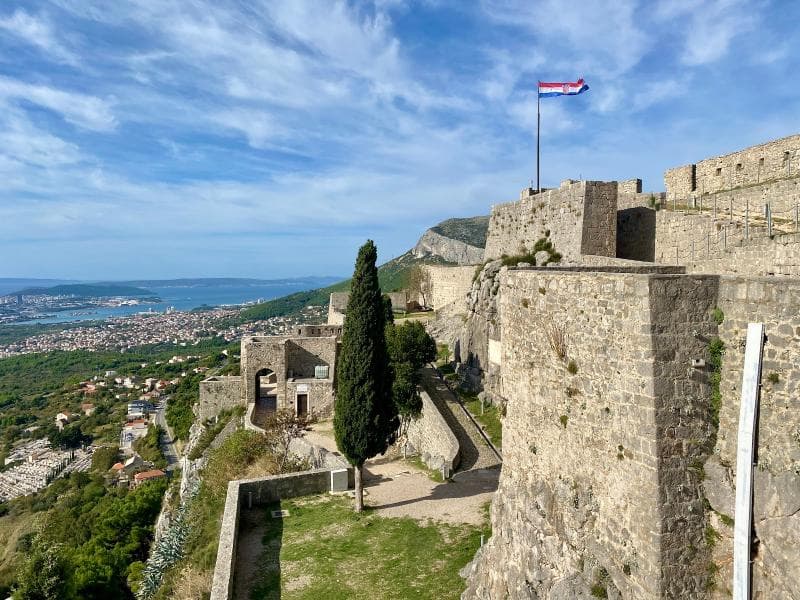
Explore the Upper Fortress of Klis, Split, Croatia. Discover its layered history, strategic importance, and panoramic views.
Overview
Perched dramatically atop a limestone ridge, the Upper Fortress at Klis, near Split, Croatia, represents the strategic pinnacle of one of Europe's most significant historical strongholds. This imposing section, often considered the heart of Klis Fortress, has stood sentinel for millennia, guarding the crucial mountain pass between the Kozjak and Mosor mountains. As you ascend through the fortress's layered defenses, the Upper Fortress reveals itself as the ultimate vantage point, offering not just protection but also breathtaking panoramic views that stretch across the city of Split, the shimmering Adriatic Sea, and its scattered islands. It is here, at the highest point, that the fortress's enduring legacy of resilience and its profound historical depth truly come into focus.
The Klis Fortress itself is a testament to continuous fortification, with its origins tracing back to the Illyrian Dalmatae tribe in the 2nd century BC. Over two thousand years, it has been shaped by the hands of Romans, medieval Croatian kings, Ottoman invaders, Venetians, and Austrians, each leaving an indelible mark on its architecture and story. The Upper Fortress, as the innermost and most vital defensive sector, embodies this rich tapestry of cultures and conflicts. Visitors today can explore the remnants of ancient walls and structures, including a distinctive church that once served as a mosque, offering a tangible link to its complex past.
History & Cultural Background
The history of Klis Fortress, and by extension its Upper Fortress, is a chronicle of power struggles and cultural exchanges in the Dalmatian region. From the 9th to 11th centuries, Klis served as a royal castle and the seat of several Croatian dukes and kings, including Duke Mislav and Duke Trpimir I, whose influence led to the expansion of the fortress. This era cemented Klis's role as a foundational site of Croatian statehood.
Perhaps the most transformative period for the Upper Fortress came during the Ottoman Wars in the 16th and 17th centuries. Klis became a crucial frontier stronghold, earning its moniker as the 'Key to Dalmatia' due to its strategic control over inland access from the coast. During its Ottoman occupation, a medieval church within the Upper Fortress was converted into a mosque, a rare architectural blend that speaks volumes about the shifting tides of power and religion. When the Venetians recaptured Klis in 1648, the mosque was reconverted into a Catholic church, dedicated to St. Vitus (Sv. Vid), a role it maintains to this day. This building stands as a poignant symbol of the fortress's layered cultural identity, having served both Islamic and Christian worship over centuries.
Further architectural additions and modifications were made by the Venetians and later the Austrians, who continuously adapted the fortress to evolving military technologies. The Upper Fortress, being the final defensive line, saw the integration of various bastions, towers, and observation points designed to withstand sieges and provide an unyielding stronghold against invaders.
What Makes It Special
What truly sets the Upper Fortress apart is its synthesis of unparalleled strategic design, breathtaking natural beauty, and a tangible sense of history. Its elevated position, inaccessible on three sides, allowed defenders an commanding view of the surrounding landscape, turning the entire area into a natural defense.
Within this highest section, visitors can explore the remarkable Church of St. Vitus, a structure that uniquely showcases the architectural and cultural amalgamation of the fortress's past. Its history as a converted mosque, retaining elements of its Islamic past beneath its Christian guise, is a compelling narrative in stone. Additionally, the ancient Oprah Tower, a significant medieval defensive structure located in the eastern, higher part of the fortress, remains a prominent feature. Originally mentioned in 1355, its continuous presence through centuries of conflict underscores its enduring importance as a western stronghold of the Upper Fortress.
However, perhaps the most captivating aspect of the Upper Fortress is the awe-inspiring panoramic vistas it provides. From this lofty perch, the eye sweeps across the sprawling city of Split, the tranquil blue of the Adriatic Sea, and the distant Dalmatian islands. It is a view that not only rewards the climb but also deeply connects the visitor to the fortress's historical significance as the guardian of this beautiful coastline.
Stories, Fun Facts & Local Details
The stones of the Upper Fortress could tell countless tales of heroism and defiance. One of the most famous stories associated with Klis Fortress is the legendary defense led by Croatian captain Petar Kružić and his Uskoks, Christian refugees who became fierce guerrilla fighters. For over two decades in the early 16th century, they valiantly resisted overwhelming Ottoman forces, with the Upper Fortress serving as their ultimate refuge and command center. Though the fortress eventually fell, their courage became an enduring part of Croatian folklore.
Another fascinating detail is the architectural journey of the St. Vitus Church. Its transformation from a medieval church to an Ottoman mosque and back again to a Christian place of worship after the Venetian reconquest highlights the dramatic power shifts that defined Klis for centuries. The minaret was removed, but the building's distinct features still hint at its diverse past, serving as a rare example of preserved Islamic architecture in Dalmatia that was repurposed.
In more recent times, Klis Fortress, including its upper sections, has garnered international fame as a filming location for the popular television series 'Game of Thrones.' It famously depicted the exterior of the city of Meereen, a significant location in Daenerys Targaryen's storyline. This modern connection has introduced the ancient fortress to a new generation of visitors, allowing them to walk in the footsteps of fictional heroes amidst very real historical grandeur.
Visitor Perspective
Visiting the Upper Fortress is an immersive journey back in time, best experienced by taking the winding path through the fortress's three layers of gates. Each ascent brings you higher, offering new perspectives and a growing appreciation for the formidable defenses that once protected this strategic location. The final climb to the Upper Fortress is rewarded with an expansive, unobstructed panorama that is truly breathtaking.
At the top, travelers can explore the venerable Church of St. Vitus and examine the sturdy Oprah Tower, imagining the sentinels who once kept watch from these very spots. The relative quiet of the upper ramparts allows for reflection on the lives lived and battles fought within these walls. While there are no refreshment facilities within the fortress itself, a small museum often located in the inner parts of the fortress provides additional historical context with displays of arms, armor, and traditional Uskok uniforms, deepening the understanding of Klis's military past. It is advisable to wear comfortable shoes and allow at least 1.5 to 2 hours to fully explore the fortress, ensuring ample time to absorb the history and the magnificent views.
Coordinates: 16.523, 43.5605
View on Google Maps💬 How Travelers Describe This Place
Based on community votes
Beautiful
722Must See
698Photogenic
595Interesting
358Unique
19
Traveler Stories
Discover memorable experiences shared by travelers who have visited this place.
No traveler stories yet.
Be the first traveler to share what made this place memorable.

Tour
By
Spot
Discover amazing places around the world. Your journey starts here.
Explore
© 2026 TourBySpot. All rights reserved.