University Building
Ljubljana, Slovenia
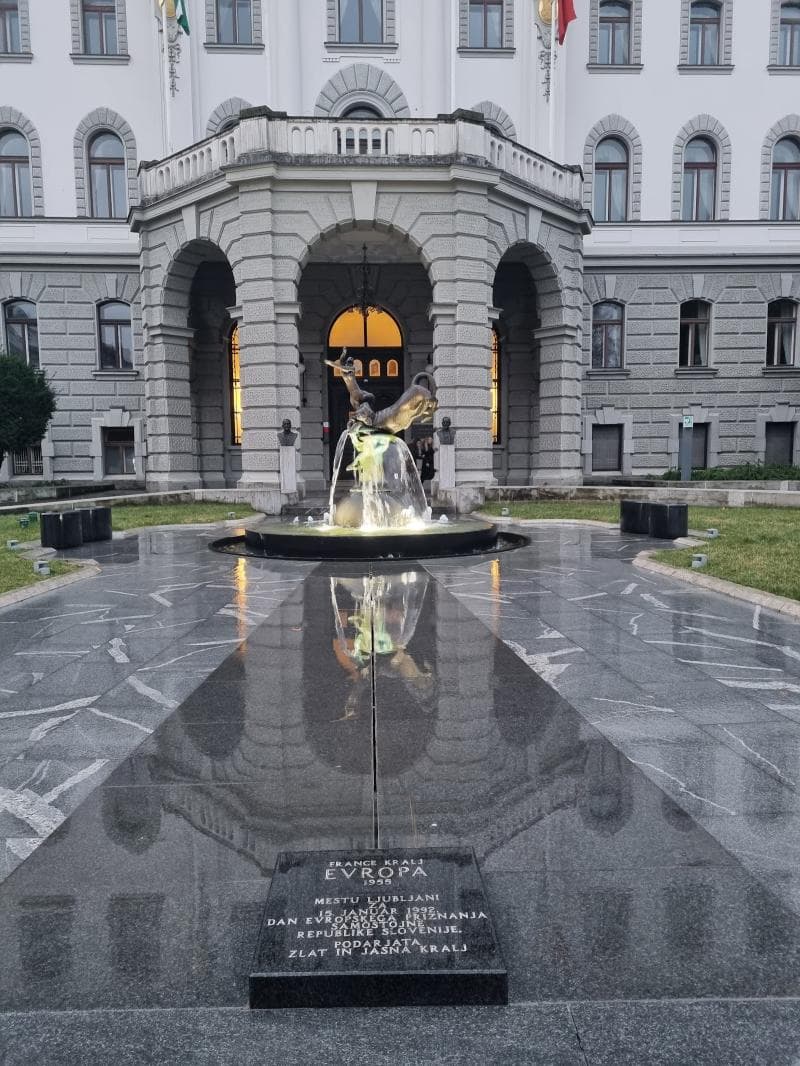
Explore the historic University Building in Congress Square, Ljubljana, Slovenia. Discover its Renaissance Revival architecture and rich past.
Overview
The University Building, often referred to as the University Palace, stands majestically on the southern side of Congress Square (Kongresni trg) in the heart of Ljubljana, Slovenia. This impressive architectural landmark serves as the administrative headquarters, or Rectorate, of the University of Ljubljana, the country's oldest and largest university. Its grand facade, characterized by Renaissance Revival architectural elements, is a prominent feature of one of Ljubljana's most historically significant public spaces.
Originally conceived and built not for academia, but as the Provincial Mansion for the Carniolan Provincial Assembly, its transition to a center of higher learning in the early 20th century cemented its role as a beacon of Slovenian intellectual life. Today, it continues to be a vibrant hub where history, architecture, and education converge, embodying both political heritage and academic identity.
History & Cultural Background
The story of the University Building begins at the turn of the 20th century. Construction started in 1899 and concluded in 1902. Designed primarily by architect Josef Hudetz, with original plans from Jan Vladimír Hráský, the building was initially known as the Provincial Mansion. It served as the seat of the Carniolan Provincial Assembly, a symbol of regional governance and stability during that era.
However, its destiny shifted profoundly after World War I and the dissolution of the Austro-Hungarian Empire. With the establishment of the Kingdom of Serbs, Croats, and Slovenes, the vision for a national Slovenian university gained traction. In 1919, the Provincial Mansion was officially transformed into the central seat of the newly founded University of Ljubljana. This act was a pivotal moment for Slovenian cultural and intellectual autonomy, making the building a powerful symbol of national identity and academic aspiration.
Congress Square itself holds deep historical resonance, dating back to the 1821 Congress of Ljubljana, an event that gave the square its name. While the current university building was not present then, the site it occupies has always been central to significant public gatherings and political discourse.
What Makes It Special
What sets the University Building apart is its dual legacy: a magnificent architectural achievement that served political power, now transformed into the heart of Slovenian academia. Its Renaissance Revival style, featuring a white limestone facade, rhythmic window arrangements, and intricate decorative elements, exudes a timeless elegance. The building's design allows it to dominate Congress Square without appearing overbearing, achieving a delicate balance between monumental presence and urban integration.
The building's balcony, overlooking Congress Square, has been a witness to pivotal moments in Slovenian history. Most notably, in May 1945, Josip Broz Tito, the leader of socialist Yugoslavia, addressed the crowds from this very balcony, marking a significant post-World War II celebration of liberation. This event underscores the building's role not just as an educational institution, but as a stage for the nation's unfolding narrative.
Furthermore, the building represents the intellectual core of Slovenia. As the oldest and largest university, the University of Ljubljana has fostered generations of scholars, artists, and leaders. It bridges its historical origins with its contemporary purpose, serving as an anchor of knowledge and progress in the country.
Stories, Fun Facts & Local Details
The transition of the Provincial Mansion into a university building in 1919 was more than just a change of ownership; it was a symbolic reclaiming of a public space for intellectual development. Imagine the excitement and pride felt by Slovenians as they finally had their own institution of higher learning, housed in such a grand and imposing structure. The university began with five faculties: law, philosophy, technology, theology, and medicine.
The interior of the building, though often restricted for visitors, reportedly features ceremonial staircases and formal halls that still reflect its original governmental function, adapted now for academic dignity. The building's facade underwent restoration work that began in 2024, aimed at preserving its historic appearance and addressing damage from atmospheric pollution. This ongoing care ensures that its beauty endures for future generations.
The University of Ljubljana plays a central role in the city's cultural calendar, organizing public lectures, exhibitions, concerts, and academic ceremonies that link its rich history with contemporary educational pursuits. This constant activity ensures the building remains a living, breathing part of Ljubljana, not merely a historical relic.
Visitor Perspective
For a curious traveler, the University Building is best appreciated from Congress Square. Its stately exterior provides excellent photographic opportunities, especially when viewed against the backdrop of the vibrant square and the historic Star Park (Park Zvezda). While full interior access might be limited due to its active administrative and academic functions, its presence alone offers a profound sense of history and intellectual heritage.
Standing in Congress Square, you can feel the layers of history emanating from this building and its surroundings. It's a place where political declarations were made, where crowds gathered for celebration and protest, and where the minds of future generations are being shaped. Visitors are encouraged to stroll around the square, take in the architectural grandeur, and reflect on the building's enduring significance to Ljubljana and Slovenia as a whole.
Coordinates: 14.5041, 46.049
View on Google Maps💬 How Travelers Describe This Place
Based on community votes
Beautiful
912Must See
820Photogenic
771Unique
479Interesting
181
Traveler Stories
Discover memorable experiences shared by travelers who have visited this place.
No traveler stories yet.
Be the first traveler to share what made this place memorable.

Tour
By
Spot
Discover amazing places around the world. Your journey starts here.
Explore
© 2026 TourBySpot. All rights reserved.