Turtle Tower
Hanoi, Vietnam
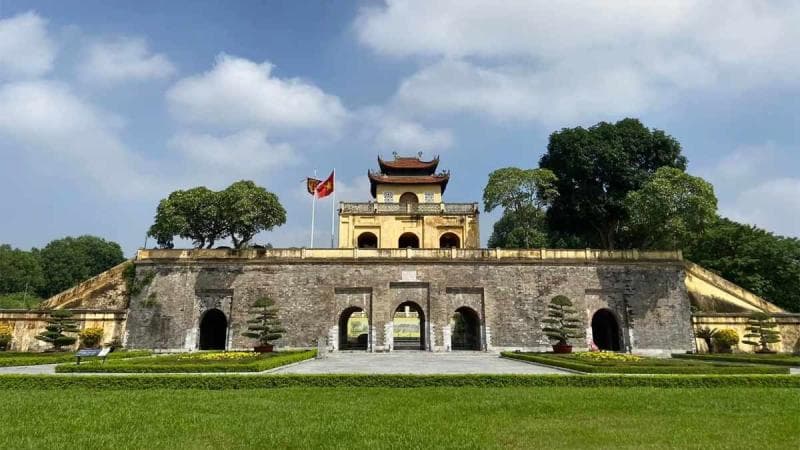
Discover Turtle Tower (Tháp Rùa) in Hanoi, Vietnam, a legendary symbol rising from Hoan Kiem Lake. Explore its unique history, architecture, and cultural significance.
Overview
The Turtle Tower, known locally as Tháp Rùa, is a small yet profoundly symbolic structure nestled on an islet in the heart of Hoan Kiem Lake in Hanoi, Vietnam. This iconic landmark serves as one of the most recognizable symbols not only of the Vietnamese capital but also of the nation's enduring spirit. It stands gracefully amidst the tranquil waters, a picturesque focal point within the bustling city. While visitors cannot directly access the tower or the small island it occupies, its captivating presence can be admired from every vantage point along the lake's scenic walking paths. Its unique architectural style, a harmonious blend of traditional Vietnamese design and French Gothic influences, tells a silent story of Hanoi’s layered past.
History & Cultural Background
The construction of the present-day Turtle Tower dates back to 1886 during the French colonial period. It was built by Nguyen Ngoc Kim, also known as Ba Ho Kim, a Vietnamese intermediary who served the French administration. Historical accounts suggest that Kim initially intended to secretly inter his father's remains within the tower, a plan that was discovered and thwarted by local residents who removed the body. Despite its controversial origins, the tower quickly became intertwined with a much older and revered Vietnamese legend, serving as a powerful commemoration of national hero Emperor Le Loi.
The legend recounts Le Loi's 15th-century fight against the Chinese Ming invaders, a struggle that ultimately liberated Vietnam. It is said that a divine Golden Turtle God (Kim Quy) emerged from what was then called Luc Thuy (Green Water) Lake and bestowed upon Le Loi a magical sword named Thuận Thiên ('Heaven's Will'), granting him extraordinary strength and leadership. After his triumphant victory, Le Loi returned to the lake, where the Golden Turtle reappeared to reclaim the sacred sword, carrying it back into the watery depths. This mythical event led Le Loi to rename the body of water Hoan Kiem, meaning 'Lake of the Returned Sword'. Consequently, the Turtle Tower stands today as a profound symbol of Vietnamese independence, patriotism, and the resilient spirit of its people. Interestingly, for a period around 1890, the French placed a miniature Statue of Liberty atop the tower, which was later removed in 1945 after the French departure.
What Makes It Special
The Turtle Tower's allure lies in its captivating blend of tangible history and ethereal legend. Its distinctive architecture, featuring a three-tiered structure that tapers elegantly towards the top, showcases a unique fusion of French Gothic elements with traditional Vietnamese design, including a curved roof that reflects indigenous aesthetics. This architectural synthesis makes it a fascinating visual representation of Hanoi's colonial past interwoven with its enduring cultural identity. Beyond its physical form, the tower's deep connection to the national epic of Emperor Le Loi and the returned sword transforms it from a mere monument into a 'living legend' and the 'soul of the capital'. It stands as a powerful emblem of sovereignty, resilience, and the peaceful resolution that followed a hard-won struggle for independence. Its central placement in Hoan Kiem Lake, a verdant oasis in the midst of a bustling metropolis, provides a serene backdrop, making it a constant, inspiring presence visible from all angles of the lake.
Stories, Fun Facts & Local Details
- Before becoming Hoan Kiem Lake, this body of water was known as Luc Thuy Lake, or 'Green Water Lake', reflecting its vibrant hue.
- The islet where the Turtle Tower stands has a long history, with earlier structures dating back to the 15th century, including a fishing pavilion built for Emperor Le Thanh Tong and a temple known as Ta Vong Temple during the 17th and 18th centuries.
- For centuries, Hoan Kiem Lake was home to rare giant soft-shell turtles (Rafetus swinhoei), often spotted basking near the tower. The last known individual of this species residing in the lake sadly passed away in 2016.
- During the challenging period of French occupation, Vietnamese patriots would courageously hoist their revolutionary flag from the tower, a daring act of defiance and a potent symbol of their unwavering spirit.
- The area around Hoan Kiem Lake is a vibrant hub of local life, especially in the early mornings and evenings. Here, you'll see locals practicing Tai Chi, joggers enjoying the scenic route, and couples relaxing at lakeside cafes, all set against the backdrop of the iconic tower.
- The best times to capture the tower's beauty are at sunrise or sunset, when the light casts a magical glow over the lake and its surroundings.
Visitor Perspective
Experiencing the Turtle Tower is an integral part of any visit to Hanoi. While direct access to the tower itself is not permitted, the primary way to appreciate its grandeur and significance is by strolling leisurely along the pedestrian paths that encircle Hoan Kiem Lake. This allows for various perspectives and photographic opportunities. The north shore, particularly near the entrance to Ngoc Son Temple and The Huc Bridge, offers excellent views, as do the east, west, and south shores.
Many visitors choose to combine their viewing of the Turtle Tower with exploration of other nearby cultural and historical sites. These include the vibrant Ngoc Son Temple, accessible via the striking red The Huc Bridge, the Ly Thai To Monument, and the charming streets of the Hanoi Old Quarter. The ambiance around the lake is particularly enchanting during autumn, when Hanoi's weather is cool and the streets are adorned with falling yellow leaves. In the evenings, the Turtle Tower and its surroundings are beautifully illuminated, creating a serene and picturesque scene that captivates onlookers and offers a different, romantic perspective of this timeless landmark.
Coordinates: 105.8525, 21.02889
View on Google Maps💬 How Travelers Describe This Place
Based on community votes
Interesting
847Unique
685Photogenic
513Beautiful
433Must See
211
Traveler Stories
Discover memorable experiences shared by travelers who have visited this place.
No traveler stories yet.
Be the first traveler to share what made this place memorable.

Tour
By
Spot
Discover amazing places around the world. Your journey starts here.
Explore
© 2026 TourBySpot. All rights reserved.