Triumphal Arch
Brussels, Belgium
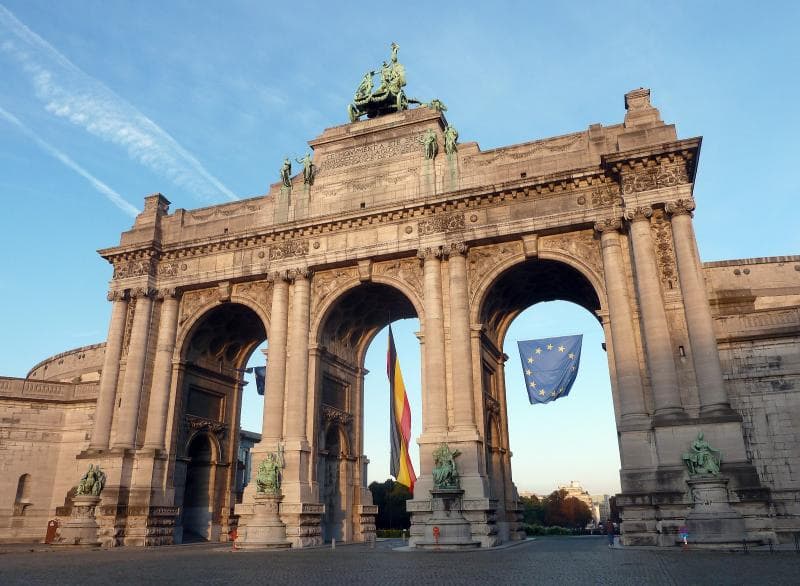
Discover the majestic Triumphal Arch in Brussels' Parc du Cinquantenaire, a historic symbol of Belgian independence.
Overview
At the heart of Parc du Cinquantenaire in Brussels, Belgium, stands the magnificent Triumphal Arch, a monumental triple archway also known as the Cinquantenaire Arch (Arc du Cinquantenaire or Triomfboog van het Jubelpark). This grand structure is a central feature of the expansive park, creating an imposing gateway that draws the eye and beckons exploration. It is a landmark that symbolizes Belgian national pride and serves as a focal point for both historical reflection and contemporary urban life.
History & Cultural Background
The story of the Cinquantenaire Arch began with ambitious plans to celebrate Belgium's 50th anniversary of independence, which occurred in 1830. King Leopold II, known for his grand visions, commissioned the project for the 1880 National Exhibition. Initially, only the bases of the arch's columns were complete, and a temporary wooden and plaster version stood in its place for the exhibition.
The journey to its permanent completion was fraught with delays and controversy, primarily due to the immense cost and the King's desire for an extravagant monument. The Belgian government was initially reluctant to allocate the necessary funds. Belgian architect Gédéon Bordiau was the initial designer, but after his death in 1904, French architect Charles Girault took over the project, ultimately redrawing the blueprints. The arch was finally completed and inaugurated on September 27, 1905, just in time for the 75th anniversary of Belgian independence, a quarter-century after its initial conception.
What Makes It Special
The Triumphal Arch is a stunning example of Neoclassical architecture. Its most striking feature is the monumental bronze quadriga group atop the central arch, depicting 'Brabant Raising the National Flag.' This sculpture portrays a female charioteer, personifying the Province of Brabant, raising the national flag. Statues representing other Belgian provinces adorn the base of the columns, further embedding its national symbolism. The arch's sides are also embellished with mosaics, illustrating Belgium's commitment to peace, adding a layer of intricate detail and cultural narrative.
Its grandeur often draws comparisons to other famous European landmarks, such as Paris' Arc de Triomphe and Berlin's Brandenburg Gate, yet it possesses a unique character rooted in Belgian history and identity. The Arch is not a standalone structure; it forms the central element of a larger U-shaped complex that connects two significant palace wings, which today house three prominent museums: Autoworld, the Royal Military Museum, and the Art & History Museum.
Stories, Fun Facts & Local Details
The protracted construction of the Triumphal Arch, spanning 25 years, was a significant point of contention between King Leopold II and the government. This lengthy process led to its inauguration coincidentally aligning with the 75th anniversary of independence, rather than the initial 50th, a detail often noted by locals. The park surrounding the arch has always been a vibrant public space. Historically, it served as a military parade and training ground, earning it the nickname 'Field of Mars'. Today, the esplanade in front of the arch is a dynamic venue for various events, from annual runs like the '20 km of Brussels' with 30,000 participants, to outdoor cinemas and cultural festivals, echoing its original purpose as an exhibition space.
For those keen to embrace a unique perspective, it's possible to climb to the top of the Arch. This access, typically via the Royal Military Museum, offers unparalleled panoramic views of Brussels and the vast expanse of Parc du Cinquantenaire. The experience provides a sense of the city's scale and the arch's commanding presence within it. On a clear day, the vista stretches far and wide, making it a favorite spot for photographers and sightseers alike.
Visitor Perspective
Approaching the Triumphal Arch, travelers are often struck by its sheer scale and intricate details. It's more than just an architectural marvel; it's an invitation to delve into Belgium's rich past. Walking beneath its arches, one can feel the echoes of national celebrations and grand exhibitions. The surrounding Parc du Cinquantenaire complements the arch beautifully, offering manicured lawns, peaceful alleys, and picturesque corners perfect for a leisurely stroll or a picnic.
The proximity to the three major museums means a visit to the arch can easily be part of a larger cultural immersion. Whether you're a history enthusiast exploring the military past, an art lover admiring ancient artifacts, or an automobile aficionado, the arch serves as a majestic gateway to these experiences. It's a place where history blends seamlessly with everyday life, providing a unique and memorable experience for any curious traveler in Brussels.
Coordinates: 4.39298, 50.84048
View on Google Maps💬 How Travelers Describe This Place
Based on community votes
Interesting
685Unique
446Photogenic
399Must See
152Beautiful
33
Traveler Stories
Discover memorable experiences shared by travelers who have visited this place.
No traveler stories yet.
Be the first traveler to share what made this place memorable.

Tour
By
Spot
Discover amazing places around the world. Your journey starts here.
Explore
© 2026 TourBySpot. All rights reserved.