Triple Bridge Access
Ljubljana, Slovenia
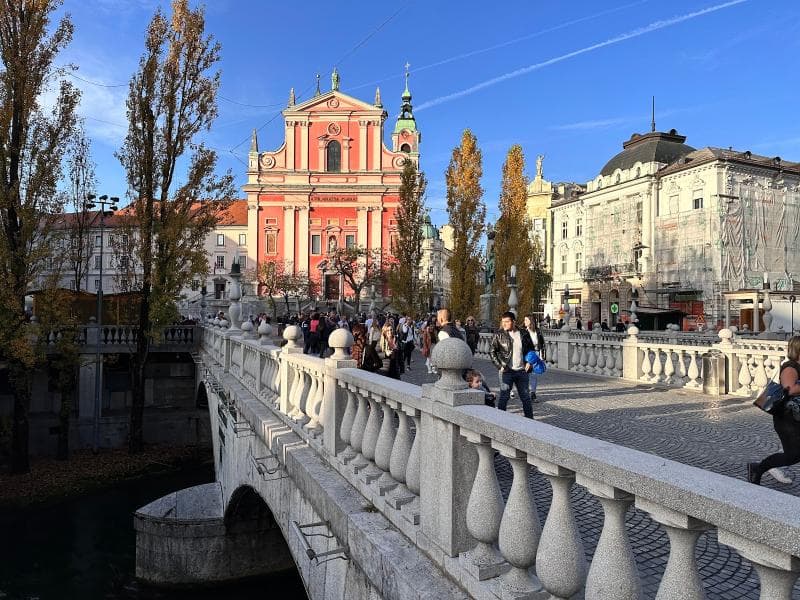
Explore Ljubljana's iconic Triple Bridge (Tromostovje), a unique architectural masterpiece connecting the old town with Prešeren Square in Slovenia. Discover its history and charm.
Overview
At the heart of Ljubljana, Slovenia, where the bustling energy of Prešeren Square meets the tranquil flow of the Ljubljanica River, lies the iconic Triple Bridge, or 'Tromostovje' in Slovene. More than just a crossing, this architectural marvel is a symbol of the city's unique charm and ingenuity, seamlessly connecting Ljubljana's historical medieval town with its vibrant modern center. It's a pedestrian-friendly hub, offering stunning views of the cityscape and serving as a central meeting point for both locals and travelers.
Comprising three distinct bridges fanning out across the river, the Triple Bridge forms an elegant gateway directly into Prešeren Square, which is often considered the heart of Ljubljana's social life. The area is a lively scene, frequently animated by street performers, artists, and vendors, adding to its dynamic atmosphere.
History & Cultural Background
The origins of the Triple Bridge can be traced back to the Middle Ages, with the first wooden bridge at this location mentioned in historical records as early as 1280. This 'Old Bridge' was a crucial crossing point, linking northwestern Europe with southeastern Europe and the Balkans. In 1842, the wooden structure was replaced by a new stone bridge, designed by Italian architect Giovanni Picco. This bridge, initially named Franz's Bridge after Archduke Franz Karl of Austria, featured two arches and a metal fence.
The transformation into the distinctive Triple Bridge we see today was the vision of the renowned Slovenian architect Jože Plečnik. Between 1929 and 1932, Plečnik undertook a redesign to address increasing traffic and enhance functionality. He preserved the original stone bridge and flanked it with two additional pedestrian bridges, set at slight angles. His design intent was to integrate the bridge into the urban fabric, creating a grand civic space rather than merely a thoroughfare. He removed the metal railings from the central bridge and unified all three with massive stone balustrades and decorative lamps, crafted from local Glinica limestone and concrete.
Plečnik's work on the Triple Bridge, alongside other notable contributions across Ljubljana, was recognized in 2021 when it was inscribed as a UNESCO World Heritage Site. This prestigious designation highlights its global importance as an innovative and culturally significant work of urban planning, showcasing Plečnik's ambition to transform his hometown into a 'new Athens'.
What Makes It Special
The Triple Bridge is special not only for its unique architectural composition but also for its profound role in the city's identity. It represents a masterful blend of historical continuity and architectural innovation. The central bridge maintains its 19th-century character, while the two pedestrian additions from the 1930s demonstrate a forward-thinking approach to urban design, efficiently separating pedestrian and vehicular traffic – a revolutionary concept for its time.
The bridge's design elements, such as the 642 balusters made of concrete and the meticulously crafted balustrades, showcase Plečnik's attention to detail and his philosophy of human-centered urban design. Staircases from the side bridges lead down to lower riverside terraces, creating a river portal that evokes a Mediterranean character, reminiscent of Venice's bridges.
Stories, Fun Facts & Local Details
Beyond its structural elegance, the Triple Bridge is steeped in local lore and everyday life. One fascinating aspect is Plečnik's intent to turn the bridge into a 'stage' for city life. Today, this vision is realized through the constant presence of street musicians, artists, and cultural events that enliven the area, fulfilling his dream of a vibrant cultural centerpiece.
The bridge's position is also strategically significant, lying at the crossing of two of Plečnik's urban axes: the river axis and the axis running between Rožnik and Castle Hills. From the bridge, visitors can enjoy picturesque views of the Ljubljanica River and the surrounding historical buildings, including the iconic Franciscan Church directly opposite. The area around the bridge was pedestrianized in recent years, making it even more enjoyable for visitors to explore at a leisurely pace.
Visitor Perspective
For visitors, walking across the Triple Bridge is an essential Ljubljana experience. It offers a tangible connection to the city's past while immersing you in its present-day vibrancy. It serves as an ideal starting point for exploring other city attractions, as side roads branch out in various directions from Prešeren Square.
Whether you're admiring the architectural details, pausing to listen to a street musician, or simply enjoying the scenic views of the river and Ljubljana Castle in the distance, the Triple Bridge encapsulates the essence of this charming Slovenian capital. It's a place where every step tells a story, inviting curious travelers to delve deeper into Ljubljana's rich history and cultural tapestry.
Coordinates: 14.50552, 46.05108
View on Google Maps💬 How Travelers Describe This Place
Based on community votes
Photogenic
982Beautiful
903Must See
481Unique
458Interesting
197
Traveler Stories
Discover memorable experiences shared by travelers who have visited this place.
No traveler stories yet.
Be the first traveler to share what made this place memorable.

Tour
By
Spot
Discover amazing places around the world. Your journey starts here.
Explore
© 2026 TourBySpot. All rights reserved.