Trebević Cable Car
Sarajevo, Bosnia and Herzegovina
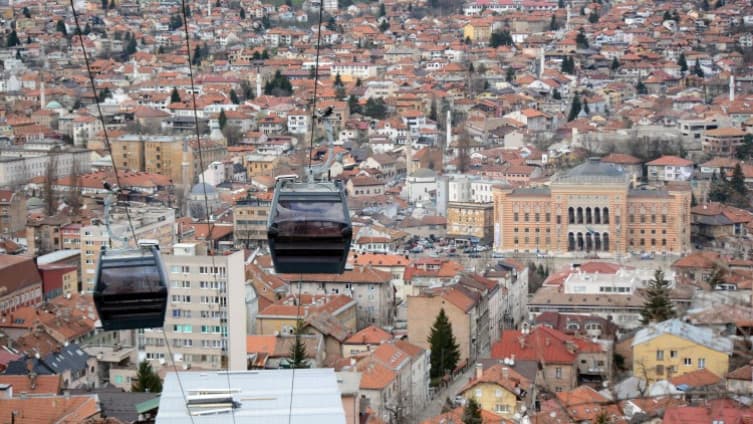
Experience the Trebević Cable Car in Sarajevo, Bosnia and Herzegovina. Enjoy panoramic views, explore history, and visit the Olympic bobsled track.
Overview
The Trebević Cable Car, known locally as Sarajevska žičara, offers a remarkable ascent from the historic heart of Sarajevo, Bosnia and Herzegovina, to the serene heights of Mount Trebević. This modern gondola lift provides a swift escape from urban life, transporting passengers in approximately seven to nine minutes from the bustling Bistrik neighborhood to Vidikovac, the upper station on the mountain. As you glide upwards, the city unfurls beneath you, offering breathtaking panoramic views that stretch across Sarajevo's distinctive rooftops and into the embrace of the surrounding Dinaric Alps. Mount Trebević itself is often referred to as 'Sarajevo's lungs' due to its lush forests and fresh air, serving as a cherished natural haven and a popular recreational spot for locals and visitors alike.
History & Cultural Background
The original Trebević Cable Car first opened its doors on May 3, 1959, quickly becoming an integral part of Sarajevo's civic life. It was more than just transportation; it was a beloved institution that carried families, schoolchildren, and skiers, symbolizing progress and connection to nature. Its significance was further amplified during the 1984 Winter Olympics hosted by Sarajevo, when the cable car played a crucial role in ferrying spectators to the various events held on Mount Trebević. However, its operational journey was tragically interrupted. After years of service and increasing maintenance challenges, the original cable car ceased operations in November 1989. The Bosnian War (1992-1995) brought further devastation, leading to the complete destruction of the cable car and its stations, transforming a symbol of civic pride into a stark reminder of conflict. For over two decades, the cable car remained a haunting ruin. A powerful testament to Sarajevo's resilience and an enduring desire for renewal, the cable car underwent extensive reconstruction between 2017 and 2018. Its grand reopening on April 6, 2018, was deeply symbolic, coinciding with Sarajevo's independence day and the anniversary of the siege's commencement, marking a profound moment of rebirth for the city. This monumental undertaking was significantly aided by a generous €3.5 million donation from Edmond Offermann, a Dutch nuclear physicist, and his Sarajevo-born wife, Maja, showcasing a global commitment to Sarajevo's future.
What Makes It Special
The Trebević Cable Car is not merely a mode of transport; it is an experience woven with history, natural beauty, and profound symbolism. Its modern cabins, 33 in total, gracefully carry up to 1,200 passengers per hour. Among these, several gondolas are uniquely colored to represent the Olympic rings, while another proudly displays the hues of the BiH flag, serving as a vibrant homage to the city's Olympic legacy and national identity. The journey itself is transformative; as the city shrinks below, the crisp, pine-scented air of Trebević embraces you, offering a unique perspective of Sarajevo. Upon reaching the upper station, visitors are immediately immersed in a natural landscape, with accessible trails leading to various viewpoints and the hauntingly beautiful, abandoned 1984 Olympic bobsled track. This blend of exhilarating views, historical significance, and effortless access to mountain recreation truly sets the Trebević Cable Car apart.
Stories, Fun Facts & Local Details
For many older Sarajevans, the Trebević Cable Car was affectionately known as 'the funicular,' a reflection of its cherished place in their daily lives. The journey from the lower station to Vidikovac on Trebević is remarkably quick, typically spanning just seven to nine minutes. A touching detail onboard the new system is a specially designated cabin that retains the old color scheme, serving as a moving memorial to Ramo Biber, a cable car guard tragically killed near the line in 1992 during the war. This small gesture ensures that his memory, and the sacrifices made during that tumultuous period, are not forgotten. Mount Trebević has long been revered as 'Sarajevo's lungs,' a title earned from its extensive, verdant forests that provide essential fresh air to the urban area. The mountain also holds a deeper historical layer, as it was known as Zlatni Do ('Golden Valley') during the Middle Ages. The abandoned Olympic bobsled track, now a canvas for vibrant graffiti, offers a poignant juxtaposition of past glory and modern artistry, drawing visitors who come to explore and photograph its unique character.
Visitor Perspective
A ride on the Trebević Cable Car is an essential experience for any curious traveler to Sarajevo. The ease of access from the city center means that within minutes, you transition from urban bustle to the peaceful embrace of mountain nature. As your gondola ascends, watch Sarajevo spread out like a living map, its red-tiled roofs a striking contrast against the verdant hills. At the upper station, Vidikovac, you'll find panoramic vistas that invite contemplation. From here, you can embark on various activities: wander along well-marked hiking trails, explore the famous abandoned bobsled track, or simply enjoy the cooler mountain air. It's a popular choice for locals seeking a quick escape for picnics, walks, or even mountain biking, especially during warmer months. A practical tip for visitors is to bring an extra layer of clothing, as the temperature on the mountain ridge can be noticeably cooler – often ten degrees lower – than in the city valley below. The entire experience offers a unique blend of scenic beauty, historical context, and outdoor activity, making it a memorable highlight of any visit to Sarajevo.
Coordinates: 18.4348472, 43.8554111
View on Google Maps💬 How Travelers Describe This Place
Based on community votes
Photogenic
547Interesting
336Unique
219Beautiful
186Must See
80
Traveler Stories
Discover memorable experiences shared by travelers who have visited this place.
No traveler stories yet.
Be the first traveler to share what made this place memorable.
Things to see at Trebević Cable Car



Tour
By
Spot
Discover amazing places around the world. Your journey starts here.
Explore
© 2026 TourBySpot. All rights reserved.