Traditional Patterns Gallery
Ashgabat, Turkmenistan
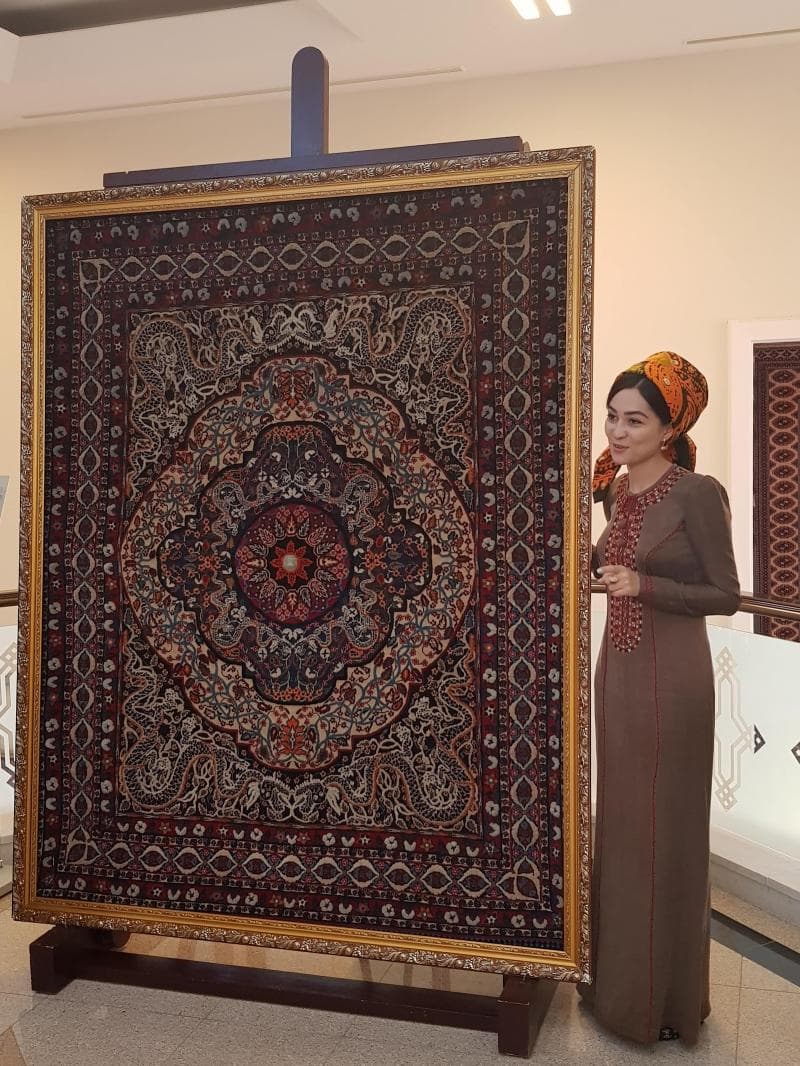
Explore the Traditional Patterns Gallery at the Turkmen Carpet Museum in Ashgabat, Turkmenistan. Discover ancient guls and tribal meanings.
Overview
Nestled within the grand Turkmen Carpet Museum in Ashgabat, Turkmenistan, lies a remarkable collection that serves as a living testament to the nation's rich weaving heritage: the gallery of traditional patterns. While not a separate, distinctly named 'Traditional Patterns Gallery' in all official guides, the essence of the museum's extensive displays is precisely that—a dedicated space for exploring the intricate and meaningful designs that define Turkmen carpets. Here, visitors are invited on a journey to understand the 'guls,' the distinctive tribal emblems woven into every carpet, which are far more than mere decoration. The museum, established in 1993 by presidential decree and opening its doors in 1994, functions as the ultimate repository for these age-old textile traditions, showcasing over 8,000 carpets that reveal the historical and artistic evolution of Turkmen weaving.
History & Cultural Background
The art of Turkmen carpet weaving boasts an ancient lineage, with archaeological findings suggesting its presence as early as the 4th to 3rd centuries BC. Even the renowned 13th-century traveler Marco Polo expressed admiration for Turkmen carpets, calling them 'the thinnest and most beautiful in the world.' This deep-rooted craft is so central to Turkmen identity that it is celebrated annually on 'Carpet Day,' and its significance is symbolically enshrined in national emblems. The national flag of Turkmenistan proudly displays five principal carpet 'gul' patterns, representing the major tribes—Akhalteke, Salyr, Ersary, Chovdur, and Yomut—and symbolizing the unity and friendship of the Turkmen people. The Turkmen Carpet Museum was founded with the explicit aim of preserving, reviving, and creatively developing this time-honored tradition, acting as a crucial cultural institution dedicated to the study and conservation of these precious textiles.
What Makes It Special
What truly sets the traditional patterns exhibits apart is the profound narrative embedded within each 'gul' or 'göl.' These are not random motifs but sophisticated geometric expressions, each serving as a unique visual signature of a specific Turkmen tribe. Visiting these galleries offers a rare opportunity to decipher this geometric language, learning how each pattern reflects tribal identity, ritual beliefs, and even social structures. The museum's collection is diverse, featuring carpets from medieval times through to the 20th century, with a significant portion dating from the 17th to 19th centuries. Beyond the sheer volume, the museum houses remarkable pieces, including the world's smallest handwoven carpet, a mere 0.01 square meters, and, conversely, one of the largest, spanning an astounding 301 square meters—a Guinness World Record holder. The museum's commitment to this art form was further recognized when the Traditional Art of Turkmen Carpet Making was added to the UNESCO List of Intangible Cultural Heritage of Humanity in 2019.
Stories, Fun Facts & Local Details
The 'gul' is often described as a tribal device, akin to a coat of arms, rather than a simple decorative pattern. Its placement and variations on a carpet can even reveal historical narratives, such as alliances or conquests between tribes. For instance, if one tribe conquered another, the defeated group's 'gul' might appear in a secondary position on the rug, subtly recording political history. Weavers traditionally passed down these complex pattern grids through memory, generation after generation, a testament to the cultural depth and importance of this craft. A fascinating aspect is that some carpets on display are two-sided, featuring entirely different designs on each face, showcasing advanced weaving techniques and the versatility of Turkmen artistry. Sometimes, you might even encounter staff members working on traditional looms within the museum, offering a live demonstration of this enduring craft.
Visitor Perspective
For the curious traveler, visiting the Turkmen Carpet Museum's traditional patterns exhibits is an immersive cultural experience. It is a chance not only to admire the aesthetic beauty of these handwoven masterpieces but also to gain a deeper understanding of Turkmen history, society, and artistic expression. Guides are often available in English and Russian, providing valuable insights into the techniques and regional distinctions of the collection. The displays help you appreciate the meticulous craftsmanship, the natural dyes, and the intricate pile heights calibrated for specific uses. You'll learn to differentiate the guls of various tribes, transforming your perception of these rugs from mere textiles into storytelling canvases. The museum offers a colorful walk through the nation's artistic history, making it an essential stop for anyone wishing to connect with the heart and soul of Turkmenistan.
Coordinates: 58.37802, 37.92396
View on Google Maps💬 How Travelers Describe This Place
Based on community votes
Interesting
996Photogenic
726Beautiful
494Unique
193Must See
125
Traveler Stories
Discover memorable experiences shared by travelers who have visited this place.
No traveler stories yet.
Be the first traveler to share what made this place memorable.

Tour
By
Spot
Discover amazing places around the world. Your journey starts here.
Explore
© 2026 TourBySpot. All rights reserved.