Toompea Hill
Tallinn, Estonia
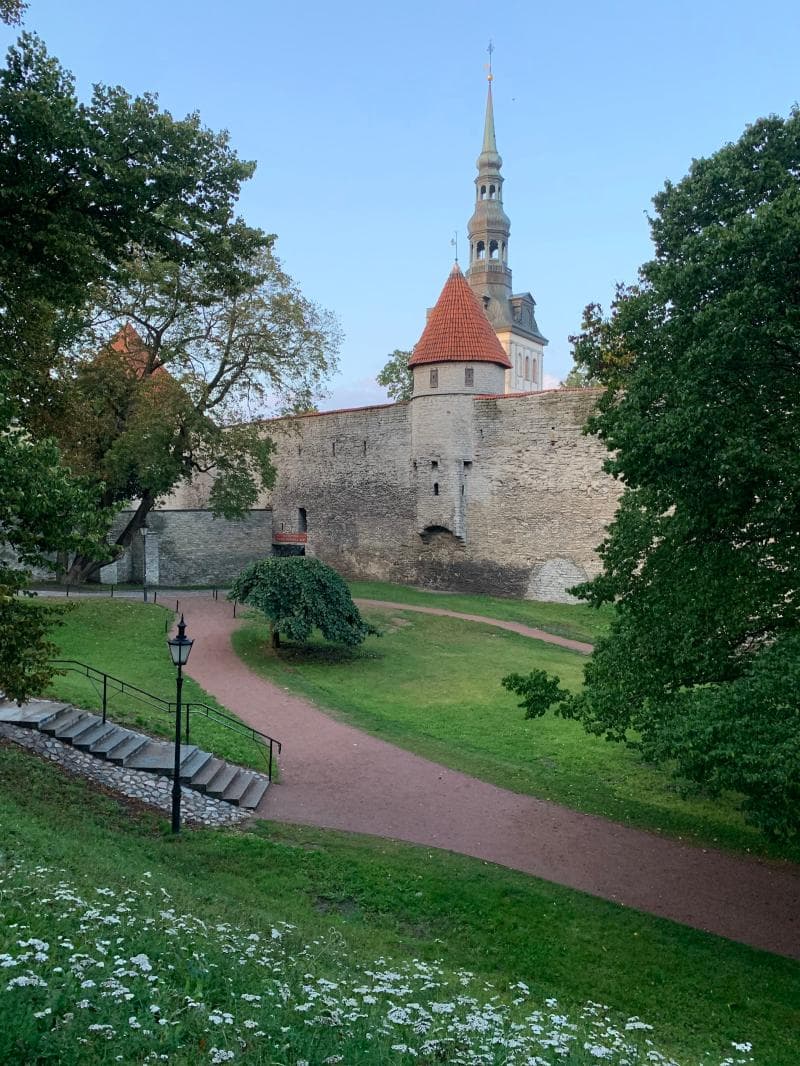
Discover Toompea Hill in Tallinn Old Town, Estonia. Explore its rich history, iconic castle, Alexander Nevsky Cathedral, and panoramic city views.
Overview
Perched majestically above Tallinn's UNESCO-listed Old Town, Toompea Hill is a distinctive limestone plateau that has served as the heart of Estonia's political and spiritual life for centuries. This oblong hill, approximately 400 meters long and 250 meters wide, rises notably about 25 meters higher than the surrounding areas, making it a prominent feature of the city's skyline. As an integral part of the Tallinn Old Town World Heritage Site, Toompea offers visitors a journey through time, blending medieval charm with significant governmental presence. It's a place where history resonates in every cobblestone and every architectural detail, providing breathtaking panoramic views of the red-tiled roofs of the Lower Town, the modern cityscape, and the distant Baltic Sea.
History & Cultural Background
The history of Toompea Hill is deeply intertwined with the very foundation and evolution of Tallinn and Estonia. Archaeological evidence suggests that the first stronghold on the hill was erected by local Estonian clans as early as the 10th or 11th century, initially as a wooden fortress to protect the harbor below. The hill's strategic importance became evident with the arrival of the Danes in 1219, who conquered the area and reconstructed the fortress. Over the centuries, Toompea changed hands numerous times, falling under the control of the Livonian Order, Swedish Empire, and Russian Empire, each period leaving an indelible mark on its architecture and cultural fabric. The Toompea Castle, which stands today, has seen various transformations, with its current Baroque and Classical appearance largely influenced during Catherine the Great's era. It has continuously been the seat of power, reflecting the shifting political landscape of the region.
What Makes It Special
What truly sets Toompea Hill apart is its unique blend of political significance, architectural grandeur, and stunning natural beauty. At its core lies Toompea Castle, an imposing complex that now houses the Riigikogu, Estonia's Parliament. Dominating the castle complex is the iconic Tall Hermann Tower, a powerful national symbol where the Estonian flag is raised daily at sunrise, signifying the nation's independence. Nearby, the onion-domed Alexander Nevsky Cathedral, an Eastern Orthodox masterpiece built during the late 19th and early 20th centuries of Russian rule, stands as a striking contrast to the more austere medieval structures. St. Mary's Cathedral, also known as the Dome Church, is another key landmark, reflecting centuries of religious and historical continuity. Visitors can also discover several viewing platforms, such as Kohtuotsa and Patkuli, which offer unparalleled vistas of Tallinn's medieval fortifications, the Lower Town, and the picturesque Gulf of Finland.
Stories, Fun Facts & Local Details
Toompea Hill is not just a collection of historical buildings; it is also steeped in enchanting folklore and local legends. Perhaps the most beloved tale tells of Linda, the grieving widow of the mythical king Kalev. According to the legend, Toompea Hill is actually a tumulus mound that Linda painstakingly built stone by stone to mark her husband's final resting place. Her ceaseless tears for Kalev are said to have formed Lake Ülemiste, located just outside Tallinn. This deeply resonant story connects the very landscape to Estonia's ancient epic poetry and the enduring spirit of its people. The Tall Hermann Tower also holds a special place in Estonian hearts; having flown many foreign flags throughout history, the daily raising of the Estonian flag is a poignant reminder of hard-won sovereignty. Toompea has remained a vital center, where decisions that shaped the nation were made, and its very name, derived from 'Toomkirik' meaning 'Dome Church', speaks to its long-standing ecclesiastical importance.
Visitor Perspective
Exploring Toompea Hill offers an immersive experience for any curious traveler. The ascent to the hill, often via cobbled streets and some steeper sections, rewards visitors with a tranquil atmosphere distinct from the bustling Lower Town. While the hill itself is freely accessible year-round, many visitors prefer the late spring and summer months for the most pleasant weather and clearest views. Early mornings are particularly recommended for photography, offering quieter surroundings before the peak crowds arrive. Comfortable shoes are a must for navigating the historic pathways. Beyond simply admiring the views, visitors can delve deeper by taking free guided tours of the Riigikogu building within Toompea Castle, which provide insights into Estonia's legislative process and the castle's rich past. These tours require advance booking and a valid photo ID. Whether gazing from a viewpoint, wandering through historic courtyards, or experiencing the seat of government, Toompea Hill offers a meaningful connection to Estonia's enduring legacy.
Coordinates: 24.7372115, 59.4357702
View on Google Maps💬 How Travelers Describe This Place
Based on community votes
Beautiful
839Photogenic
445Must See
388Unique
289Interesting
141
Traveler Stories
Discover memorable experiences shared by travelers who have visited this place.
No traveler stories yet.
Be the first traveler to share what made this place memorable.

Tour
By
Spot
Discover amazing places around the world. Your journey starts here.
Explore
© 2026 TourBySpot. All rights reserved.