Tokyo Skytree
Tokyo, Japan
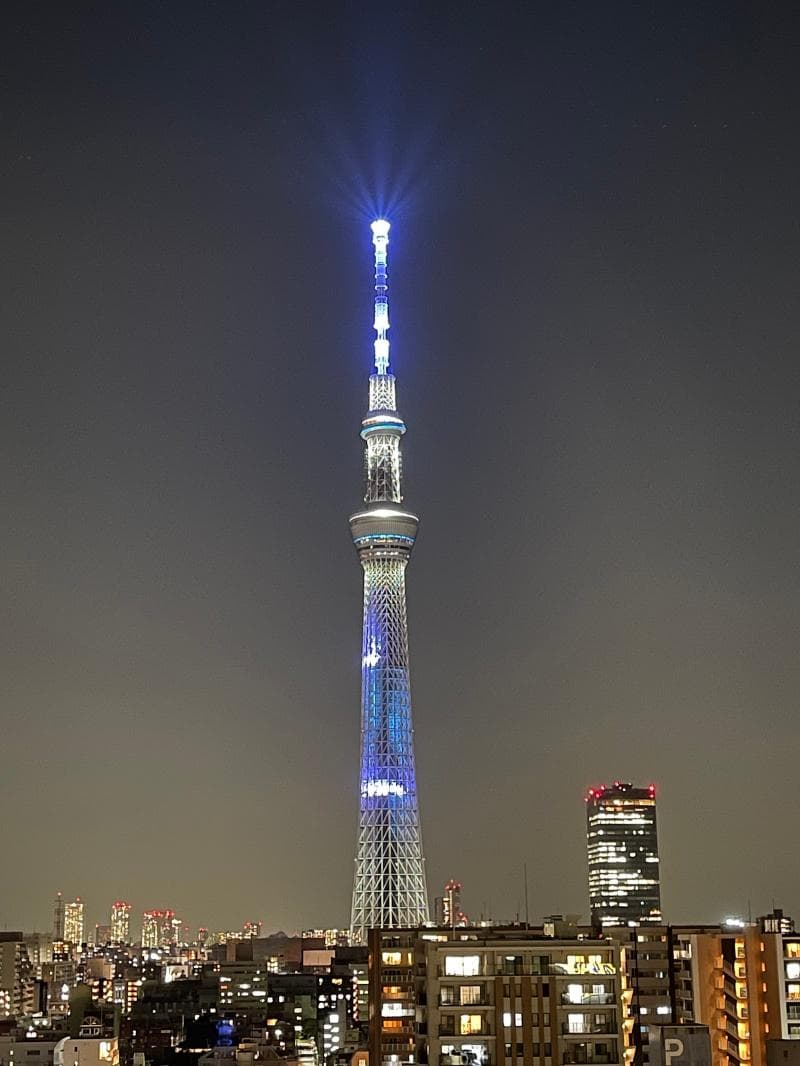
Discover Tokyo Skytree in Tokyo, Japan – an iconic 634-meter broadcasting and observation tower. Explore its unique design, cultural history, and breathtaking panoramic views of the city and beyond.
Overview
Soaring majestically above the Sumida district, the Tokyo Skytree is not merely an architectural marvel but a powerful symbol of modern Japan, blending cutting-edge engineering with profound cultural roots. Standing at an impressive 634 meters, it reigns as the tallest structure in Japan and one of the tallest towers globally, dominating the Tokyo skyline. More than just a breathtaking observation point, it serves a crucial role as a primary broadcasting tower for television and radio signals across the Kantō region, a function that became essential due to the obstruction of signals from the older Tokyo Tower by the city's ever-growing skyscrapers.
Since its grand opening in May 2012, the Tokyo Skytree has drawn millions of visitors eager to experience its unparalleled panoramic views and immerse themselves in the vibrant Tokyo Skytree Town at its base. It stands as a testament to human ingenuity and a beacon of resilience, captivating both locals and travelers with its distinctive design and commanding presence.
History & Cultural Background
The genesis of the Tokyo Skytree dates back to the early 2000s when a need arose for a new broadcasting tower capable of providing unobstructed digital terrestrial television coverage. The venerable Tokyo Tower, built in 1958, found its signals increasingly hindered by the proliferation of high-rise buildings across the metropolis. Plans for this ambitious project began around 2003, with construction officially commencing on July 14, 2008.
Completed on February 29, 2012, and opening its doors to the public on May 22, 2012, the Skytree's height of 634 meters was chosen with deep cultural significance. The numbers 6 (mu), 3 (sa), and 4 (shi) combine to form 'Musashi,' the historic name of the former province where the tower now proudly stands, encompassing parts of modern-day Tokyo, Saitama, and Kanagawa prefectures. This intentional naming imbues the modern structure with a profound connection to Japan's rich history. Moreover, the tower rapidly became a symbol of the national spirit and resilience, particularly as it reached its full height shortly after the devastating 2011 Tōhoku earthquake, showcasing Japan's ability to innovate and rebuild.
What Makes It Special
The Tokyo Skytree's distinctive architecture is a harmonious blend of futuristic aesthetics and traditional Japanese design principles. Its base begins as an equilateral triangle, gracefully transitioning to a circular cross-section at higher elevations, a design that not only offers stability but also provides diverse visual expressions depending on the viewer's angle. Architects drew inspiration from the elegant curves of ancient Japanese swords and the robust structures of traditional five-story pagodas, such as those at Hōryūji Temple. This influence is most evident in its sophisticated earthquake-resistant system, which utilizes a central pillar, or 'shinbashira,' a technique adapted from ancient pagodas. The upper two-thirds of this steel-reinforced concrete core are designed to oscillate freely, absorbing seismic movements through oil dampers, a feature that proved its effectiveness during the 2011 earthquake.
The tower's exterior is painted an original color called 'Skytree White,' a bluish-white hue derived from 'aijiro,' a traditional Japanese indigo blue. Beyond its structural integrity and beauty, the Skytree offers two distinct observation decks: the Tembo Deck at 350 meters and the Tembo Galleria at 450 meters. These provide different perspectives, with the Tembo Galleria offering a unique, sloping spiral glass-covered skywalk that creates the sensation of floating above the city.
Stories, Fun Facts & Local Details
The choice of 634 meters for the Tokyo Skytree's height is more than just a number; it is a mnemonic device. The Japanese pronunciation of '6-3-4' as 'mu-sa-shi' pays homage to the Musashi Province, linking the ultra-modern structure to the ancient history of the region. At night, the Skytree transforms into a canvas of light, illuminated in various artistic styles that reflect Japanese aesthetics. Two prominent lighting patterns are 'Iki,' representing the spirit with light blue lights reminiscent of the Sumida River, and 'Miyabi,' embodying beauty with golden and purple hues prevalent in the Edo era.
The base of the tower is not just a foundation but a bustling urban hub known as Tokyo Skytree Town. This expansive complex includes Tokyo Solamachi, a large shopping and entertainment center housing over 300 shops and restaurants, ensuring a full day of activities for visitors. Also within this area is the Sumida Aquarium, offering another fascinating attraction. The Skytree's strategic location also places it conveniently near the historic Asakusa district, making it a gateway between traditional and contemporary Tokyo.
Visitor Perspective
A visit to the Tokyo Skytree is an immersive journey from the bustling city streets to the serene expanse of the sky. High-speed elevators whisk visitors up to the Tembo Deck at 350 meters, where expansive, floor-to-ceiling glass windows present a breathtaking 360-degree panorama of Tokyo. For the adventurous, a transparent glass floor section offers a thrilling vertical view down to the ground. The Tembo Deck also features a café, souvenir shop, and the Musashi Sky Restaurant, which serves French-Japanese fusion cuisine.
Ascending further to the Tembo Galleria at 450 meters offers an even more elevated experience. Dubbed 'the world's highest skywalk,' this spiraling, glass-enclosed ramp gives the sensation of walking through the air, leading to the tower's highest observation point at 451.2 meters. On clear days, the views extend far beyond the urban sprawl, sometimes revealing the majestic Mount Fuji in the distance. The entire experience, from the innovative design to the sweeping vistas, is curated to provide a memorable and awe-inspiring perspective of Tokyo.
Coordinates: 139.8107, 35.7101
View on Google Maps💬 How Travelers Describe This Place
Based on community votes
Photogenic
951Unique
748Beautiful
499Interesting
427Must See
94
Traveler Stories
Discover memorable experiences shared by travelers who have visited this place.
No traveler stories yet.
Be the first traveler to share what made this place memorable.
Things to see at Tokyo Skytree



Tour
By
Spot
Discover amazing places around the world. Your journey starts here.
Explore
© 2026 TourBySpot. All rights reserved.