Tjuvholmen Entrance
Oslo, Norway
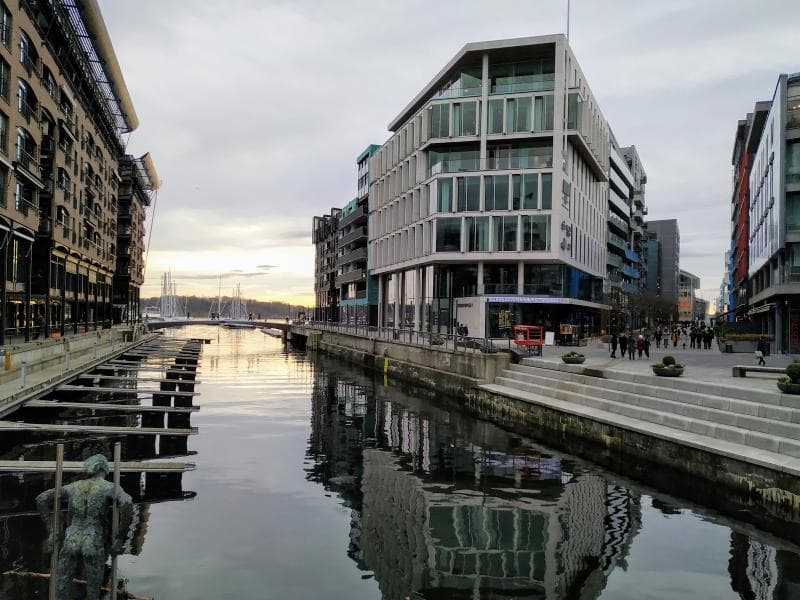
Discover Tjuvholmen Entrance in Oslo, Norway. Explore this modern art and architecture district, home to the Astrup Fearnley Museum, stunning sculptures, and unique waterfront design.
Overview
Tjuvholmen, often considered an extension of Oslo's bustling Aker Brygge, serves as a captivating entrance to a world where contemporary art, innovative architecture, and serene waterfront living coalesce. Situated on a peninsula stretching into the Oslofjord, this district, whose name intriguingly translates to 'Thief Islet', has undergone a remarkable transformation from its historical past to become one of Oslo's most celebrated modern urban spaces. As you cross the short bridge or stroll along the promenade from Aker Brygge, you step into a meticulously designed neighborhood that prioritizes pedestrians, art, and a seamless connection with the sea.
This compact area is a vibrant tapestry of sleek buildings, tranquil canals, and open spaces, all framed by the sparkling waters of the fjord. It is renowned for housing the iconic Astrup Fearnley Museum of Modern Art, a striking architectural marvel that anchors Tjuvholmen's cultural identity. Surrounding the museum, the Tjuvholmen Sculpture Park invites visitors to engage with world-class contemporary art in an open-air setting, making the entire district feel like an accessible gallery.
History & Cultural Background
The history of Tjuvholmen is as colorful as its present is modern. Originally a small islet, its name, 'Thief Islet' or 'Tyveholmen' in older Danish spelling, harks back to the 18th century when it was reputedly an execution site for thieves and a known haunt for dubious characters. Over centuries, the islet gradually evolved into a peninsula due to post-glacial rebound and significant land reclamation efforts.
Through the 19th and 20th centuries, Tjuvholmen was primarily an industrial area. It served as a site for shipyards, docks, and later, warehouses and office spaces, reflecting Oslo's strong maritime heritage. The transformation into the vibrant cultural hub we see today began in earnest in the early 2000s as part of Oslo's ambitious 'Fjord City' urban renewal program. In 2003, developers Selvaag and Aspelin Ramm acquired the area, and their vision, chosen in a 2002 conceptual competition, began to take shape. The first residents moved into their new homes in 2007, and the entire district, including its major cultural institutions, was largely completed by 2014, marking a new chapter for this historically intriguing location.
What Makes It Special
What truly sets Tjuvholmen apart is its deliberate integration of art, architecture, and public space, creating a singular urban experience. The district boasts an extraordinary architectural landscape, with its approximately 31 buildings designed by some 20 different architects, both Norwegian and international. This collaborative approach has resulted in a rich visual diversity, where each structure contributes to a cohesive yet varied aesthetic, making every stroll an architectural discovery.
At its heart lies the Astrup Fearnley Museum of Modern Art, a masterpiece designed by the renowned Italian architect Renzo Piano. Its distinctive sail-like glass roof and timber-clad structures perfectly complement the maritime surroundings, housing an impressive collection of contemporary art. Adjacent to the museum, and also designed by Piano, is the Tjuvholmen Sculpture Park. This open-air gallery features works by celebrated international artists like Louise Bourgeois, Antony Gormley, and Anish Kapoor, seamlessly blending art into the everyday urban fabric. Furthermore, the area offers a unique public beach at the peninsula's tip, inviting visitors to swim in the fjord with views of the city and its islands.
Stories, Fun Facts & Local Details
The name Tjuvholmen, 'Thief Islet', always sparks curiosity, offering a glimpse into Oslo's grittier past. It is a striking contrast to the sophisticated, art-filled district it is today, reminding visitors of how much a place can evolve. A fun fact for architecture enthusiasts is that the district's varied visual appeal is a direct result of an urban planning philosophy that engaged numerous architectural firms, leading to a dynamic skyline rather than a monolithic development.
Renzo Piano's influence here is profound; he not only designed the iconic Astrup Fearnley Museum but also conceived the surrounding sculpture park, including elements like artificial grassy knolls, canals, and bridges. Even the benches were considered part of his comprehensive design. For those seeking a panoramic view, a glass elevator known as 'The Sneak Peak' near the Astrup Fearnley Museum transports visitors 54 meters above ground, offering breathtaking vistas of the fjord and city. Tjuvholmen's successful urban renewal was recognized globally when it received The ULI Global Awards for Excellence and the City Prize in 2014, cementing its status as a model for modern city planning.
Visitor Perspective
Approaching Tjuvholmen from Aker Brygge, the transition is smooth and inviting, with wide promenades guiding you into this distinct neighborhood. The first impression is often one of modern elegance and calm, a stark contrast to the sometimes busier feel of its neighbor. Visitors can enjoy leisurely strolls through car-free streets, discovering hidden courtyards, unique sculptures, and engaging architectural details around every corner.
The area is designed for exploration on foot, offering continuous visual stimulation. Whether you are deeply invested in contemporary art, fascinated by modern urban design, or simply seeking a beautiful waterfront setting to relax, Tjuvholmen delivers. The open access to the sculpture park and the public beach makes art and nature accessible to everyone, fostering a welcoming atmosphere. It is a place to linger, to appreciate both grand architectural statements and subtle artistic interventions, all while enjoying refreshing views of the Oslofjord. Tjuvholmen offers a refined and enriching experience for any curious traveler.
Coordinates: 10.722, 59.9071
View on Google Maps💬 How Travelers Describe This Place
Based on community votes
Beautiful
953Unique
658Photogenic
585Interesting
69Must See
22
Traveler Stories
Discover memorable experiences shared by travelers who have visited this place.
No traveler stories yet.
Be the first traveler to share what made this place memorable.

Tour
By
Spot
Discover amazing places around the world. Your journey starts here.
Explore
© 2026 TourBySpot. All rights reserved.