Tiled Roof
Zagreb, Croatia
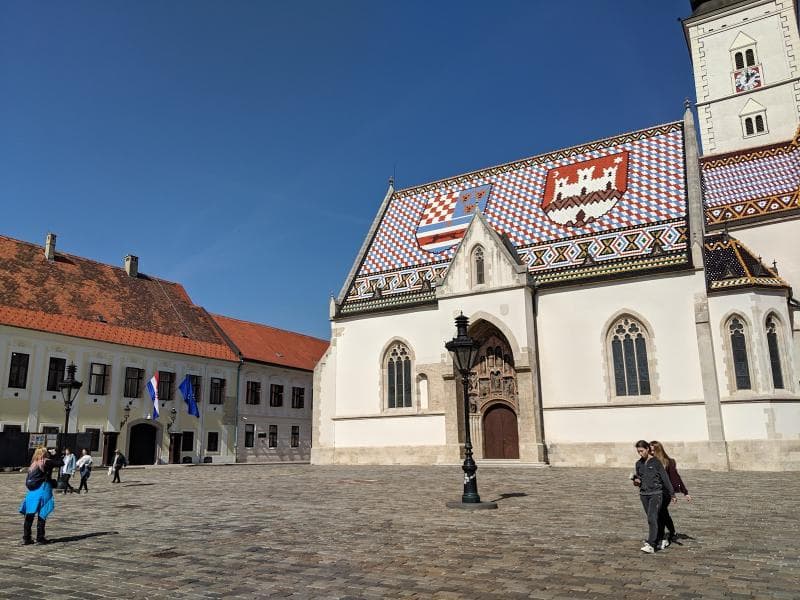
Discover the iconic Tiled Roof of St. Mark's Church in Zagreb, Croatia. Explore its unique heraldic design, rich history, and cultural significance.
Overview
The Tiled Roof of St. Mark's Church stands as one of Zagreb, Croatia's most visually striking and historically significant landmarks. Perched atop the Gothic church in the city's charming Upper Town, this vibrant mosaic roof is instantly recognizable and a beloved symbol of Croatian identity. Its colorful glazed tiles form two prominent coats of arms, telling a story of the nation's past right above the bustling St. Mark's Square. This unique architectural feature draws countless eyes, making it a focal point for visitors exploring the historic heart of the Croatian capital.
History & Cultural Background
While St. Mark's Church itself dates back to the 13th century, with elements of Romanesque and Gothic architecture, the iconic Tiled Roof in its present form is a product of a significant 19th-century restoration. Between 1876 and 1882, Viennese architect Friedrich von Schmidt and his collaborator Hermann Bollé undertook extensive renovations, during which this distinctive roof was created.
The roof is a masterwork of heraldry, displaying two intricate coats of arms crafted from thousands of ceramic tiles. On the left side, as viewed from the square, is the medieval coat of arms of the Triune Kingdom of Croatia, Dalmatia, and Slavonia. This emblem historically represented the aspirations for a united kingdom of these three Croatian regions. Within this larger coat of arms, you can discern elements specific to each region: the red and white checkerboard for Croatia, three crowned lion heads for Dalmatia, and a blue shield with a pine marten (kuna) between two stars for Slavonia. The pine marten, 'kuna' in Croatian, even lent its name to Croatia's former currency.
On the right side of the roof, the mosaic depicts the historical emblem of the City of Zagreb, specifically the Gradec coat of arms, featuring a white castle on a red background. This differs slightly from the modern official Zagreb coat of arms, which has a blue background, reflecting the historical period from which the roof's design originates. The church and its square have long been central to Croatian political life, with significant governmental buildings like the Croatian Parliament and Government Palace situated nearby, further cementing the roof's symbolic importance.
What Makes It Special
The Tiled Roof is extraordinary not only for its vibrant colors but for the profound historical narrative it presents. It transforms a functional church covering into a monumental piece of public art, visually articulating centuries of Croatian history and national pride. Unlike many European churches that feature more subdued roofing, St. Mark's boldly showcases its heritage with dazzling effect. The glazed tiles shimmer under the sun, creating a dynamic surface that captivates onlookers and serves as a powerful reminder of Croatia's rich and complex past. This distinctiveness makes it one of Zagreb's most photographed sights and a true architectural marvel.
Stories, Fun Facts & Local Details
The intricate design of the Tiled Roof has made it an enduring icon, appearing on countless postcards, travel guides, and promotional materials for Zagreb and Croatia. Its visual impact is so strong that it often defines the image of the city for many international travelers. The church itself, with its striking roof, often serves as a backdrop for important state ceremonies and city events, connecting the past with the present. Locals hold the church in high regard, and its prominent position in the Upper Town means it has witnessed countless historical moments unfold in St. Mark's Square. There's even an older coat of arms of Zagreb from 1499 preserved on the church's northwest wall, offering a glimpse into the city's heraldic history predating the roof's construction.
Visitor Perspective
Approaching St. Mark's Church, especially when rounding the corner onto the square, travelers are met with a breathtaking view of the Tiled Roof. Its splendor is often a moment of surprise and delight, exceeding expectations set by photographs. The contrast of the vivid roof against the more subdued stone facade of the church, and the surrounding historic buildings, creates a picturesque scene perfect for capturing memories. It's a structure that invites contemplation, encouraging visitors to pause and consider the stories woven into its colorful patterns. The roof is best viewed from the outside, offering an unobstructed panorama of its detailed artistry and historical symbolism, making it an essential stop for anyone wishing to understand the heart and soul of Zagreb.
Coordinates: 15.97367, 45.81639
View on Google Maps💬 How Travelers Describe This Place
Based on community votes
Beautiful
980Photogenic
396Unique
389Interesting
340Must See
201
Traveler Stories
Discover memorable experiences shared by travelers who have visited this place.
No traveler stories yet.
Be the first traveler to share what made this place memorable.

Tour
By
Spot
Discover amazing places around the world. Your journey starts here.
Explore
© 2026 TourBySpot. All rights reserved.