Theatre Façade
Sofia, Bulgaria
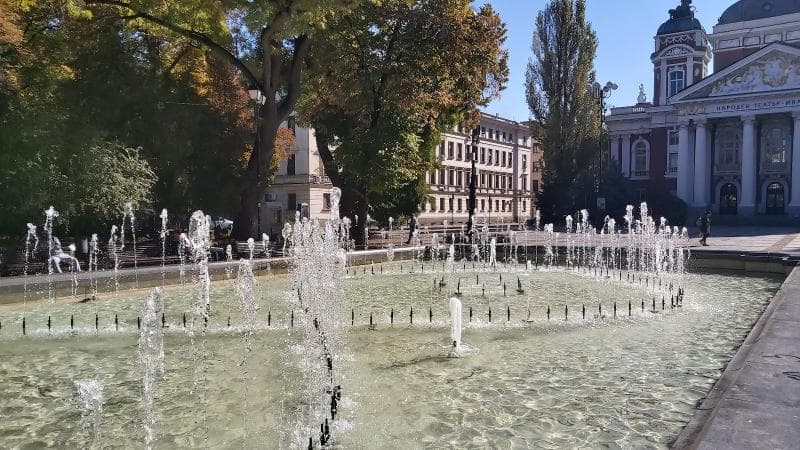
Explore the iconic Theatre Façade of the Ivan Vazov National Theatre in Sofia, Bulgaria. Discover its neoclassical architecture, rich history, and cultural significance.
Overview
The Ivan Vazov National Theatre in Sofia, Bulgaria, stands as a captivating architectural masterpiece and a profound symbol of the nation's cultural heritage. Its magnificent façade, located at the heart of the city and gracefully overlooking the City Garden, immediately draws the eye with its neoclassical elegance and intricate detailing. As Bulgaria's oldest and most authoritative theatrical institution, it is not merely a building but a living monument to Bulgarian arts and history. Regarded as one of the most beautiful theatre buildings in the Balkans, its exterior offers a breathtaking display of artistic prowess, making it a beloved landmark and a popular subject for photography among locals and visitors alike.
History & Cultural Background
The story of the Ivan Vazov National Theatre began in 1904, when the privately owned 'A Tear and Laughter' theatre company was transformed into a state-run institution. The construction of its iconic building commenced shortly thereafter, designed by the celebrated Viennese architects Ferdinand Fellner and Hermann Helmer. These architects were renowned across Central Europe for their prolific work, having designed dozens of theatre buildings. The theatre's neoclassical structure was completed in 1906 and officially opened its doors on January 3, 1907, instantly becoming one of Sofia's most imposing and representative buildings.
Over its long history, the theatre's façade has witnessed significant challenges and remarkable resilience. In 1923, a devastating fire caused extensive damage to the interior, though fortunately, the central façade remained largely intact. It was subsequently reconstructed in 1929 by German architect Martin Dülfer. Further damage occurred during the World War II bombings, but the theatre was meticulously restored in 1945 and again between 1971 and 1975, being brought back to its original grandeur by 1976. The theatre was named after Ivan Vazov, the eminent Bulgarian writer, poet, and playwright, widely considered the 'Patriarch of Bulgarian literature', honoring his immense contributions to the nation's cultural identity.
What Makes It Special
The façade of the Ivan Vazov National Theatre is a compelling blend of neoclassical design and intricate sculptural work. It features a grand portico dominated by six towering Corinthian columns, supporting a triangular pediment. Within this pediment, visitors can admire reliefs depicting scenes of Apollo, the Greek god of music and arts, surrounded by the Muses, creating a tableau that symbolizes artistic inspiration and cultural richness. Above the entrance, a magnificent sculptural ensemble further enhances its majestic appearance.
Adding to its unique charm, the building also features two twin towers crowned by statues of Nike, the winged Greek goddess of victory, lending an air of triumph and aspiration to the structure. The façade's detailed carvings and colonnades are exquisitely executed, showcasing the Bulgarian artistic style and cultural heritage. Its significance is further underscored by its depiction on the obverse of the Bulgarian 50 levs banknote, issued in 1999 and 2006, cementing its status as a national treasure.
Stories, Fun Facts & Local Details
The architects Fellner and Helmer were renowned for tailoring each of their 48 theatre designs across Europe to the specific city, ensuring that Sofia received one of their finest and most distinctive works. A touching local detail involves the theatre's namesake, Ivan Vazov himself. A devoted theatregoer, he maintained a permanently reserved seat in the second row until his passing, a testament to his profound love for the arts and his personal connection to this cultural institution.
Despite the severe fire in 1923 which ravaged much of the interior, the resilience of the façade meant that much of the building's original external character could be faithfully restored. This enduring exterior stands as a symbol of Bulgaria's commitment to preserving its artistic heritage through adversity. The theatre's unique tapestry of the front-of-house curtain, emblazoned with a motif inspired by Igor Stravinsky's ballet 'The Firebird,' also adds to its artistic legacy.
Visitor Perspective
For any traveler to Sofia, the Ivan Vazov National Theatre's façade is a must-see. Its central location in front of the verdant City Garden makes it easily accessible and a perfect starting point for exploring the city's cultural heart. The garden itself, with its fountains, green spaces, and benches, invites visitors to relax and soak in the atmosphere, often finding locals playing chess or enjoying the vibrant surroundings. Whether bathed in daylight or illuminated at night, the theatre's exterior offers a captivating sight, attracting many photographers.
Visitors are encouraged to take a leisurely stroll around the building to appreciate its intricate architectural details. For those wishing to delve deeper, guided tours are available, offering insights into the theatre's design, its storied past, and a behind-the-scenes look at its operations. The theatre is conveniently located within walking distance of other significant Sofia landmarks, such as the Alexander Nevsky Cathedral and the National Art Gallery, allowing for a rich cultural itinerary.
Coordinates: 23.326848, 42.695379
View on Google Maps💬 How Travelers Describe This Place
Based on community votes
Beautiful
539Interesting
517Photogenic
422Unique
251Must See
234
Traveler Stories
Discover memorable experiences shared by travelers who have visited this place.
No traveler stories yet.
Be the first traveler to share what made this place memorable.

Tour
By
Spot
Discover amazing places around the world. Your journey starts here.
Explore
© 2026 TourBySpot. All rights reserved.