The Western Facade
Paris, France
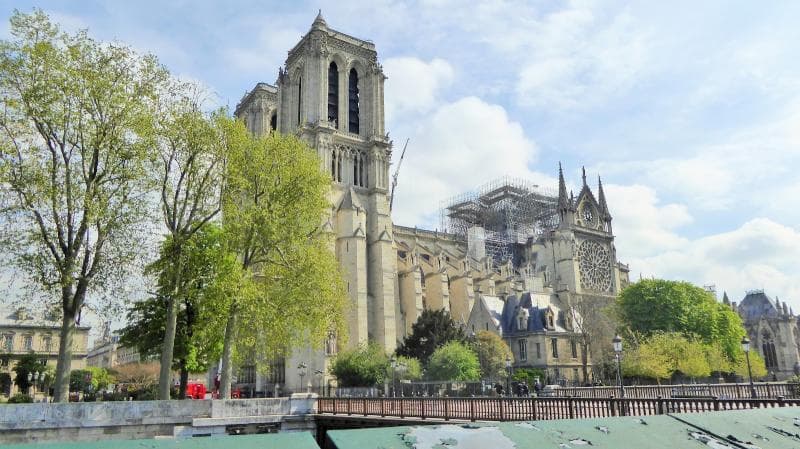
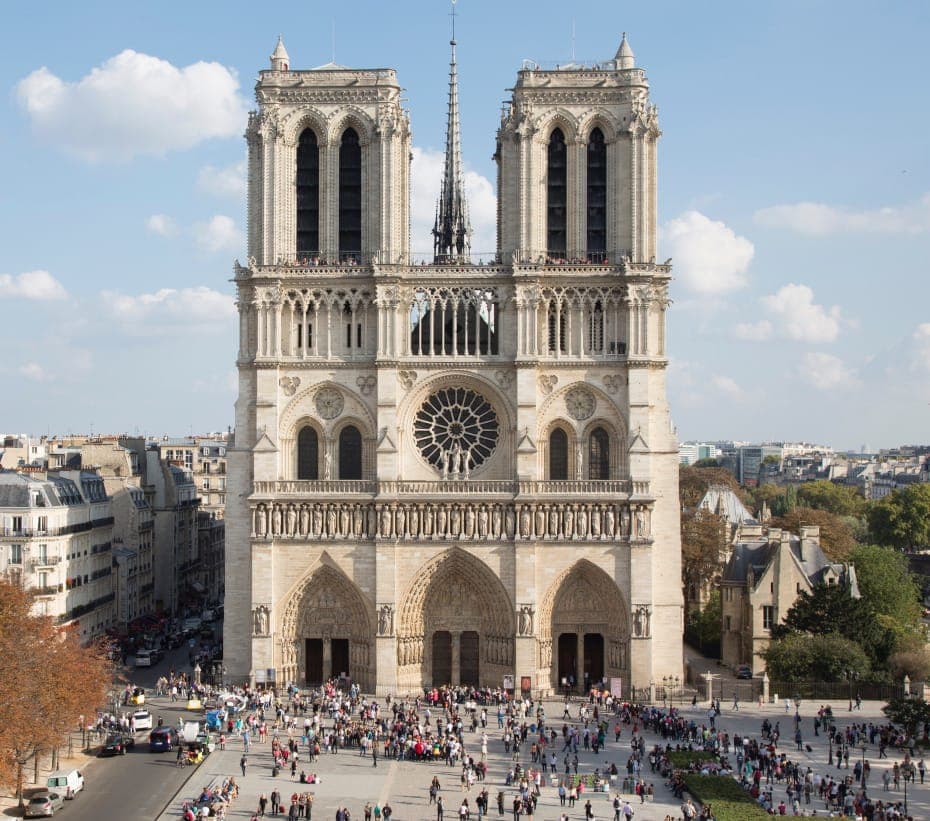
Discover the iconic Western Facade of Notre-Dame Cathedral in Paris, France. Explore its Gothic architecture, intricate portals, and rich history.
Overview
The Western Facade of Notre-Dame Cathedral in Paris, France, stands as a monumental masterpiece of Early Gothic architecture, serving as the principal entrance to this iconic religious edifice. Constructed primarily between 1200 and 1250, it presents a harmonious blend of vertical and horizontal lines, culminating in its famed twin towers. This grand front, often the first view for countless visitors, is characterized by its three intricately sculpted portals, the majestic Gallery of Kings, and the stunning Western Rose Window. It represents not only a significant architectural achievement of its era but also a profound narrative in stone, conveying centuries of history and faith.
Its imposing dimensions—43.5 meters wide and 69 meters high to the top of the towers—were a technological feat for the 13th century. The facade's design was innovative for its time, establishing a 'harmonic facade' concept that was both symmetrical and tripartite, influencing later Gothic cathedrals.
History & Cultural Background
The construction of Notre-Dame's Western Facade began around 1200 under Bishop Eudes de Sully and was largely completed by 1250, with the north tower finished by 1240 and the south tower between 1235 and 1250. Its development spanned several decades, overseen by various architects who contributed to its intricate design. The facade's sculptural program was intended to educate the largely illiterate populace on biblical stories and Christian dogma.
A significant period in its history was the French Revolution (1793), when the 28 statues of the Gallery of Kings were mistakenly identified as French monarchs and consequently destroyed or severely mutilated. It was during the extensive 19th-century restoration led by Eugène Viollet-le-Duc that these statues were painstakingly recreated, restoring much of the facade's original splendor.
What Makes It Special
The Western Facade is distinguished by several key features. At its base are three grand portals: the central Portal of the Last Judgment, the Portal of the Virgin on the left, and the Portal of Saint Anne on the right. Each portal is a sermon in stone, adorned with hundreds of figures illustrating biblical narratives. The Portal of the Last Judgment vividly depicts Christ in Majesty, the resurrection of the dead, and the weighing of souls. The Portal of the Virgin narrates the death, assumption, and coronation of Mary as Queen of Heaven. The Portal of Saint Anne, the oldest of the three (circa 1200), showcases episodes from the childhood of Christ and is notable for its Romanesque elements, some of which were salvaged from an earlier cathedral.
Above the portals, the Gallery of Kings presents 28 statues representing the generations of the kings of Judah, preceding Christ. Further up, the magnificent Western Rose Window, dating to approximately 1225 and 9.6 meters in diameter, is a stunning focal point, symbolizing the Virgin Mary with Child, flanked by angels. The two square towers, each 69 meters high, house bells and offer panoramic views of Paris.
Stories, Fun Facts & Local Details
One fascinating discovery occurred in 1977 when 21 original heads from the Gallery of Kings, thought lost forever, were unearthed during excavation work on Rue de la Chaussée d'Antin. These heads, retaining traces of their original polychromy, are now preserved and exhibited at the Musée de Cluny (National Museum of the Middle Ages), offering a tangible link to the cathedral's 13th-century appearance.
The architectural genius of the facade impressed even 20th-century masters; the renowned architect Le Corbusier famously described its harmonic simplicity as 'a pure creation of the spirit' managed by the square and the circle, admiring its geometric purity. The facade's sculptures, beyond their religious narratives, also occasionally feature whimsical or symbolic details, like the allegories of the Church and the Synagogue, or individual statues within the recreated Gallery of Kings rumored to bear the likenesses of historical figures like Viollet-le-Duc himself.
Visitor Perspective
For any traveler approaching Notre-Dame, the Western Facade is the quintessential image of the cathedral, immediately evoking a sense of grandeur and historical depth. The sheer scale and intricate detail of the sculptures invite contemplation, encouraging visitors to decipher the biblical stories carved into the stone. Entering through one of its three portals (once fully accessible) transports one directly into centuries of faith and artistry.
The facade's function extends beyond mere aesthetics; it historically served as the primary entry point for the faithful, channeled western light into the nave, and through its towers, amplified the sound of its significant bells across Paris. Even amidst ongoing restoration efforts following the 2019 fire, the Western Facade remains a powerful symbol of Parisian resilience and artistic heritage, a testament to human creativity and spiritual aspiration that continues to awe and inspire.
Coordinates: 2.34987, 48.85294
View on Google Maps💬 How Travelers Describe This Place
Based on community votes
Photogenic
680Must See
514Interesting
432Unique
316Beautiful
196
Traveler Stories
Discover memorable experiences shared by travelers who have visited this place.
No traveler stories yet.
Be the first traveler to share what made this place memorable.

Tour
By
Spot
Discover amazing places around the world. Your journey starts here.
Explore
© 2026 TourBySpot. All rights reserved.