The Wall
Cancún, Mexico
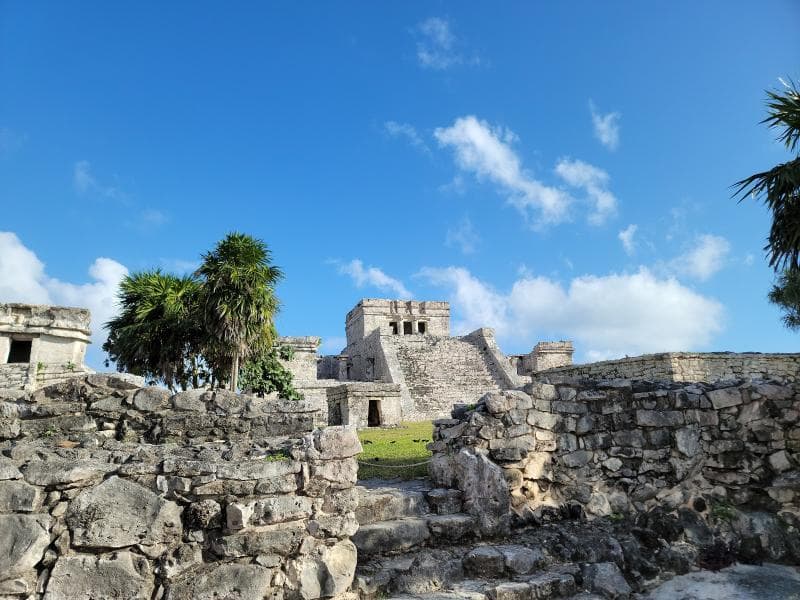
Explore 'The Wall' of Tulum Ruins, a formidable ancient Mayan fortification in Cancún, Mexico, revealing its history, purpose, and cultural significance.
Overview
Stepping through one of the ancient gateways into the Tulum Ruins, visitors are immediately greeted by the impressive sight of 'The Wall'. This monumental limestone fortification isn't merely a boundary; it's a testament to the ingenuity and strategic prowess of the ancient Maya who once thrived in this coastal city in Cancún, Mexico. Tulum, originally known as Zamá, meaning 'City of Dawn' or 'sunrise', gained its current name, which is the Yucatec Mayan word for 'wall' or 'fence', owing to this very structure.
Unlike many other Mayan cities nestled deep within the jungle, Tulum uniquely sits atop a 12-meter (39-foot) cliff overlooking the turquoise waters of the Caribbean Sea. While the formidable sea cliffs provided natural protection on one side, 'The Wall' completed Tulum's defensive perimeter, enclosing the city on its landward three sides – north, south, and west. This defensive masterpiece measures approximately 784 meters (around 2,572 feet) in length, is about 7 to 8 meters (23 to 26 feet) thick, and stands between 3 to 5 meters (10 to 16 feet) high.
History & Cultural Background
Tulum rose to prominence during the Late Postclassic period of Mayan civilization, primarily between the 13th and 15th centuries. It served as a vital port city for Coba, an inland Mayan metropolis, facilitating extensive trade routes both by land and sea. Goods such as jade, obsidian, turquoise, and textiles flowed through Tulum, connecting it with distant regions like Central Mexico and Central America.
The construction of 'The Wall' during this period highlights the increasing importance of defense in Mayan society. It was a strategic decision to fortify this crucial trading hub, protecting its valuable resources and inhabitants from potential threats. The city remained active for about 70 years after the Spanish arrived in the early 16th century but was eventually abandoned due to diseases brought by the Europeans by the end of that century.
What Makes It Special
'The Wall' of Tulum is unique because it's one of the few Mayan cities protected by such a substantial fortification, especially on the coast. Its sheer scale and thickness—up to 8 meters—demonstrate the Maya's commitment to protecting this strategic location. The wall wasn't just a physical barrier; it helped define the city's structure, creating a controlled environment for the elite within its confines.
With five narrow gateways—two on the north, two on the south, and one on the west—the wall regulated access and movement into and out of the city. These controlled entry points, along with watchtowers at the southwest and northwest corners, underscore Tulum's design as a well-defended fortress. The seamless integration of natural defenses (the sea cliffs) with engineered ones ('The Wall') showcases an advanced understanding of strategic urban planning by the Maya.
Stories, Fun Facts & Local Details
The name 'Tulum' itself is a direct reference to this impressive wall, distinguishing it from its earlier name, Zamá. The presence of such a robust defensive structure has led to various theories about its purpose. Some archaeologists believe it protected the Mayan population of around 600 people inside from invaders. Another theory suggests it housed only priests and nobility, while commoners resided outside.
Evidence suggests that the wall was not solely for defense but also played a role in controlling trade and perhaps even social segregation within the city. Imagine the bustling scene around these gateways, with merchants bringing goods from afar, navigating the carefully planned entry points. The watchtowers embedded in the wall were not just observation posts; some even housed religious altars, blending spiritual elements with defense.
Visitor Perspective
Today, as a visitor to the Tulum Ruins, approaching 'The Wall' offers a profound sense of stepping back in time. It provides a tangible connection to the ancient Maya and their sophisticated understanding of architecture and defense. While you cannot climb directly on the wall for preservation reasons, observing its immense scale and walking through its gateways helps paint a vivid picture of this once-thriving fortified city. The wall frames the stunning coastal landscape, allowing glimpses of the Caribbean Sea and the iconic El Castillo within, providing a dramatic backdrop for exploration. The layout, defined by this ancient barrier, guides your journey through the historical site, enhancing the narrative of Tulum as a powerful, walled seaport on the edge of the Maya world.
Coordinates: -87.4294, 20.213
View on Google Maps💬 How Travelers Describe This Place
Based on community votes
Interesting
910Unique
755Photogenic
374Must See
183Beautiful
28
Traveler Stories
Discover memorable experiences shared by travelers who have visited this place.
No traveler stories yet.
Be the first traveler to share what made this place memorable.

Tour
By
Spot
Discover amazing places around the world. Your journey starts here.
Explore
© 2026 TourBySpot. All rights reserved.