The Underwater Cavern Network
Cancún, Mexico
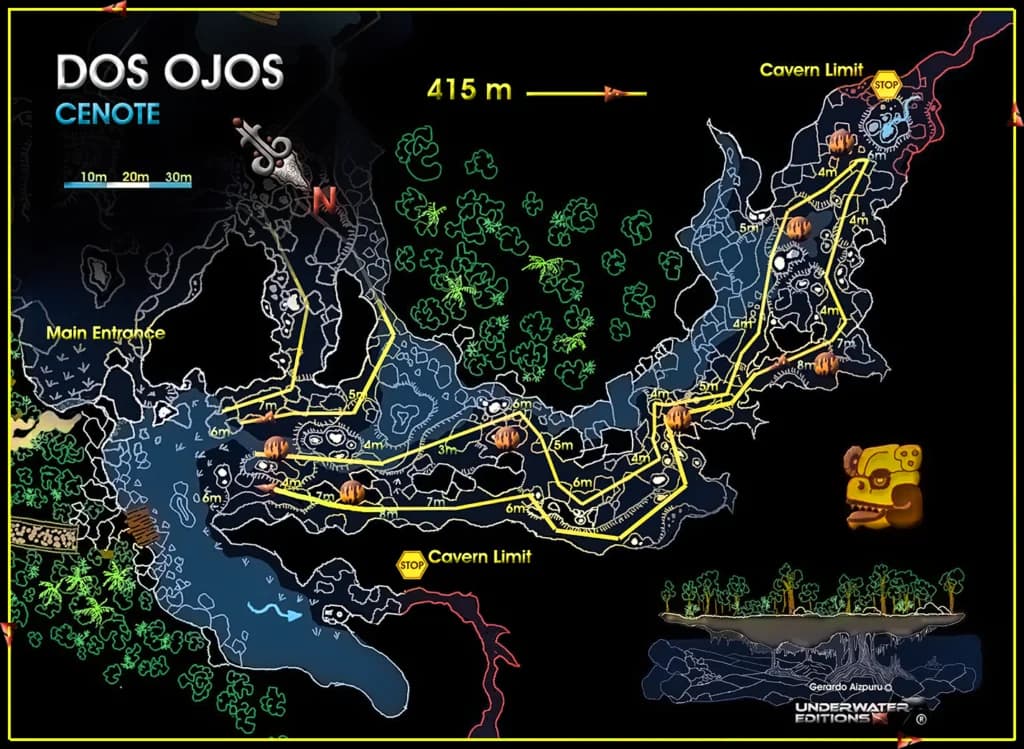
Explore The Underwater Cavern Network within Cenote Dos Ojos, Cancún, Mexico. Discover ancient Mayan history, stunning formations, and crystal-clear waters.
Overview
Deep within the heart of the Yucatán Peninsula, nestled between the vibrant towns of Tulum and Playa del Carmen in Quintana Roo, Mexico, lies the captivating Cenote Dos Ojos. Its name, meaning 'Two Eyes' in Spanish, aptly describes its two circular entrances that open into a mesmerizing subterranean world. This natural wonder is not merely a cenote; it is a gateway to 'The Underwater Cavern Network,' a significant part of the vast Sistema Sac Actun, one of the world's most extensive underwater cave systems. Recognized globally for its exceptionally clear freshwater and breathtaking geological formations, Cenote Dos Ojos beckons curious travelers to explore its aquatic depths. It serves as a premier destination for both snorkeling and cavern diving, offering an unparalleled opportunity to witness an ancient, hidden landscape.
History & Cultural Background
The story of cenotes like Dos Ojos stretches back millennia, woven into the very fabric of the Yucatán Peninsula's geological past. These natural sinkholes began forming thousands of years ago when the region's porous limestone bedrock, a remnant of ancient marine life, collapsed, revealing the groundwater below. This process, known as karstification, shaped the intricate network of underground rivers and caverns that characterize the area.
For the ancient Maya civilization, cenotes were far more than just sources of fresh water in a land devoid of surface rivers; they were sacred portals to Xibalba, their mythical underworld. Considered sacred spaces where the spiritual and physical worlds converged, the Maya performed vital ceremonies, rituals, and offerings, including human sacrifices, to appease deities like Chaac, the rain god. Archaeological investigations within these submerged caves have unearthed invaluable treasures, from the remains of ancient megafauna to human skeletons, some dating back up to 13,000 years, providing a unique 'time capsule' of prehistoric life and early human habitation during periods when the caves were dry.
What Makes It Special
What truly sets 'The Underwater Cavern Network' of Cenote Dos Ojos apart is its sheer scale and the immersive experience it offers. As a key component of the Sistema Sac Actun, it once held the title of the world's longest underwater cave system after their connection was discovered in 2018. Today, it remains one of the longest, inviting exploration into a vast, interconnected realm. The water here boasts extraordinary visibility, often exceeding 60 meters (200 feet), a result of rainwater being meticulously filtered through the limestone. This clarity, combined with a constant, comfortable temperature of 24-26°C (76-78°F) year-round, creates ideal conditions for underwater discovery.
Visitors can choose between two distinct primary routes for diving: the Barbie Line and the Batcave. The Barbie Line, often recommended for beginners, features wider passages and abundant natural light filtering from the surface, creating stunning beams that illuminate massive stalactite and stalagmite formations. In contrast, the Batcave offers a more adventurous experience, leading divers through darker, more enclosed environments that culminate in an air-filled dome where hundreds of bats reside. Both routes offer a unique overhead environment experience, allowing certified Open Water divers to safely explore cave-like settings under the guidance of professionals, always remaining within the natural light zone.
Stories, Fun Facts & Local Details
Beyond its geological grandeur, Cenote Dos Ojos holds a collection of intriguing tales and features. The very name, 'Two Eyes,' originated from the two adjacent entrances that resemble a pair of eyes peering into the earth. The popular Barbie Line earned its whimsical name from a Barbie doll reportedly discovered by early explorers in a remote section of the cave, now amusingly marked by a replacement doll accompanied by a plastic crocodile. Meanwhile, the Batcave provides a truly unique encounter, allowing divers to surface within a cavern where countless bats flutter in the overhead air pocket, their calls echoing in the natural chamber. The surreal beauty of this underwater world has even captured the attention of filmmakers, with scenes from the 2001 IMAX film 'Journey into Amazing Caves' and portions of the 2005 Hollywood movie 'The Cave' being filmed within Dos Ojos. The entire area surrounding Cenote Dos Ojos is a protected natural reserve, emphasizing its ecological importance. Within the larger Dos Ojos Park, visitors can also explore other remarkable cenotes such as Cenote Jaguar, Cenote Nicte Ha, and the deeper El Pit.
Visitor Perspective
Embarking on a journey into 'The Underwater Cavern Network' of Cenote Dos Ojos is an experience that transcends a typical swim or dive; it's a descent into history and natural artistry. Whether you choose to snorkel on the surface, marveling at the light penetration, or dive deeper into the cavern zones, the clarity of the water and the intricate limestone formations promise a magical and unforgettable adventure. It feels akin to floating through windows into a pristine, underground world, untouched by time. While snorkeling is accessible to most, cavern diving requires at least an Open Water certification, and engaging a qualified local guide is highly recommended to navigate the system safely and appreciate its nuances. To preserve this fragile ecosystem, visitors are encouraged to use biodegradable sunscreen and respect the natural environment. A visit here offers a rare connection to both the Earth's ancient geological processes and the profound cultural heritage of the Maya, leaving a lasting impression of wonder and respect for this extraordinary hidden realm.
Coordinates: -87.39194, 20.32472
View on Google Maps💬 How Travelers Describe This Place
Based on community votes
Beautiful
872Must See
846Unique
684Interesting
363Photogenic
250
Traveler Stories
Discover memorable experiences shared by travelers who have visited this place.
No traveler stories yet.
Be the first traveler to share what made this place memorable.

Tour
By
Spot
Discover amazing places around the world. Your journey starts here.
Explore
© 2026 TourBySpot. All rights reserved.