The Rose Windows
Paris, France
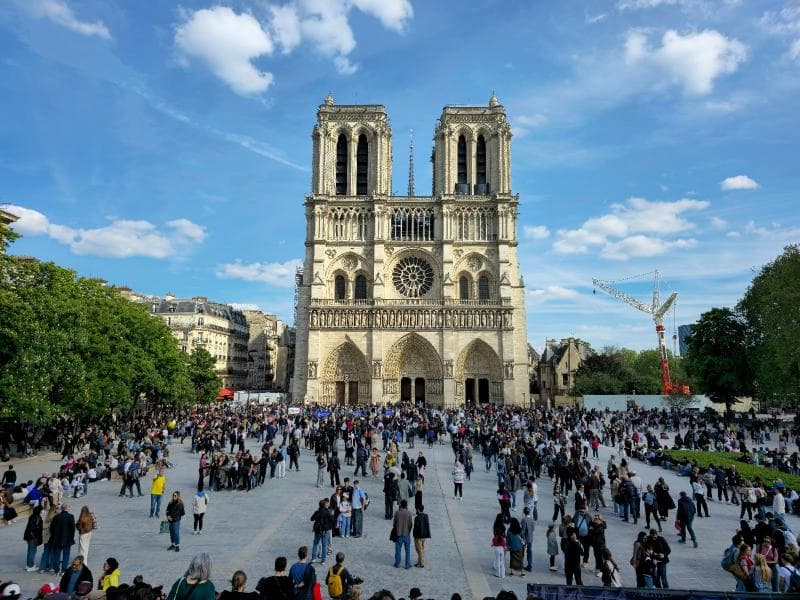
Discover the stunning Rose Windows of Notre-Dame Cathedral in Paris, France. Explore their rich history, symbolic art, and miraculous survival of the 2019 fire.
Overview
The Rose Windows of Notre-Dame Cathedral in Paris, France, are among the most celebrated masterpieces of Gothic stained glass in the world. Often spoken of in the singular, 'The Rose Windows' actually refers to three magnificent circular stained-glass windows: one on the west facade and two larger ones adorning the north and south transepts. These luminous circles of colored glass bathe the cathedral's interior in divine light, narrating the sacred history of Christianity through their intricate designs and vibrant hues. Each window is unique in its size, symbolism, and color palette, yet collectively they represent a profound theological statement and an engineering marvel of the 13th century. Remarkably, all three rose windows miraculously survived the devastating fire of April 2019, albeit with some heat damage, preserving their centuries-old legacy for future generations.
History & Cultural Background
The architectural form of rose windows emerged in the 12th century, allowing Gothic builders to pierce massive stone walls with enormous circular openings. The term 'rose window' itself was not commonly used until the 17th century. Notre-Dame's three rose windows date from the 13th century, each built at different times and with varying degrees of original glass preservation.
- The West Rose Window: Located above the main entrance, this is the oldest and smallest of the three, completed around 1225. At the time of its creation, it was the largest rose window in the world. However, none of its original medieval glass remains today, having been entirely recreated during the 19th-century restoration by Eugène Viollet-le-Duc.
- The North Rose Window: Constructed between 1250 and 1260 under the direction of architect Jean de Chelles, this window is situated in the north transept. It is widely considered to contain the most authentic medieval stained glass in the entire cathedral, preserving a significant portion of its original 13th-century glass. It was gifted by King Saint Louis IX.
- The South Rose Window: Also commissioned by King Saint Louis IX and completed around 1260, this window in the south transept is slightly larger than its northern counterpart. Its design is attributed to Jean de Chelles, with Pierre de Montreuil completing the work. While preserving some medieval glass, it also features 19th-century restorations due to historical color stability issues and renovations in the 18th century.
These windows served a crucial purpose in medieval times, acting as visual sermons that communicated divine truths and biblical narratives to a largely illiterate populace.
What Makes It Special
Each rose window at Notre-Dame tells a distinct story, combining theological symbolism with breathtaking artistry and engineering prowess.
- West Rose Window: Measuring approximately 9.6 meters (31 feet) in diameter, it features the Madonna and Child at its center. Surrounding them, its 24 rays depict the twelve tribes of Israel, pairs of vices and virtues, and the twelve signs of the zodiac associated with the labors of the months, emphasizing the Last Judgment and the divine order of the universe.
- North Rose Window: With a diameter of 12.9 meters (42 feet), this window is a vision of the Old Testament. It centers on the Virgin Mary enthroned with the Christ Child, surrounded by prophets, kings, and judges from the Old Testament, underscoring Mary's role as the link between the past and Christ's arrival. Its dominant cool blue tones create a serene and mystical atmosphere, specifically chosen to maintain visual impact in the indirect light of its north-facing position.
- South Rose Window: At about 13 meters (42 feet) in diameter, it is the largest of the three. This 'midday rose' depicts Christ in majesty at its center, surrounded by apostles, martyrs, and saints, symbolizing the New Testament and Christ's triumph. Its warm reds, golds, and oranges set the cathedral ablaze under afternoon sunlight, a deliberate choice to enhance the dramatic effect of direct light.
The circular shape of the rose window itself holds profound symbolism, representing eternity, divine perfection, and the heavens in Christian theology.
Stories, Fun Facts & Local Details
- A Miracle of Survival: All three rose windows famously survived the catastrophic 2019 fire, a feat cathedral spokesman André Finot called 'a bit of a miracle'. Protected by the stone vaulting, they emerged intact, though restoration efforts are underway to address smoke and lead damage.
- Giants and Dwarves: Below the North Rose Window, a unique depiction shows four prophets (Isaiah, Daniel, Jeremiah, Ezekiel) carrying the four Evangelists (Matthew, Mark, Luke, John) on their shoulders. This illustrates the 13th-century meditation: 'We are like dwarves perched on the shoulders of giants, so that we can see more than they, not because our sight is sharper or our stature higher, but because we are lifted up by their giant size.'
- Color and Light Engineering: The distinct color palettes of the north (cool blues) and south (warm reds/golds) rose windows were not arbitrary. They were thoughtfully designed to optimize the visual experience based on the varying sunlight they receive throughout the day.
- 18th-Century Renovation: In the 18th century, some of the medieval stained glass was replaced with clear glass by canons seeking a brighter, more 'modern' look, diminishing the original luminous and colorful effect. Fortunately, the rose windows largely escaped this fate.
Visitor Perspective
Standing beneath Notre-Dame's Rose Windows is an experience that transcends mere sightseeing; it's an immersion into centuries of artistry and faith. As sunlight streams through thousands of meticulously crafted glass pieces, the cathedral's interior is transformed into a kaleidoscope of shifting colors, painting the stone floors and columns with an ethereal glow. This ever-changing interplay of light and color creates a mystical atmosphere, allowing visitors to connect with the spiritual awe medieval worshippers must have felt. The sheer scale and intricate detail of these 'crown jewels of Gothic architecture' command attention, inviting contemplation of the biblical narratives and symbolic figures they depict. It is a moment of profound beauty, where the past and present merge in a radiant display of human ingenuity and devotion.
Coordinates: 2.35, 48.85306
View on Google Maps💬 How Travelers Describe This Place
Based on community votes
Interesting
958Beautiful
743Unique
719Photogenic
382Must See
176
Traveler Stories
Discover memorable experiences shared by travelers who have visited this place.
No traveler stories yet.
Be the first traveler to share what made this place memorable.

Tour
By
Spot
Discover amazing places around the world. Your journey starts here.
Explore
© 2026 TourBySpot. All rights reserved.