The Orsay Clock
Paris, France
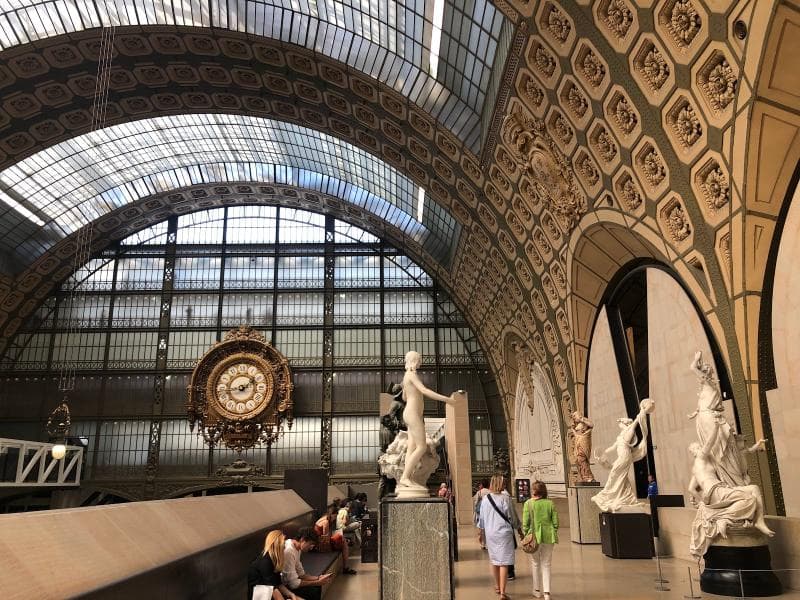
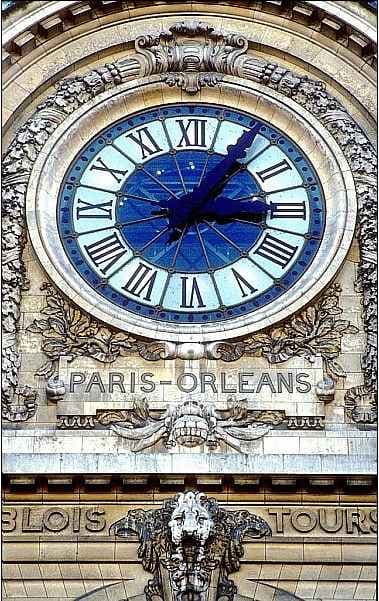
Discover The Orsay Clock in Paris, France – an iconic symbol within the Musée d'Orsay, offering stunning views of the Seine and Louvre through its historic dial.
Overview
Nestled within the grand Beaux-Arts architecture of the Musée d'Orsay in Paris, France, 'The Orsay Clock' is far more than a mere time-telling device. It stands as an iconic landmark, a powerful symbol of the museum's history, and a beloved feature for countless visitors. Situated predominantly on the fifth floor of the former railway station, this monumental clock offers a truly unique perspective of the City of Lights. Its transparent dial frames breathtaking panoramic views, encompassing the winding Seine River, the majestic Louvre Museum directly across the water, and the distant silhouette of Montmartre and its Sacré-Cœur Basilica. Once a functional timepiece guiding travelers, it now serves as a captivating window, inviting contemplation on the passage of time and the rich tapestry of Parisian life.
While many refer to 'the' Orsay Clock, it is worth noting that the building actually features several grand clocks. The most famous one, visible from within the museum, allows visitors to step behind its face. Other monumental clocks adorn the exterior facade, visible from the Seine, and one can even be found in the museum's restaurant. Each clock is a testament to the building's original grandeur, blending industrial design with an enduring elegance that continues to captivate onlookers.
History & Cultural Background
The story of the Orsay Clock is intrinsically linked to the building it inhabits. The Musée d'Orsay was originally conceived as the Gare d'Orsay, a magnificent railway station designed by architect Victor Laloux for the 1900 Exposition Universelle. The station was an engineering marvel of its time, notable for being the world's first electrified urban rail terminal. The monumental clocks were an integral part of Laloux's design, intended to serve a practical purpose: to keep train travelers punctual for their departures and arrivals.
However, the station's functional life was relatively short-lived. By 1939, the Gare d'Orsay became obsolete as its platforms proved too short for the longer, more modern trains. During World War II, the vast space found a somber new purpose, serving as a postal center for packages destined for prisoners of war. The building faced an uncertain future until, in 1978, the decision was made to transform it into a museum. It reopened its doors as the Musée d'Orsay in December 1986, dedicated to showcasing French art from 1848 to 1914, with a particular focus on Impressionist and Post-Impressionist masterpieces. In this transformation, the clocks, once symbols of industrial punctuality, were reinvented as powerful cultural icons, bridging the past and present.
What Makes It Special
The Orsay Clock's enduring appeal lies in its unique blend of function, form, and symbolism. It is a masterpiece of Belle Époque design, with its elegant lines, intricate detailing, and massive scale. More than its aesthetic beauty, what truly sets this clock apart is its transparent face. From the inside of the museum, visitors are invited to step behind the colossal dial and gaze out at Paris through its Roman numerals and golden framework. This provides an unparalleled framing of the cityscape, transforming the ordinary view into a living, breathing artwork. The clock acts as a powerful metaphor for the passage of time, reminding us of the building's journey from a bustling transport hub to a revered cultural institution. It eloquently symbolizes the reinvention of space and the seamless integration of industrial heritage into the realm of art.
Stories, Fun Facts & Local Details
Beyond its grand appearance, the Orsay Clock harbors a few intriguing secrets and stories. One widely discussed fun fact is that the clock faces on the facade, particularly the main exterior ones, do not always display the correct time. Some accounts suggest that the hands might even move counter-clockwise at times, primarily to maintain architectural symmetry rather than for accurate timekeeping. This delightful quirk adds to its mystique and charm. The clock's iconic status extends beyond the museum walls; it has made appearances in numerous films, books, and artistic works, cementing its place in popular culture as a universal symbol of nostalgia and mystery.
It's also interesting to remember the architectural ingenuity involved in its creation. As part of the Gare d'Orsay, the building itself was a cutting-edge design for its era, showcasing advanced technology for the 1900 Universal Exhibition. The presence of multiple monumental clocks throughout the former station further underscores the importance of time and precision in the industrial age, a stark contrast to their current role as objects of artistic and historical contemplation.
Visitor Perspective
For many travelers, encountering the Orsay Clock is a highlight of their visit to the Musée d'Orsay. The most sought-after experience involves ascending to the fifth floor, where the colossal clock facing the Seine awaits. Here, a crowd often gathers, each person eager to capture the perfect photograph or simply to absorb the breathtaking view. Standing behind the clock, with the historic mechanism and Roman numerals foregrounding the Parisian panorama, is a moment of quiet awe. It offers a cinematic perspective, distinct from any other observation point in the city, allowing one to literally look through time at the timeless beauty of Paris.
This unique vantage point encourages a reflective pause amidst the museum's extensive art collections. It's a chance to connect with the building's past, to imagine the hurried travelers of a century ago, and to appreciate how this former train station has been artfully repurposed. The clock is not just a backdrop for a photo; it is an active participant in the visitor's journey, making it a truly unforgettable and deeply meaningful part of the Musée d'Orsay experience.
Coordinates: 2.32653, 48.85992
View on Google Maps💬 How Travelers Describe This Place
Based on community votes
Must See
898Photogenic
853Beautiful
667Interesting
190Unique
32
Traveler Stories
Discover memorable experiences shared by travelers who have visited this place.
No traveler stories yet.
Be the first traveler to share what made this place memorable.

Tour
By
Spot
Discover amazing places around the world. Your journey starts here.
Explore
© 2026 TourBySpot. All rights reserved.