The Mosaics in the Quire
London, United Kingdom
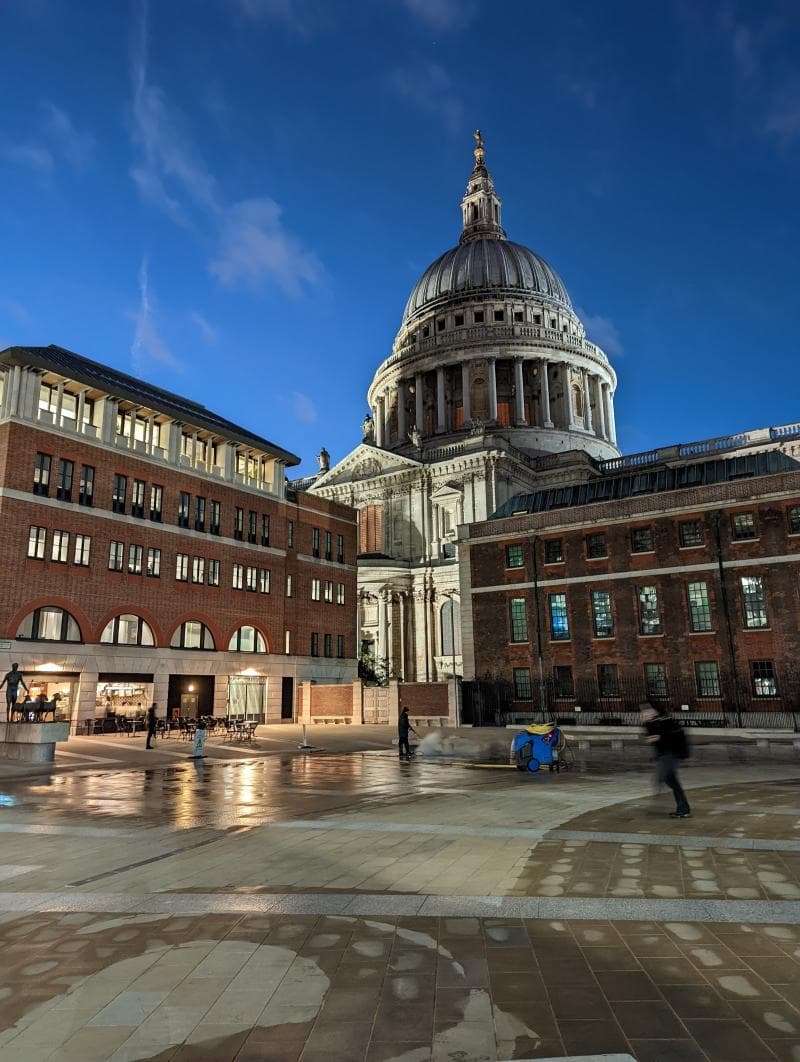
Explore the stunning Mosaics in the Quire of St. Paul’s Cathedral, London, UK. Discover their rich history, vibrant artistry, and unique details.
Overview
Stepping into the Quire of St. Paul’s Cathedral in London, visitors are immediately drawn upwards to a breathtaking display of shimmering gold and vibrant color: the magnificent Mosaics in the Quire. These intricate artworks, covering the ceilings and walls of this sacred space, were not part of Sir Christopher Wren's original Baroque design for the cathedral. Instead, they represent a grand Victorian-era embellishment, brought to life through the vision of artist William Blake Richmond. Installed between 1891 and 1904, these mosaics transformed the Quire into a radiant spectacle, adding a profound layer of visual storytelling and spiritual grandeur to one of London's most iconic landmarks.
History & Cultural Background
St. Paul's Cathedral, a masterpiece of English Baroque architecture, rose from the ashes of the Great Fire of London in the late 17th century, designed by Sir Christopher Wren and completed in 1710. For many years, its interior remained relatively austere, adhering to a Protestant aesthetic that emphasized light and space over ornate decoration.
However, by the mid-19th century, a shift in artistic and religious sensibilities occurred. Queen Victoria herself remarked that the cathedral's interior felt 'dark, dingy, and undevotional', prompting a movement to introduce more vibrant ornamentation.
This led to the ambitious commission of Sir William Blake Richmond, a prominent painter and designer, to create the mosaics for the Quire and Apse. Richmond, who had been discussing the interior decoration since 1874, began developing his scheme in 1890.
Influenced by the rich, luminous mosaics of Byzantine and early Christian art he observed in Italy, Greece, and Egypt, Richmond embarked on a monumental project. He collaborated closely with James Powell and Sons, renowned glassmakers, to develop new colors and materials for the tesserae, a partnership that significantly impacted the burgeoning Arts and Crafts Movement.
Despite some initial controversy and criticism from those who felt mosaics were not part of English tradition, Richmond's vision prevailed, introducing a dazzling, jewel-like quality that had been absent from Wren's original conception.
What Makes It Special
The Mosaics in the Quire are special not only for their sheer scale but also for their innovative artistry and profound thematic content. Comprising millions of tiny tesserae made of colored glass and gold leaf, they literally encrust the ceilings and walls, catching the light and creating an ever-changing, shimmering effect.
Richmond's design provides an extraordinary vision of 'The Creation', featuring a continuous narrative across the saucer domes. From east to west, visitors can observe 'The Creation of the Birds', 'The Creation of the Fishes', and 'The Creation of the Beasts', each depicted with remarkable detail and dynamism.
Beyond the biblical narratives, the mosaics incorporate a blend of classical cultures and traditional Christian iconography, showcasing allegorical figures, angels, and detailed natural elements. The bold use of color and the Byzantine-inspired style set these mosaics apart, offering a striking contrast to the cathedral's underlying Baroque structure and serving as a testament to Victorian artistic ambition.
Stories, Fun Facts & Local Details
- It was Queen Victoria's direct critique of the cathedral's somber interior that helped spur the decision to commission the vibrant mosaics, marking a significant shift in decorative philosophy for St. Paul's.
- Artist William Blake Richmond was named after his father's close friend, the renowned poet and artist William Blake.
- Among the detailed creatures depicted in 'The Creation' mosaics, observant visitors can spot a peacock in 'The Creation of the Birds', an eel in 'The Creation of the Fishes', and even a cat among 'The Creation of the Beasts'. Richmond was reportedly most proud of 'The Creation of the Fishes' mosaic, admiring its turbulent and frothing depiction of the sea.
- The complex installation process involved 21 craftspeople and took approximately ten years to complete, with work commencing in 1891 and concluding in 1904.
- A major cleaning program in 2003 helped restore the mosaics to their original brilliance, allowing their colors to shine with renewed intensity.
Visitor Perspective
Upon entering the Quire, visitors are encouraged to take a moment to gaze upwards, allowing their eyes to adjust to the sheer scale and luminosity of the mosaics. While the intricate details can be challenging to discern from the cathedral floor due to their height, the overall effect is one of overwhelming beauty and spiritual upliftment. The glittering surfaces evoke a sense of the divine, bathing the space in a warm, ethereal glow. You might want to seek out the specific animals mentioned in the 'Stories, Fun Facts & Local Details' section to truly appreciate the artist's attention to detail. Although seeing every minute tessera might require binoculars, the collective brilliance of the Mosaics in the Quire is an unforgettable experience, an inspiring fusion of faith, art, and architectural ingenuity.
Coordinates: -0.0984, 51.5138
View on Google Maps💬 How Travelers Describe This Place
Based on community votes
Photogenic
685Interesting
446Beautiful
152Unique
33Must See
16
Traveler Stories
Discover memorable experiences shared by travelers who have visited this place.
No traveler stories yet.
Be the first traveler to share what made this place memorable.

Tour
By
Spot
Discover amazing places around the world. Your journey starts here.
Explore
© 2026 TourBySpot. All rights reserved.