The Last Column
New York, United States
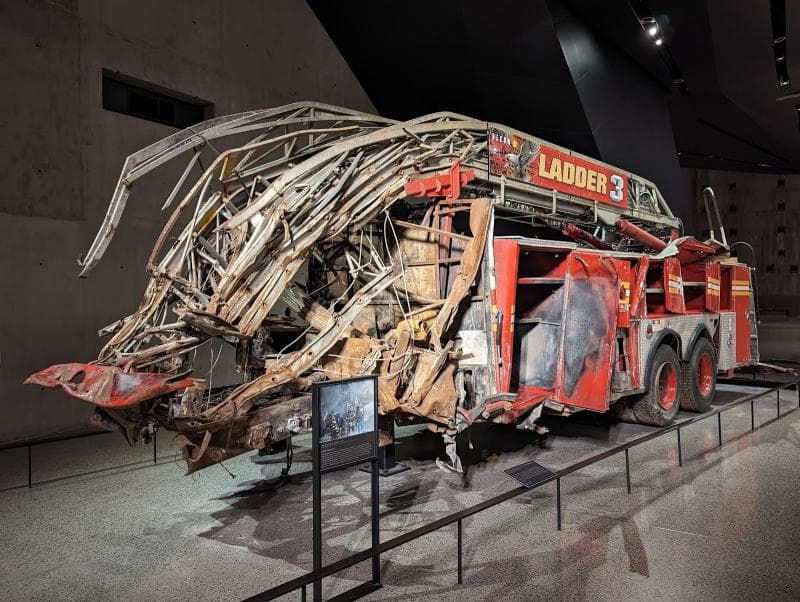

Discover The Last Column at the 9/11 Memorial & Museum in New York, United States – a powerful symbol of resilience and remembrance.
Overview
Deep within the Foundation Hall of the 9/11 Memorial & Museum in New York, United States, stands a powerful and deeply moving artifact known as The Last Column. This towering 36-foot, 58-ton steel beam is much more than just a structural remnant; it is a profound symbol of resilience, remembrance, and the unwavering human spirit in the face of unimaginable tragedy. Once a vital part of the South Tower's inner core, specifically Column 1001B, it endured the catastrophic collapse of the World Trade Center on September 11, 2001.
Its unique preservation and subsequent transformation into a collective memorial make it a central and poignant focal point of the museum. For many, The Last Column encapsulates the nine-month recovery effort at Ground Zero, representing the physical and emotional arduous journey that followed the attacks. It stands as a testament to those who were lost and to the extraordinary efforts of those who responded and rebuilt.
History & Cultural Background
Following the devastation of September 11, 2001, The Last Column was discovered still anchored to bedrock amidst the wreckage of the World Trade Center site. During the arduous nine-month recovery period, this resilient steel remnant played a practical role, helping to support a temporary haul road. However, its significance soon transcended mere utility. The column was located near the South Tower's lobby elevator banks, an area identified as one of the last known locations of some first responders.
Its transformation into a living memorial began spontaneously. In March 2002, after traces of six missing members of FDNY Squad 41 were found nearby, firefighter George Luis Torres painted 'SQ 41' on the column to mark their location. This act resonated deeply with others working at Ground Zero, leading to a cascade of tributes. Recovery workers, first responders from various agencies like the NYPD and Port Authority Police Department (PAPD), and even family members of victims began to cover its surfaces with messages, names, unit patches, photographs, and other mementos.
The column became a poignant canvas of grief, solidarity, and defiance. Its removal from Ground Zero marked the official end of the recovery effort. This solemn event occurred in two ceremonies: a private one for recovery workers on May 28, 2002, where trade union members cut it from its footing, and a public, televised ceremony on May 30, 2002, attended by thousands, where it was draped with an American flag and escorted off the site.
What Makes It Special
What truly sets The Last Column apart is its organic evolution from a piece of debris into a sacred monument. It was not designed as a memorial but rather became one through the collective actions of those intimately involved in the recovery. This makes it a raw, authentic, and incredibly personal artifact. It embodies not only the immense loss but also the strength, determination, and unity that emerged from the tragedy.
The layers of inscriptions and mementos tell countless individual stories, creating a powerful narrative of collective remembrance. It stands as a tangible link to the past, allowing visitors to connect with the human impact of 9/11 on a deeply emotional level. The column's sheer scale, combined with the intimacy of the tributes etched upon its surface, creates a unique juxtaposition that underscores both the magnitude of the event and the intensely personal nature of grief and memory.
Stories, Fun Facts & Local Details
The Last Column is adorned with countless individual stories. Beyond the initial 'SQ 41' marking, visitors can find 'PAPD 37,' honoring the Port Authority Police Department officers lost, a poignant reminder of the greatest loss of personnel for any police force in a single event in American history.
Another remarkable detail involves the 'Cigar Guys,' Joseph Johnson and Herbert Minks, who placed stickers on the column. These cousins provided chiropractic services at Ground Zero and distributed cigars, offering moments of respite to exhausted recovery workers. Their stickers honor rescue workers and commemorate victims, symbolizing their sustained efforts.
A significant 'fun fact' is that The Last Column is so massive – 36 feet tall and 58 tons – that the 9/11 Memorial & Museum was literally built around it. After its removal from Ground Zero, it was transported to an empty hangar at JFK Airport for conservation before returning to the World Trade Center site in August 2009 for its installation. This logistical challenge highlights its immense symbolic value, deemed so crucial that the museum's construction adapted to accommodate its presence as a centerpiece.
Visitor Perspective
Visitors encounter The Last Column within the expansive Foundation Hall, typically towards the end of their journey through the 9/11 Memorial & Museum. This placement allows for a culmination of emotional processing after experiencing the historical galleries. It stands upright, surrounded by the preserved sections of the slurry wall that heroically held back the Hudson River, creating an atmosphere of quiet reflection at bedrock level.
Exploring the column involves more than just observation; it's an act of remembrance. Interactive touchscreens positioned nearby allow guests to zoom in on specific markings and learn the stories behind the many tributes, from union stickers to memorial cards. It is recommended to allocate sufficient time, perhaps visiting during the quieter morning hours, to truly absorb the details and the profound emotional weight carried by this artifact. Many find this part of the museum to be particularly affecting, as it provides a tangible, human-touched connection to the events and their aftermath, emphasizing both enduring loss and the enduring power of human connection.
Coordinates: -74.013855, 40.711449
View on Google Maps💬 How Travelers Describe This Place
Based on community votes
Beautiful
836Interesting
795Must See
620Unique
522Photogenic
489
Traveler Stories
Discover memorable experiences shared by travelers who have visited this place.
No traveler stories yet.
Be the first traveler to share what made this place memorable.

Tour
By
Spot
Discover amazing places around the world. Your journey starts here.
Explore
© 2026 TourBySpot. All rights reserved.