The Great Organ
Paris, France
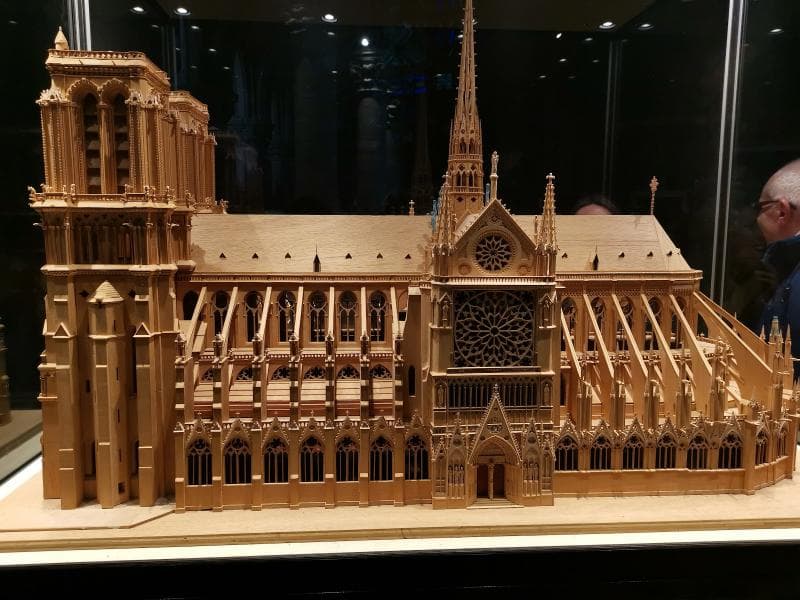
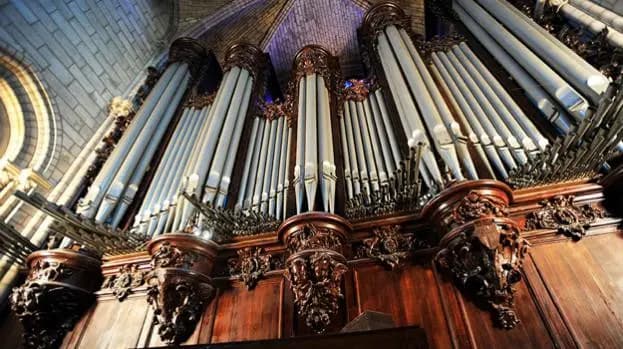
Discover The Great Organ of Notre-Dame Cathedral in Paris, France. Explore its rich history, monumental scale, and incredible resilience after the 2019 fire.
Overview
Perched majestically within the iconic Notre-Dame Cathedral in Paris, France, 'The Great Organ' stands as a breathtaking testament to centuries of musical artistry and engineering. This monumental instrument is not merely a collection of pipes but a living, breathing entity that has resonated through the cathedral's hallowed halls for generations. It is renowned as one of France's largest and most famous organs, an intricate masterpiece that captivates all who hear its powerful voice.
Boasting approximately 8,000 pipes, though some sources cite 7,952, its sheer scale is astounding. These pipes range dramatically in size, from towering bass notes measuring 10 meters (32 feet) in length to tiny treble pipes just mere centimeters long. The organ features an impressive console with five keyboards, a 30-note pedalboard, and typically 109 to 115 stops, each controlling a unique timbre or set of pipes.
Housed prominently in the cathedral's west gallery, towering three stories high, its intricate facade is a visual marvel. The Great Organ miraculously survived the devastating fire of 2019, shielded by the cathedral's robust stone vaulting. While spared from direct flames, it was enveloped in a layer of toxic lead dust from the melted roof, necessitating a complex and meticulous four-year restoration. Its triumphant return, filling the newly restored cathedral with sound, was a highlight of Notre-Dame's reopening in December 2024.
History & Cultural Background
The lineage of Notre-Dame's Great Organ stretches back to the early 15th century, with the first recorded instrument built by Friedrich Schambantz in 1402 or 1403. This initial installation marked the beginning of a continuous evolution, as the organ was rebuilt, expanded, and refined over more than six centuries by various master craftsmen. Elements of these historical iterations remain, with some pipes dating back to the 1400s and 33 stops predating the French Revolution.
A significant milestone in its development was the construction of the main Louis XV style case by François Thierry between 1730 and 1733, giving the instrument much of its present-day proportions. Its survival during the tumultuous French Revolution is a notable part of its legend; it is said to have been preserved by an organist who cleverly played patriotic tunes like 'La Marseillaise' to appease the revolutionaries.
The 19th century brought another monumental transformation when, at the behest of architect Eugène Viollet-le-Duc, the renowned organ builder Aristide Cavaillé-Coll completely reimagined the instrument between 1863 and 1868. Cavaillé-Coll's genius transformed it into a 'symphonic organ,' a revolutionary design capable of producing an unprecedented orchestral grandeur and a vast palette of sounds, moving beyond the classical French organ's clarity and brightness. Further modernizations in the 1960s and 70s, under figures like Pierre Cochereau, continued to enhance its capabilities, leading to comprehensive restorations in 1992 and again from 2011 to 2014.
What Makes It Special
What truly sets Notre-Dame's Great Organ apart is its unparalleled combination of historical depth, architectural integration, and acoustic brilliance. Its monumental size, housing nearly 8,000 pipes, makes it one of the largest organs in France, but it is the meticulous craftsmanship spanning centuries that makes each pipe a whisper or roar of history.
The organ's 'symphonic' character, a legacy of Aristide Cavaillé-Coll's innovative design, allows it to mimic an entire orchestra, producing an incredible range of tonal colors and dynamics. This symphonic quality, combined with the unique reverberant acoustics of the Gothic cathedral, creates a sound experience unlike any other. The instrument is tuned specifically to the acoustic environment of Notre-Dame, a process that requires immense precision and sensitivity to ensure every note resonates perfectly within the sacred space. The post-fire cleaning of the cathedral's stone has even further enhanced this acoustic phenomenon, leading to a notably brighter sound and extended reverberation.
Its survival and subsequent painstaking restoration after the 2019 fire underscore its resilience and profound cultural significance. The fact that only one of its thousands of pipes suffered water damage is remarkable, testifying to the protective nature of the cathedral's structure. The restoration process itself, involving the complete dismantling, cleaning, and reassembly of every component, was a monumental undertaking that highlighted the organ's status as a national treasure.
Stories, Fun Facts & Local Details
The Great Organ is steeped in fascinating stories, from its miraculous preservation during the French Revolution, reputedly by playing patriotic anthems, to its dramatic rescue and restoration after the 2019 fire. When the flames engulfed Notre-Dame, the organ was coated in a layer of toxic lead dust, which necessitated its complete dismantling. This immense task involved removing each of the nearly 8,000 pipes, from the colossal 32-foot giants to those no bigger than a pencil. The restoration took four years, culminating in its much-anticipated return to sound in December 2024.
Olivier Latry, one of the cathedral's longest-serving titular organists, was among the first to play the restored instrument. He remarked on the 'transformed' acoustics, noting an eight-second reverberation—a testament to the cathedral's newly cleaned stone interior, which, free of accumulated dust, now allows the sound to travel with unprecedented clarity and depth.
Throughout its history, many legendary organists have graced its console, including Louis-Claude Daquin, Louis Vierne, and Pierre Cochereau, who brought the instrument international fame. Today, a team of four titular organists—Olivier Latry, Vincent Dubois, Thierry Escaich, and Thibault Fajoles—share the immense privilege and responsibility of bringing its voice to life during services and concerts. Before the 2019 fire, such was the desire to play this iconic instrument that the waiting list for organists to perform on a Sunday afternoon could stretch for two to three years.
Visitor Perspective
For any traveler exploring Notre-Dame Cathedral, the Great Organ is an unmissable highlight, even if only visually. Its sheer presence in the west gallery, with its ornate Louis XV case, is a striking example of the cathedral's artistic and spiritual richness. Observing its facade offers a glimpse into the intricate world of organ building.
However, it is through its sound that the Great Organ truly comes alive. Attending a service or one of the cathedral's renowned organ concerts allows visitors to experience the full majesty of this instrument. The powerful and nuanced music fills the vast space, creating an immersive and profoundly moving spiritual and cultural experience. The sound, now brighter and with an extended reverberation thanks to the recent restoration, promises an even more breathtaking auditory journey. Its music is the enduring voice of Notre-Dame, a powerful reminder of its history, resilience, and continued cultural importance to Paris and the world.
Coordinates: 2.34984, 48.85293
View on Google Maps💬 How Travelers Describe This Place
Based on community votes
Photogenic
674Must See
585Beautiful
546Interesting
503Unique
92
Traveler Stories
Discover memorable experiences shared by travelers who have visited this place.
No traveler stories yet.
Be the first traveler to share what made this place memorable.

Tour
By
Spot
Discover amazing places around the world. Your journey starts here.
Explore
© 2026 TourBySpot. All rights reserved.