The Crypt
London, United Kingdom
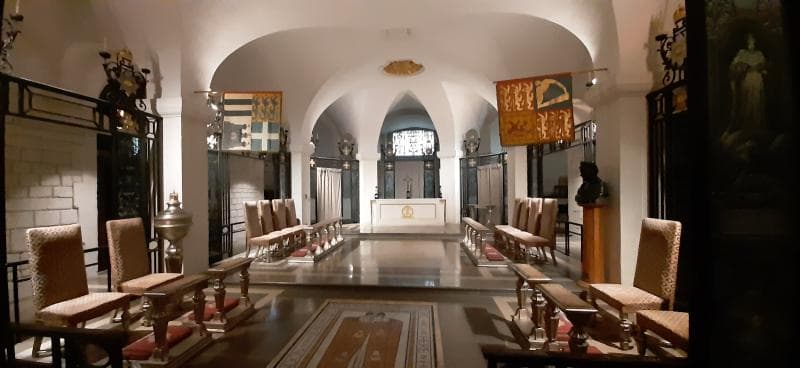
Explore The Crypt at St. Paul's Cathedral in London, United Kingdom. Discover the final resting place of national heroes like Nelson, Wellington, and Wren.
Overview
Deep beneath the iconic dome of St. Paul’s Cathedral in London lies The Crypt, a vast subterranean space that serves as the final resting place and memorial for many of Britain’s most celebrated figures. Spanning the entire footprint of the cathedral above, it is reputed to be the largest crypt in Europe, a sprawling testament to national history. Far from a dark and dusty vault, The Crypt is a surprisingly well-lit and architecturally impressive area, welcoming visitors to explore its solemn yet inspiring chambers. It houses around 200 memorials, offering a unique journey through centuries of British achievement in art, science, and leadership. Visitors often find it an essential part of their St. Paul's experience, providing a profound sense of connection to the past heroes of the United Kingdom.
History & Cultural Background
The current St. Paul's Cathedral, including its monumental Crypt, is a masterpiece designed by Sir Christopher Wren, built between 1675 and 1710 following the devastating Great Fire of London. Wren conceived The Crypt not merely as a foundation, but as an integral and impressive component of his grand design. While the site itself has hosted a cathedral dedicated to St. Paul since 604 AD, the present structure and its crypt emerged from the ashes of its predecessor, embodying resilience and architectural ambition. Fittingly, Sir Christopher Wren himself is interred here, his simple tomb marked by the powerful Latin epitaph: 'Lector, si monumentum requiris, circumspice' – 'Reader, if you seek his monument, look about you,' a poignant reminder of his enduring legacy. For centuries, interments within St. Paul's were somewhat restricted, but by the early 19th century, with public demand and state endorsement, the Crypt evolved into a national pantheon. The 1858 Burial Act further formalized this, reserving burial rights for those who had rendered 'distinguished services to the nation,' transforming The Crypt into a prestigious honor.
What Makes It Special
What truly distinguishes The Crypt is its extraordinary collection of tombs and memorials belonging to individuals who profoundly shaped British history. It is here you'll find the majestic marble sarcophagus of Admiral Lord Horatio Nelson, the victor of the Battle of Trafalgar. Nearby rests Arthur Wellesley, the 1st Duke of Wellington, who famously defeated Napoleon at Waterloo, his massive granite tomb a striking presence. The Crypt also features 'Painters' Corner,' honoring renowned artists such as J.M.W. Turner, Sir Joshua Reynolds, and Sir John Millais, amongst others, some interred and others commemorated by memorials. Sir Alexander Fleming, the discoverer of penicillin, also lies within these historic walls. Another unique aspect is the St. Faith's Chapel, a remnant from the previous medieval cathedral, housing older monuments and adding layers of historical depth. The sheer scale of the crypt, with its elegant vaulted ceilings and intricate stonework, creates an atmosphere of dignified grandeur that perfectly complements the legacies it preserves. It even contains the Chapel of the Order of the British Empire (OBE), dedicated by Queen Elizabeth II in 1960.
Stories, Fun Facts & Local Details
The lives of those entombed here are rich with compelling stories. Take Admiral Nelson, whose body, after his death at Trafalgar, was famously preserved in a barrel of brandy for the journey back to England. This led to the enduring nautical legend of 'tapping the admiral,' a tale of sailors supposedly sneaking sips from the barrel. His sarcophagus itself has a fascinating backstory, having been originally commissioned for Cardinal Wolsey, then appropriated by Henry VIII, before finally being used for Nelson centuries later. The Duke of Wellington’s burial was equally grand, with his coffin temporarily resting on Nelson's tomb for a year before its final placement. You'll also discover a bust of the first U.S. President, George Washington, a surprising detail that highlights the broad historical connections contained within these walls. Near Wren's tomb, the simple yet profound epitaph in Latin, 'Lector, si monumentum requiris, circumspice,' encourages visitors to view the entire cathedral as his lasting memorial. Additionally, The Crypt features memorials like the one dedicated to the Falklands fallen, linking this ancient space to more recent national memory. Sir Winston Churchill is commemorated by ornate gates, though he himself is not buried here, marking his place among Britain's titans.
Visitor Perspective
Visiting The Crypt offers a profound and accessible experience for all. Included with a general sightseeing ticket to St. Paul's Cathedral, guests can explore at their own pace or join one of the informative guided tours. The space is thoughtfully designed for visitors, featuring stair-free access from the South Churchyard and level flooring, making it welcoming for a wide range of mobilities. Far from being gloomy, it is generally well-illuminated, allowing for clear views of the intricate memorials and architectural details. Within The Crypt, you'll also find amenities such as a cafe and a shop, providing spaces for reflection and refreshment during your visit. It’s an immersive journey into Britain's past, presenting history not just through facts, but through the tangible presence of those who shaped it, inviting a quiet contemplation of their lives and legacies.
Coordinates: -0.0984, 51.5138
View on Google Maps💬 How Travelers Describe This Place
Based on community votes
Unique
996Photogenic
673Beautiful
585Interesting
143Must See
69
Traveler Stories
Discover memorable experiences shared by travelers who have visited this place.
No traveler stories yet.
Be the first traveler to share what made this place memorable.

Tour
By
Spot
Discover amazing places around the world. Your journey starts here.
Explore
© 2026 TourBySpot. All rights reserved.